Friday 14th March 2014, 160klms / 100 miles:
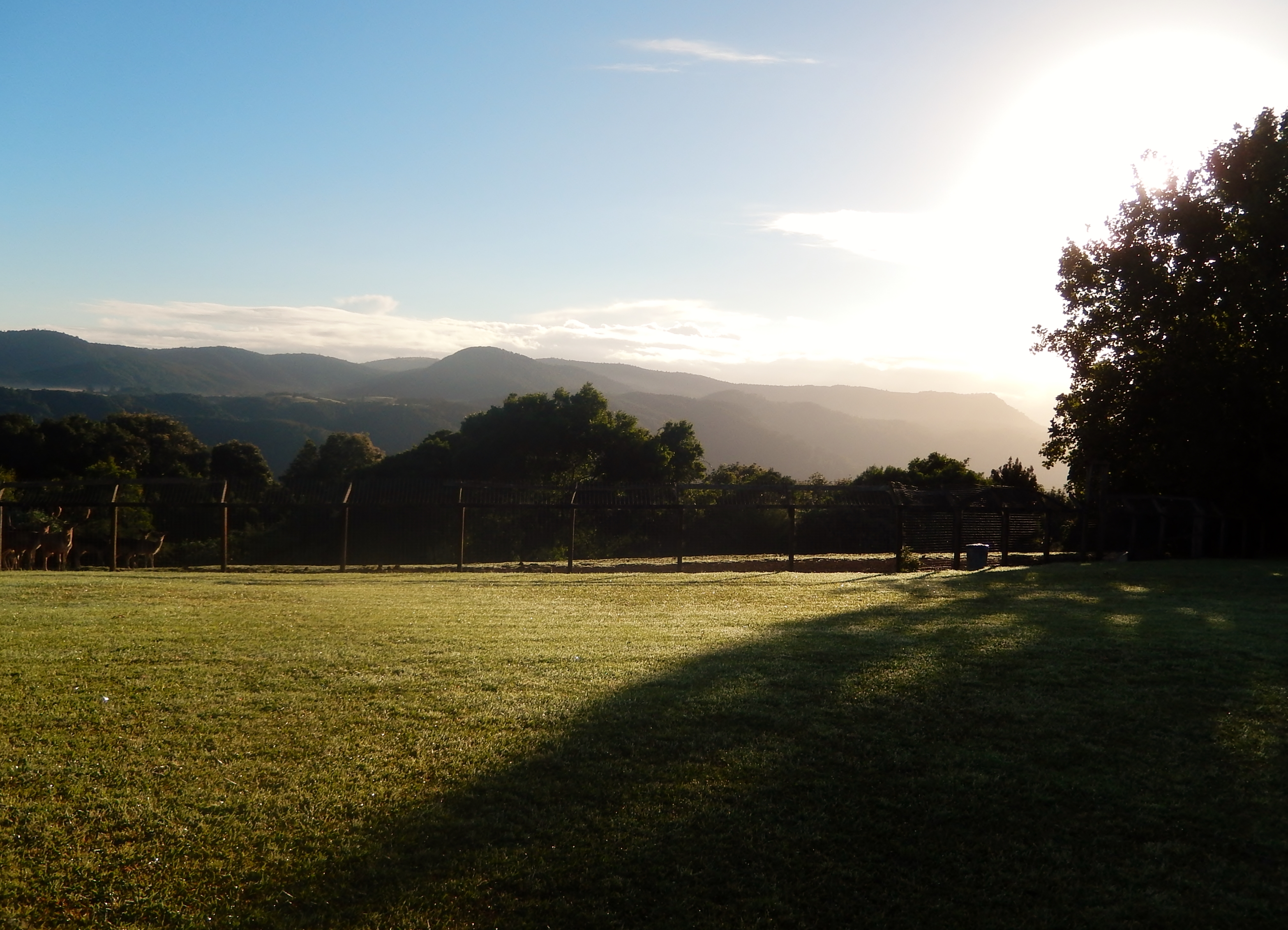
Time to Get Up, Lookout Motel, The Mountain, Dorrigo
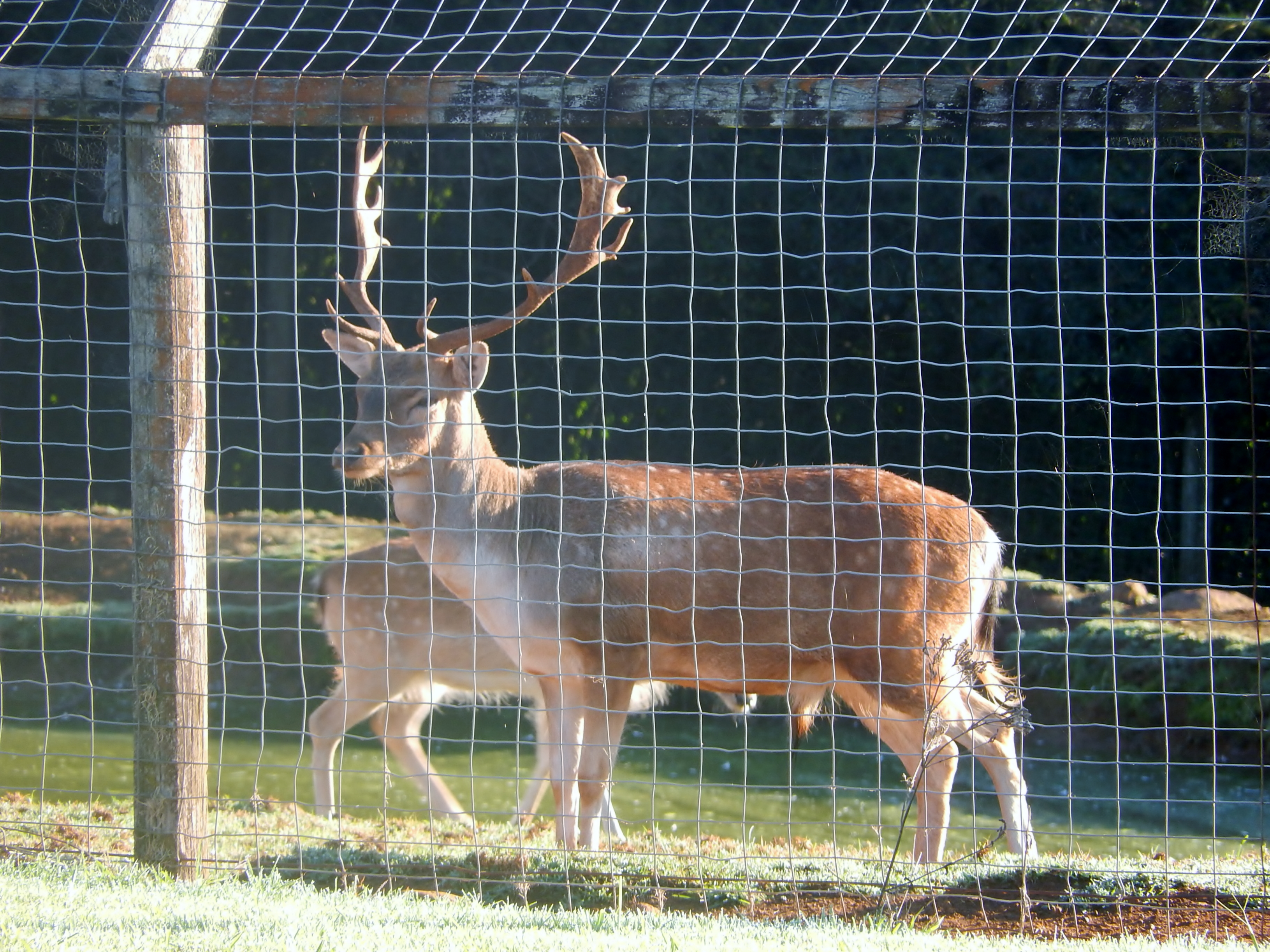
Leader of the Pack
When this is what you wake up to, you just know your day is going to get up close with nature. We can forgive that our motel has seen better days, because our sleep was deep and peaceful, and it is located in this tranquilly beautiful spot. There is a deer reserve just at the back of us, and a barrel of feed is placed where curious tourists can easily toss a scoop over the fence. We quickly discovered that no matter how widely we scattered it, there was only one who got fed.

Mountain Top Dorrigo early morning
I wanted to return to Griffith Lookout, to compare the change in light from when we had visited at 4.30pm the day before, and this is how it looked at 8.30am. An explanatory board advises that pioneer landowners cleared the area of its rainforests, in order to create dairy farms. This exposed the area, which is 750 metres above sea level, to winter frosts and cold southerly winds. There is now a land rectification programme in place. 
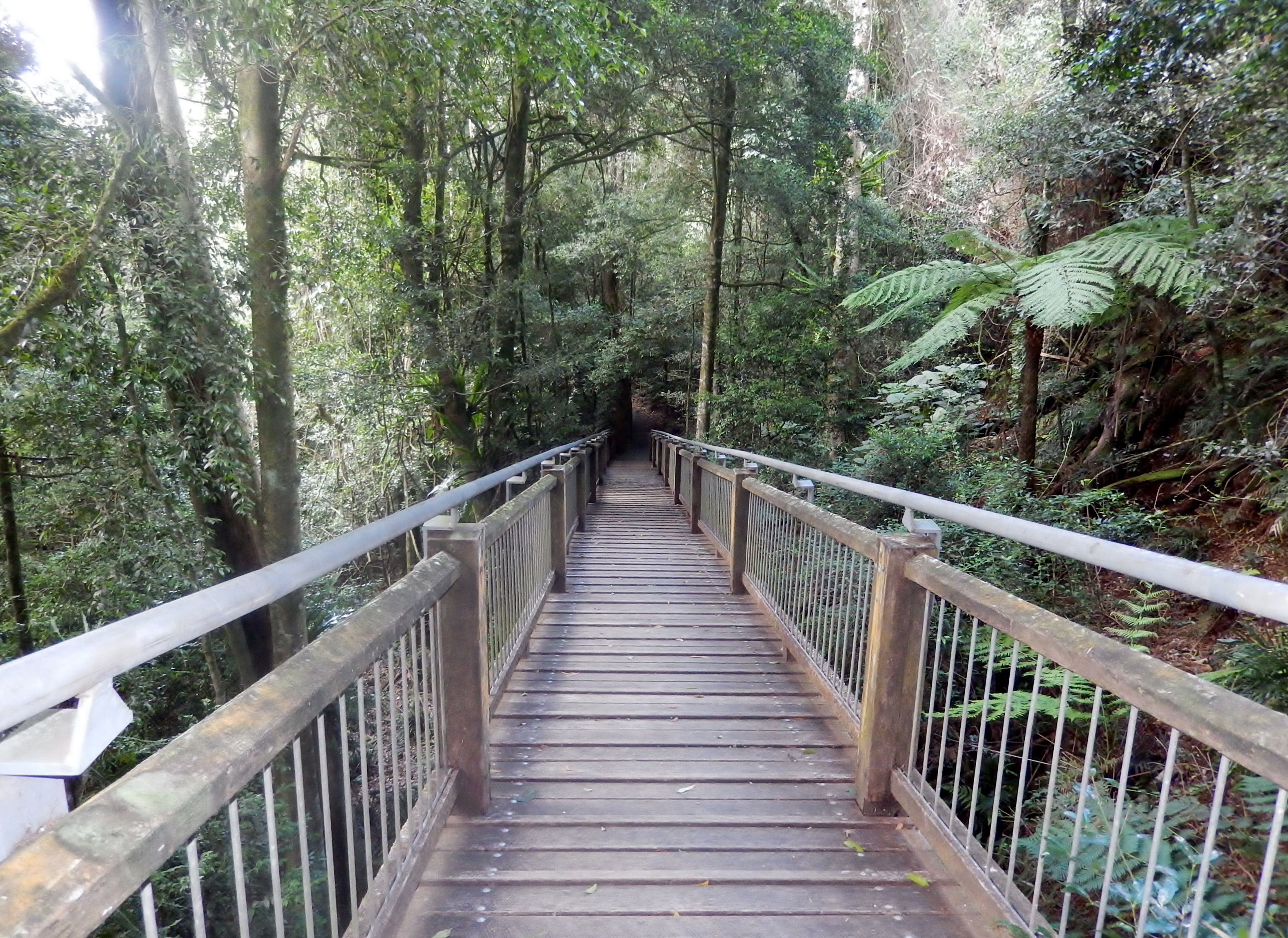 Shortly after, we parked at the Rainforest Centre in the Dorrigo National Park. We were a little before the official opening time, however, there are signs clearly indicating the various tracks and level of difficulty (some are wheelchair accessible), so we set off bravely. As you can see, we were hardly hacking our way through with machetes, fighting off wild animals at every turn. HOWEVER, as we did get further in, I was glad that it had not been wet recently (possibility of leeches), and although we were amongst the first that morning, we did not walk into too many spider webs, nor did I notice any (harmless) tree snakes. How I wish, though, that I could upload video to this blog (need to pay?), and then I could bring you the birdsong. So many sounds, and so few I could recognise. The lyrebirds were active, and they are identifiable because of how many other birds and people that they mimic. When you hear what sounds like ten different birds all coming from the one spot, then you know there is a shy lyrebird hiding in there. They have even been known to mimic urban sounds such as chainsaws, barking dogs, crying babies, rifle shots, and camera shutters. Another bird that is well know is the whip bird. The male makes a drawn out sweeping whip sound that ends in a loud crack, and the female answers with a quick choo-choo, or chewm, chewm sound. It is not usual to be caught between the male-female exchange, but on this morning we were fortunate to be right in the middle of several of them. In fact, I think we may even have heard two males vying for the one female. Easy-peasy to spot were the bush turkeys. They scratch around in the bush, making a hell of a ruckus, and some of them were very bold.
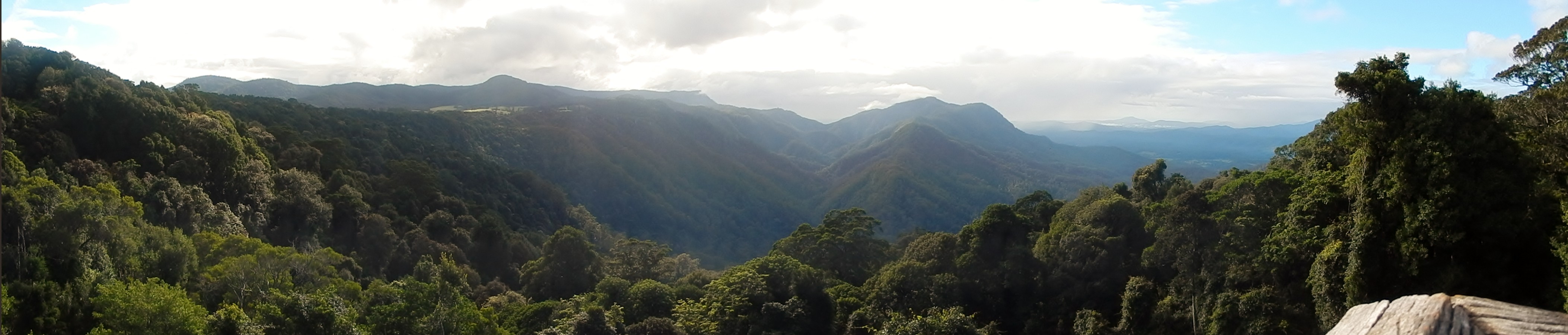
Dorrigo Rainforest Overhead Panorama


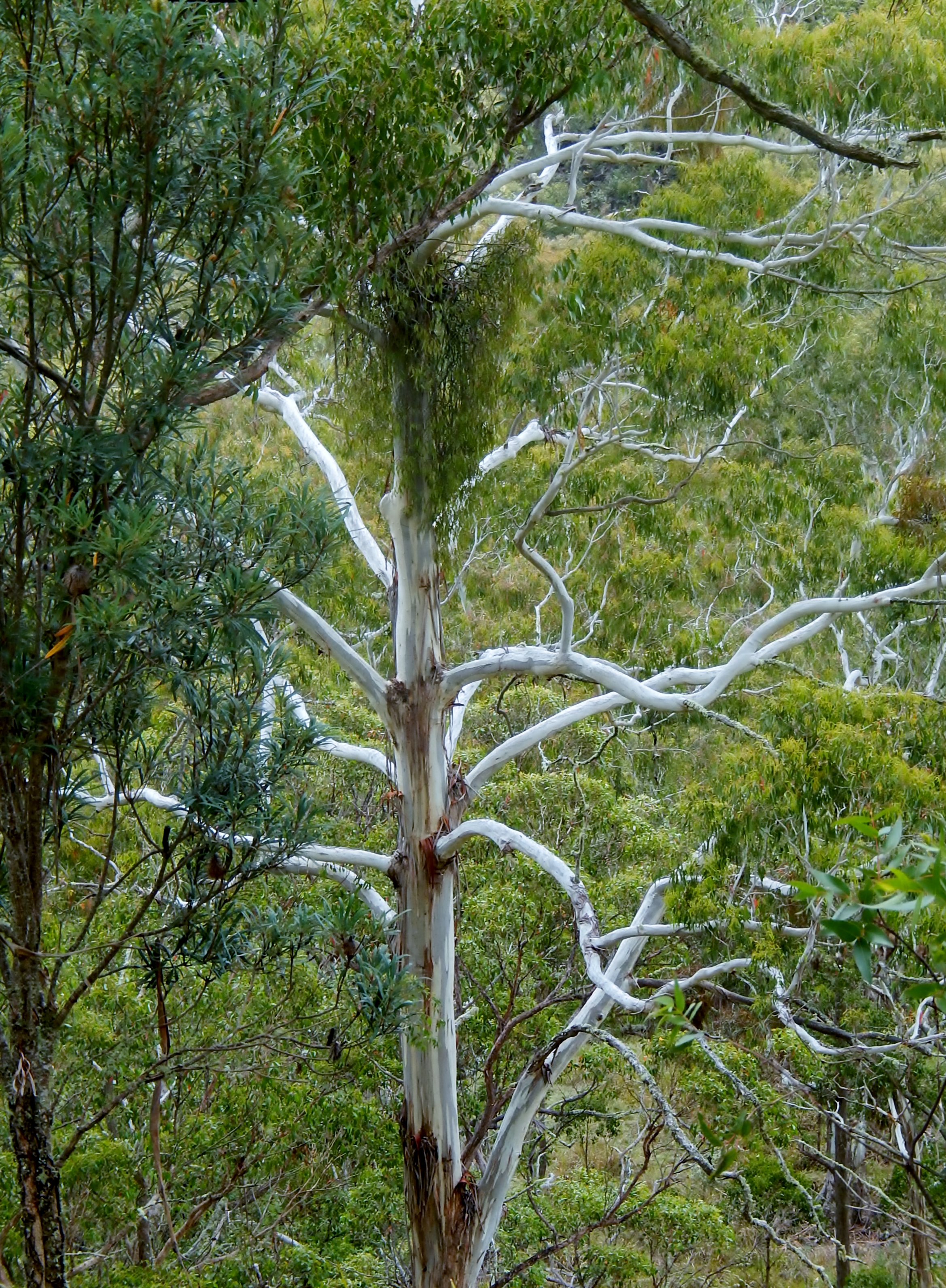
This is either a White Gum, or a Ghost Gum – or a dead tree
Okay, so we are supposed to be on a road trip, so we get back in the car and continue along the Waterfall Way, passing ‘localities’ such as Fernbrook, Deer Vale, Meldrum and Ebor, until we reach the Ebor Falls, located on the Guy Fawkes River. These falls have an upper and lower level, both easily accessible on a sealed road, with walking tracks into the gorges if you are up to that. The first lookout is on a sealed road, approximately 200 metres (660 ft) off the Waterfall Way. This viewing platform shows the upper falls tumbling 115 metres (377 ft) over columned basalt rock in two falls. The lower Ebor falls, 600 metres (2,000 ft) further on, fall into a steep forested gorge below.


There are attractive, well provided picnic grounds at the falls, so time to introduce my overseas readers to a few ‘typical’ Aussie offerings:
1. An outdoor barbecue / cooking place. The fire can be made on the cement base, the heating plate swings back and forth, and the overhead arm also swings, with hooks for cooking pots.


2. A cheeky magpie – it has a musical song, can raid other bird nests, is not afraid of humans, will take food from hands, and is VERY aggressive if you come near its nests.


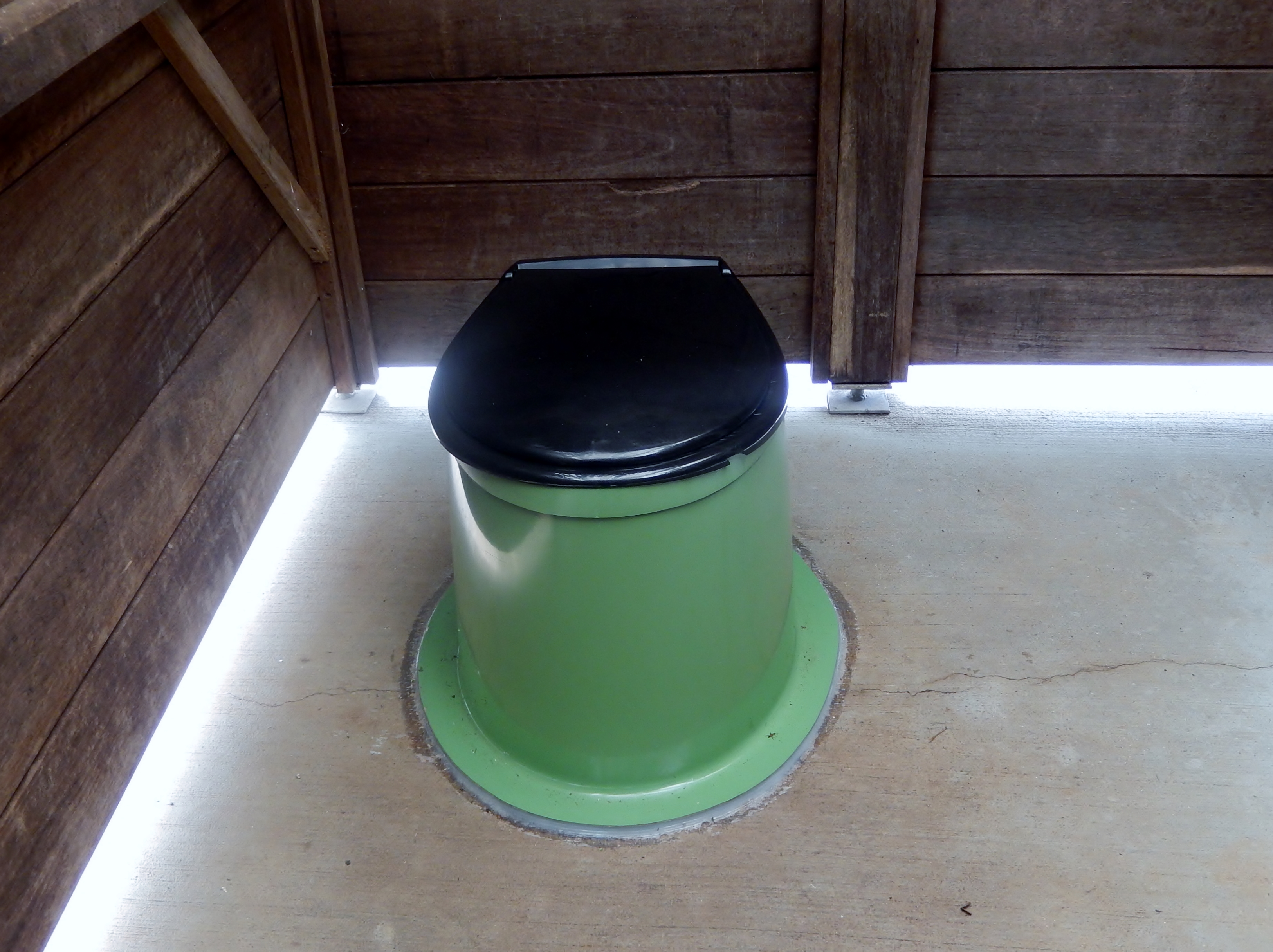
The Long Drop
3. The ‘dunny’, ‘loo’, ‘long drop’ and many other names. An outdoor toilet (housed in a shed). This one relied on ‘natural’ bacteria to ‘compost’ the waste droppings – thankfully many metres below where you sit – I spared you all a photo of the contents.
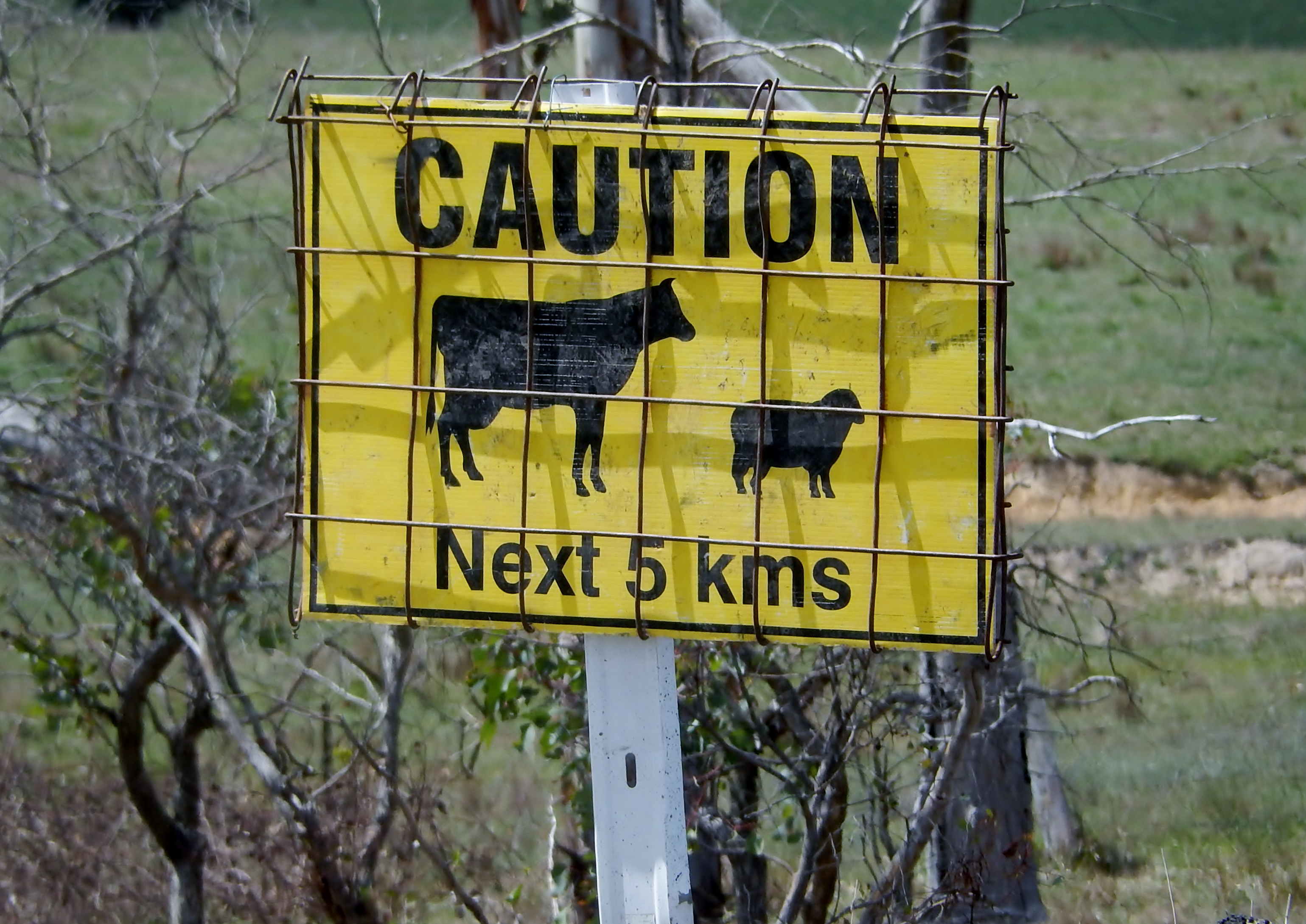
Long Paddock Warning Sign near Armidale March 2014
Okay . . . So back in the car, and pushing on – – – – we were in for a shock. Not far from the falls we came across a warning sign that there were cattle on the road. Now . . . it may be common in the UK, and even New Zealand, to allow stock to wander here and there, but in Australia it usually means one thing. Starving stock are being driven/droved (? what is the past tense of ‘drove’ – to move a large group of stock on foot over vast distances?), along public roads, in the hope that there is enough forage on the sides of the highway to keep them alive until the rain falls again. This was the first of many such herds were encountered, some were local people letting their cattle chase the ‘greener grass on the other side of the fence‘, some were herds that had been walked down from Queensland. It is the first time I have seen The Long Paddock with my own eyes. Some of the cattle looked well enough, with calves afoot, some looked in pitiful condition, with ribs and haunches sticking through lacklustre coats.


This country is in drought, and this is why. Take a look at these non-rain bearing clouds:


And if we needed any further proof, this is what we found when we reached the Wollomombi Falls. At one time it was believed that these were the tallest in Australia. That estimate has been revised to second or third, but the point is – they are supposed to contain water. There should be at least 100 metres (> 300 feet) of water tumbling down these ravines:


So, after such a big day of exploration and discovery, it was a couple of very tired puppies who made it in to Armidale in the late afternoon. A sign that we had reached a major centre of civilisation was the sight of the St Mary and St Joseph’s Catholic Cathedral which we passed on our way to dinner. Even if the front doors had not been locked, we would have moved on. We were ready for a feed, a drink and a sleep, so we left any further exploration for another day.
Footnote 9th April 2014:
A friend pointed the following out to me after reading this post:
“You had a picture of a Ghost Gum/White Gum, I just thought I would let you know on our travels we learnt that there is a parasite attacking our native Gums you can just see it on you picture, it looks like a large cluster of leaves, apparently birds carry this parasite from tree to tree and is decimation our Gums, when you drive anywhere you can see these clusters and the damage they are doing. She thinks it is called a mistletoe.”
 GWEN WILSON The Reluctant Retiree
WOW! love your images of Dorrigo. Would love to gain your permission to use some of them in our new, not-for-profit, community website aimed at promoting Dorrigo.
The website is http://www.destinationdorrigo.com
many thanks
John Eastment
Destination Dorrigo Inc.
LikeLike
Thanks for getting in contact John. The photos did come out well, didn’t they? And that is just with a mug’s camera 🙂 Of course you may use them, and please credit Garrulous Gwendoline, The Reluctant Retiree. Also John, since writing this post, I have become a published author, (I Belong to No One, Gwen Wilson) so if there was any scope to be part of a writer’s festival or library reading in Dorrigo, I would be pleased to visit again. You can contact me on gwil7(at)optusnet.com.au
LikeLike
Hi again John, I imagine you saw them, but there are also a few night time shots of Dorrigo on the preceding post, including a mood shot of the war memorial: https://garrulousgwendoline.wordpress.com/2014/03/23/to-dorrigo-via-the-mid-north-coast-and-bellingen-nsw/ cheers Gwen
LikeLike
Pingback: Fade to Black – from bright sunshine to stormy skies | The Reluctant Retiree
An interesting post – thanks. So sad about the drought – we all seem to be having strange extremes these days.
LikeLike
The winter in North America has seemed so extreme and now all are talking about spring taking a long time coming. I have booked a trip to Paris which will be the European autumn, and I am worrying about how to stay warm. Don’t know how I could cope in a polar vortex.
LikeLike
Pingback: City Tour of Armidale, then Glen Innes via the Newell Highway (most of the time) | The Reluctant Retiree