Day 3 of our Broken Hill adventure – after lunch
As mentioned in yesterday’s post, Menindee was established on the Darling River in the mid-1800s. Back then, there were two ways to transport goods and people: bullock trains or paddle-steamer, with the latter method being subject to river levels.
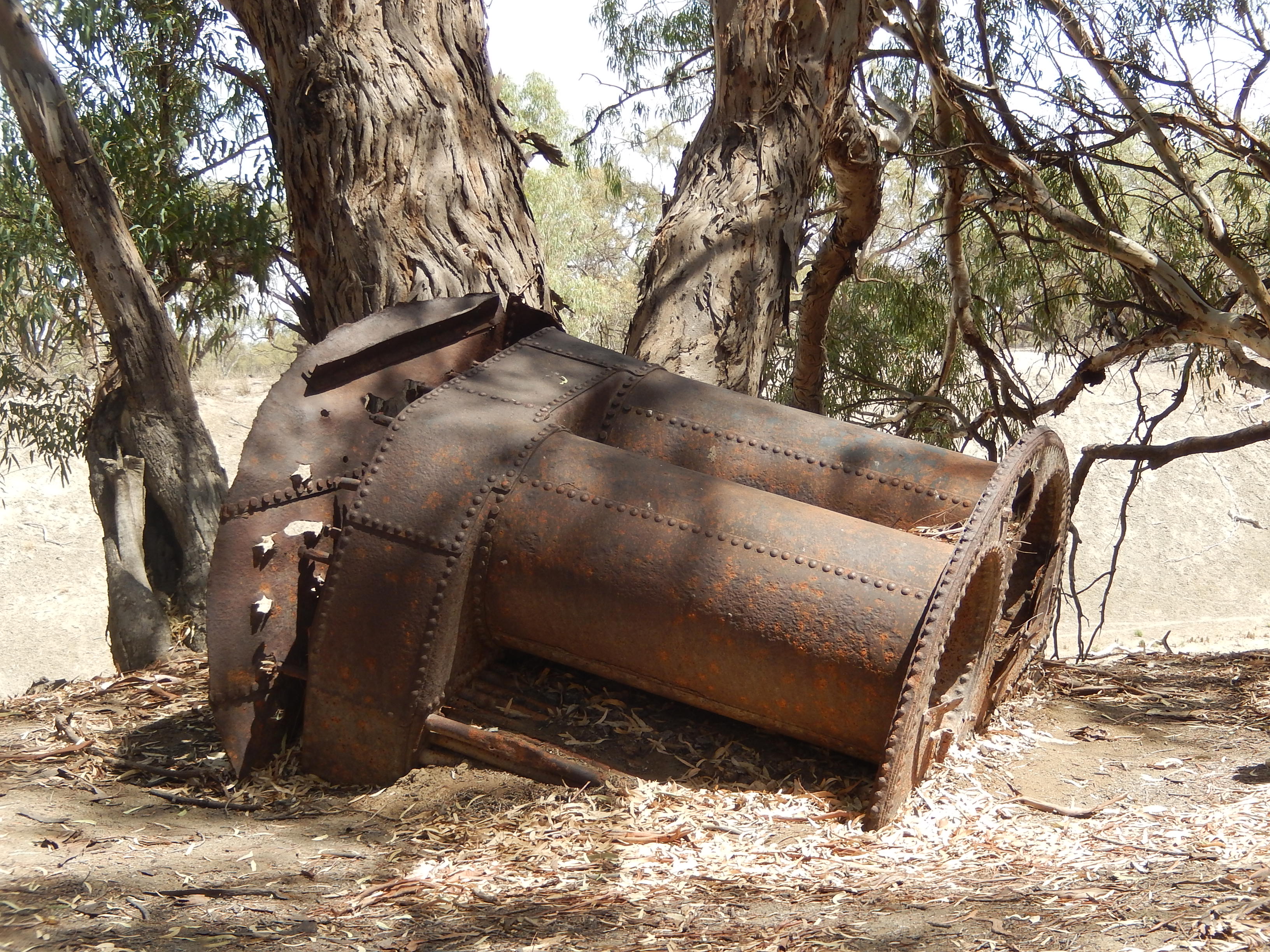

The outback is full of yarns. Many are really very tragic, and yet, with the passing of years, they take on an air of incredulity. So is the story of the P.S. Providence (paddle-steamer Providence – I did not make up that name!).
P.S. Providence was stuck on the Darling River for twelve months due to low water levels. When the day came to set off the crew had first slaked their thirst in Menindee.
Then they stoked up fire and set off downriver. Problem is, they did not slake the thirst of the boiler first, and it exploded, landing on this bank, where it has subsequently lain since 9th November 1872.
The Chinese cook was rescued from the tree into which he had been blown, but did not survive. The Captain, Engineer and Fireman were killed outright. The only survivor was a miner, on his way to visit family in Adelaide.
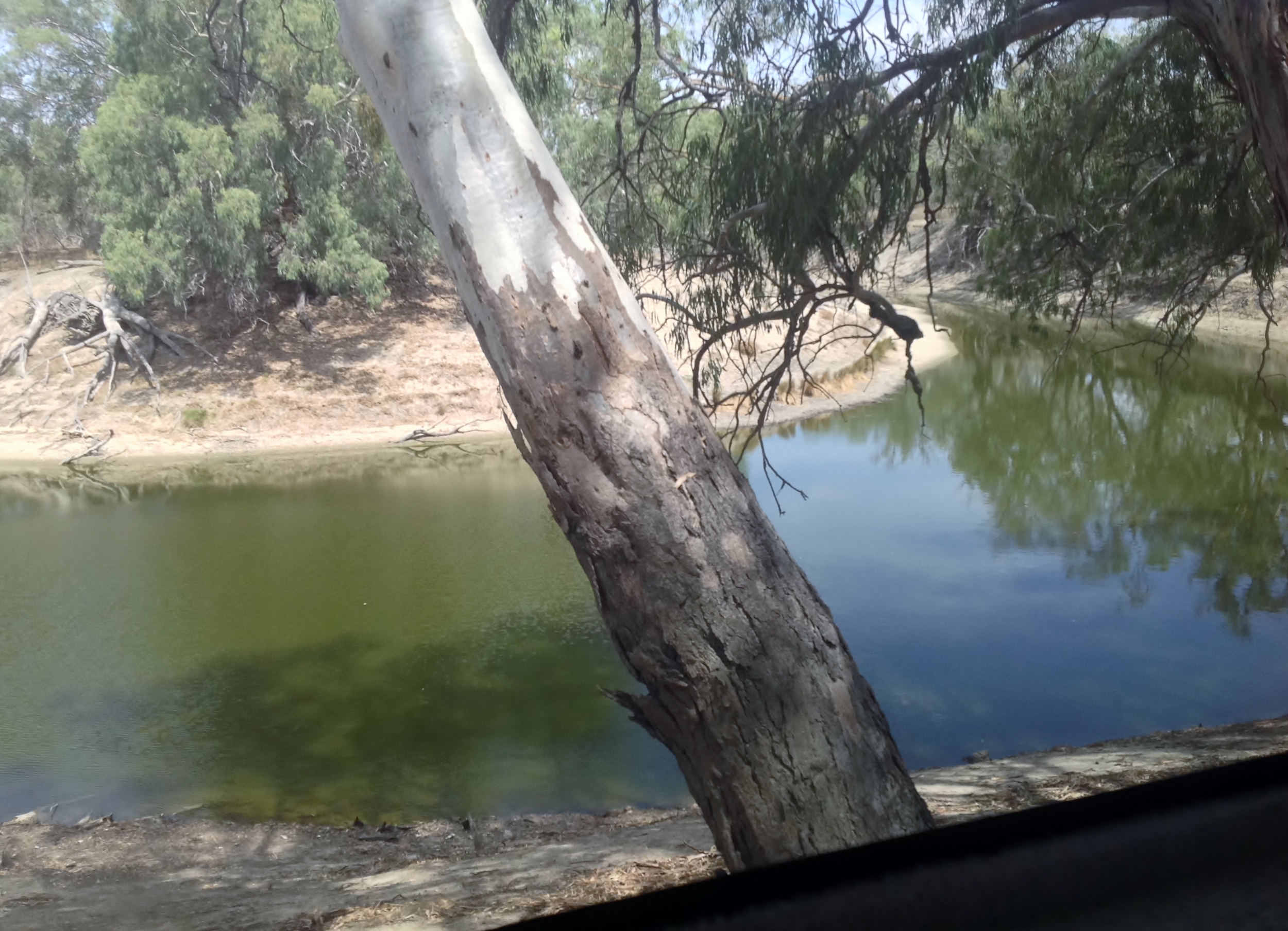
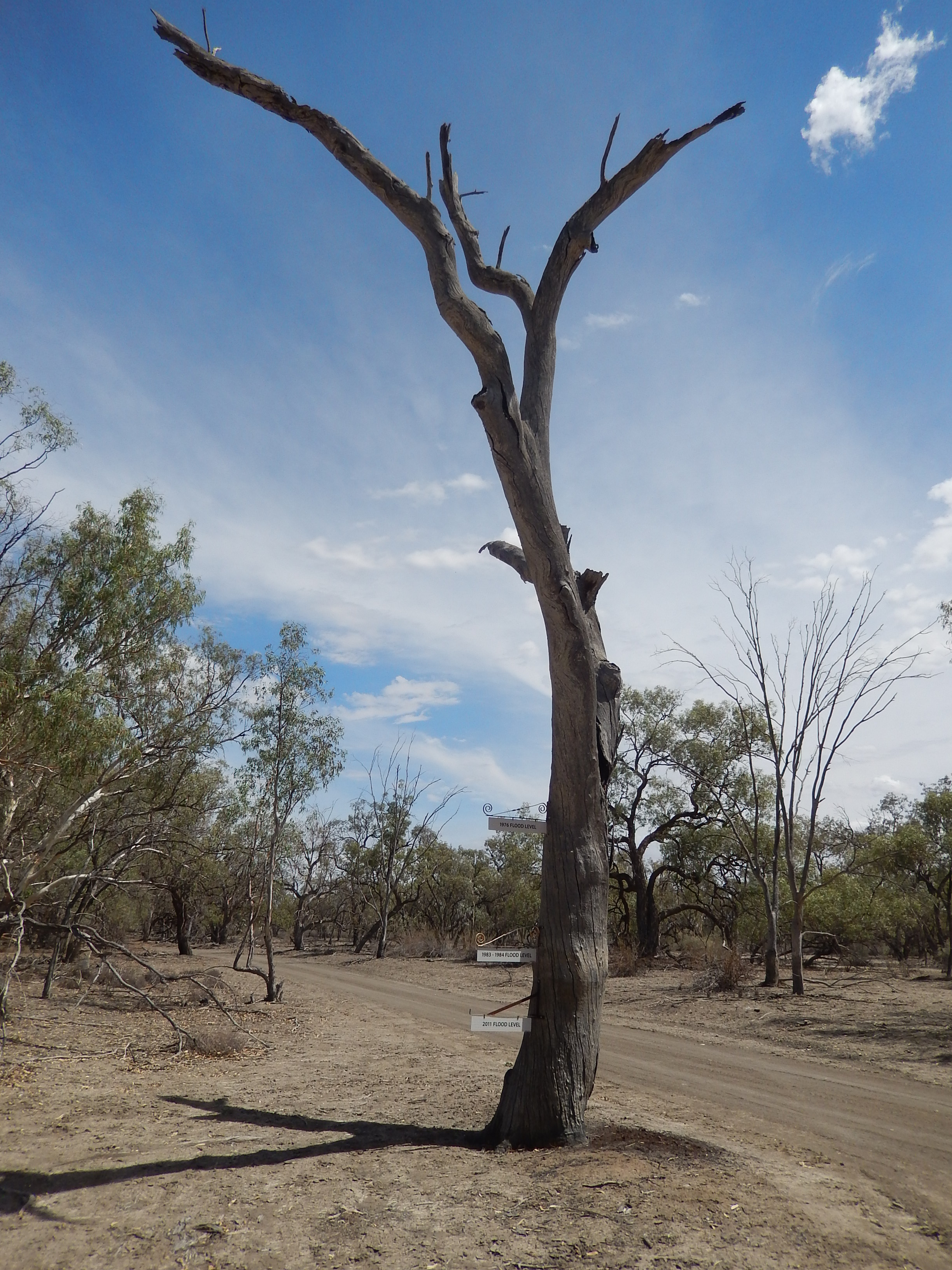
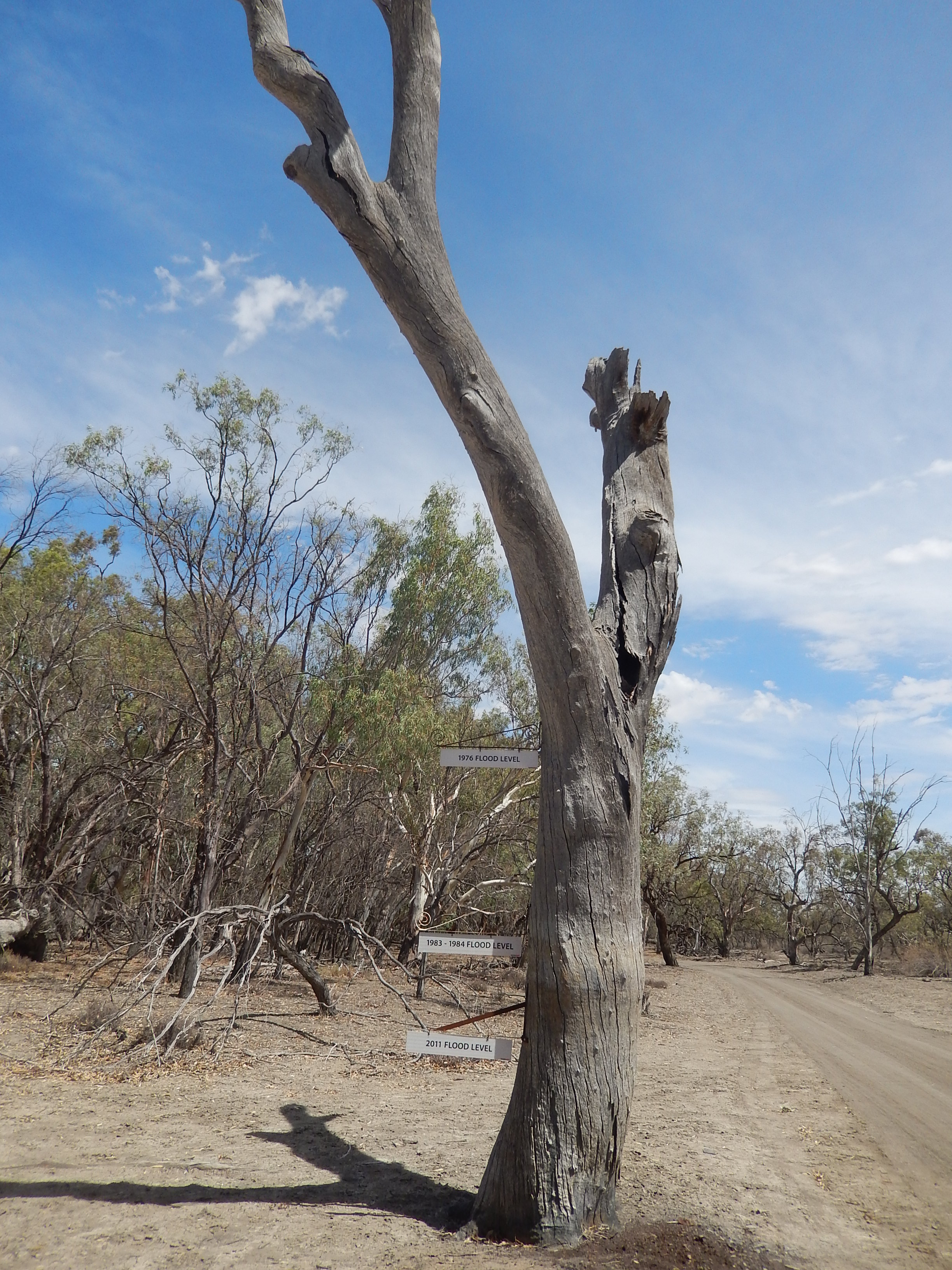
As you can see from the photo above, the Darling River is currently very low. But it can flood, and those levels can reach incredible heights, as the flood markers on this nearby tree demonstrate (photos below). I cannot say whether it is co-incidence, or a warning sign, but the flood height is lower through the decades. The years marked are 1976, 1983/84 and 2011. To provide perspective, the lowest marker, 2011, is about the height of an average woman. At nearby Wilcannia, the 1976 flood of the Darling River was recorded at around 12 metres high (approximately 40 feet).
Those early pastoralists had to be a tough lot to deal with the constant cycle of drought and flood, and our next destination, the Kinchega National Park, was once part of the Kinchega-Kars pastoral lease held by the Hughes family since 1870. At its grandest, the property extended from Menindee to Broken Hill and covered an area of over 800,000 acres. At its height, the station had around 140,000 Merino (wool) sheep.
Visitors can view the buildings of the old Kinchega Station (farm), which was built in 1875 of corrugated iron and river red gum. You can even book a stay in the shearers’ quarters if you are in the mood for basic accommodation. Today’s visit is a rare opportunity for us women to enter a woolshed. Wayne tells us that, “In days past, when a woman entered a shearing shed, the blokes would call out, Ducks on the pond.” It was a cryptic warning to the other shearers that they should clean up their act and watch their language. In the heat and the dust and the sweat, you can imagine that the last thing they wanted to worry about was women’s sensibilities, and some sheds banned women altogether.
Kinchega Station operated for just under a hundred years, and six million sheep were sheared in that time, with techniques improving all the time. The day of our visit was blisteringly hot, and as I wandered through, lagging behind the others, the only sign of life was a herd of kangaroos that I flushed out as they sheltered under the old timber floorboards.
Unlike the shearers, we had the luxury of returning to our air-conditioned bus, en-route to our air-conditioned motel room. It’s about an hour and three-quarters drive from the woolshed, plus for us a delay while we waited at a level crossing for a freight train to go through. it went on, and on, and on, and on . . .


I got tired of snapping photos, so eventually resorted to a video. You can hear me at the end, “ninety and two engines“, and Bill’s laconic reply, “yeah, she was a long ‘un.”
By then, the only “long ‘un” we wanted was a nice cold drink!
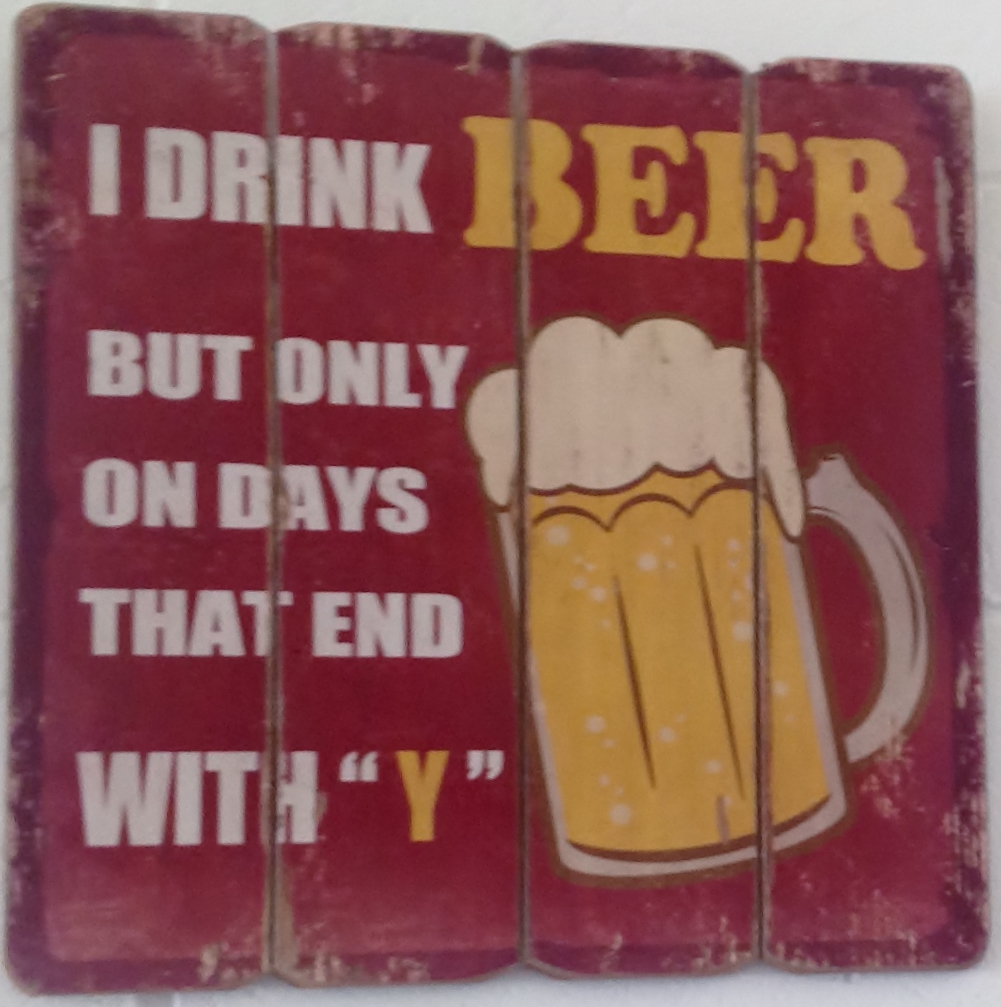
While this sign is fairly clear . . .

Even Wayne couldn’t fathom this one! What horses????
 GWEN WILSON The Reluctant Retiree
What a tough life those sheep farmers and shearers so had – you’ve captured the dry, hot struggle it must have been back then very well! Looks like the droughts are getting worse though.
LikeLike
The “squattocracy” – the very wealthy and influential owners of sheep stations – had it good in the heyday of wool in Australia, but I have read many accounts of early colonialists trying to eke out their living on properties which were too small to be viable, and fighting drought, flood and fire. A particularly tough experience for the women, trying to run households with basic amenities, and dealing with the isolation.
LikeLike
Thanks for taking us along on this wonderful trip. Your photos and stories are really entertaining and educational.
LikeLike
I am glad to hear you are enjoying them Don! Quite a few more to come from this trip.
LikeLiked by 1 person
What a journey! So interesting and so much history. I know so little about Australia with most of my impressions from reading The Thorn Birds back in the day!
LikeLike
Nothing wrong with basing your impression of the outback on The Thorn Birds. We all got carried away with that “cassock-ripper”. Did you know Colleen McCullough went on to write several novels about the rise and fall of the Roman Empire? So she had a strong historical interest too.
LikeLiked by 1 person
Interesting history! Nothing like traveling to new places and learning so much….
LikeLike
Thanks Sue. I don’t think it’s a part of the world that gets much attention outside of Oz.
LikeLike
Another interesting ride along with you. Thanks so much for sharing your travels.
LikeLike
Thank you Michelle. Been away for a few days over Easter, so am back on deck now and gathering my photos and notes to carry on with the rest of the trip.
LikeLiked by 1 person
Fantastic! I hope you had a wonderful Easter and break.
LikeLiked by 1 person
My second cousin turned forty and had a big party. He invited an eclectic mix of guests across all age ranges. I stayed in the house that used to belong to my aunt and is filled with happy memories for me. So it was really lovely for so many reasons, although I don’t feel as if I have slept in my own bed much this last month 🙂 I hope you enjoyed your Easter also.
LikeLiked by 1 person
It was a beautiful weekend with family.
LikeLiked by 1 person
Do folks ride the freight trains “for free” like they do in the States?
LikeLiked by 1 person
Funny you mention that. As we watched the train pass, Bill and commented that there is no room on the wagons to do just that! Although, I never heard of it as a practice in Australia.
LikeLike
Always looked very dangerous to me.
LikeLike
I guess the trick is in the timing and the spring in your legs. I wouldn’t like to try it, that is for sure. But I do have a voucher to skydive 🙂
LikeLike
Skydive – wow!
LikeLiked by 1 person
And maybe The Good Life team will film it – which means I can’t back out 🙂
LikeLike
Yes, yes, yes – let’s see it on telly!!!!! Go Gwen super skydiver, super adventurer.
LikeLiked by 1 person
Good to hear your voice 🙂
LikeLiked by 1 person
I forgot the microphone would pick it up 😀
LikeLiked by 1 person
And it has since been pointed out to me that is not my voice at all. It is in fact my friend Helen (who was acknowledged in my book for her wonderful editing help). Guess we grew closer than even I imagined during all that hard work 🙂
LikeLiked by 1 person
🙂
LikeLike
Isn’t it great to step back into history?!!
LikeLiked by 1 person
I seem to feel it all around me.
LikeLiked by 1 person