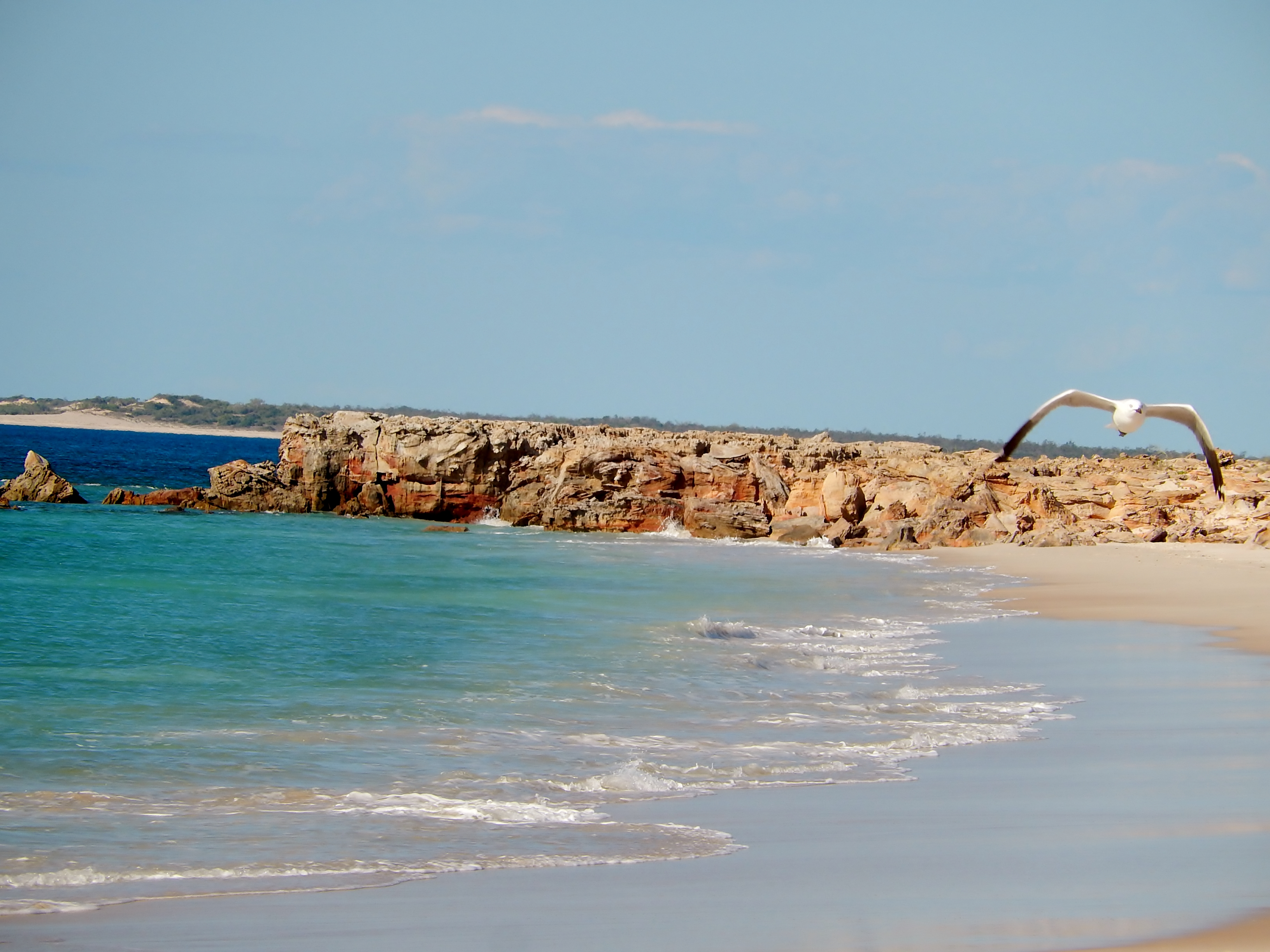
At Cape Leveque, Kimberley Region, Western Australia 2016-05-27 photo by Bill
Day 10 of the “Ultimate Australian Rail Holiday” Friday 27th May 2016
Oh my giddy aunt (I picked that saying up from a neighbour – M – I know you are reading this 🙂 ), this day’s touring is going to be one of the hardest to write about succinctly. Between us, Bill and I took more than 300 photographs, plus several videos. On top of which, I have about 1000 words of notes. I really don’t know whether I am coming or going . . .


We are driving on a long, lonely, open road, and we are headed for Cape Leveque, which is situated on the northernmost tip of the Dampier Peninsula in the Kimberley region of Western Australia – pretty much the north-west corner of Australia. Cape Leveque is another place named during the 1801 Baudin French expedition, but the traditional owners of this land, the Bardi people – salt-water people – call it Kooljaman.
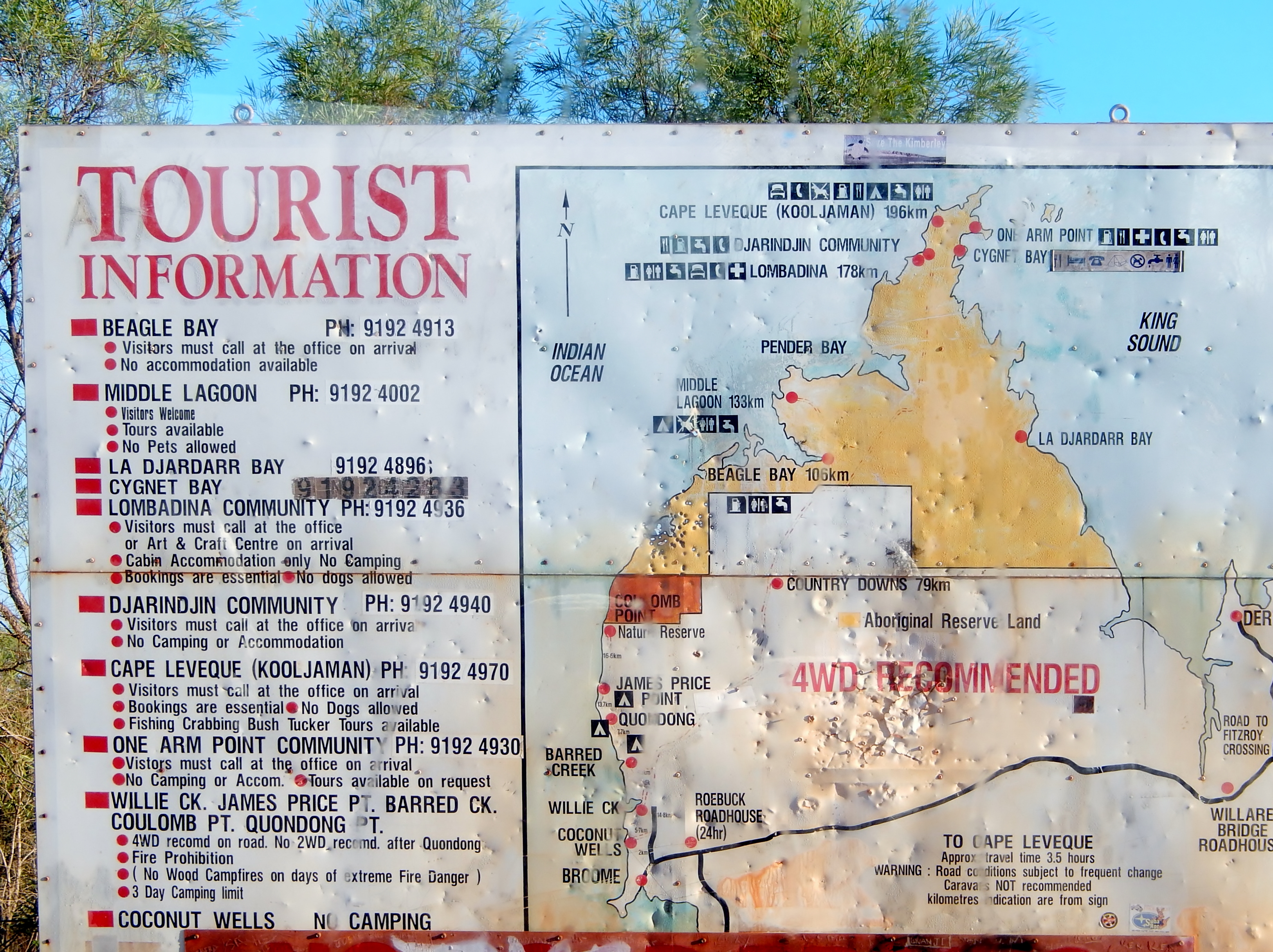
The above map, despite doubling as target practice, gives the first-timer fair warning that this is remote and rugged territory, and a good part of the road is dirt, best suited to four wheel drive vehicles, or you risk ending up like the car in the photo below . . . (although to be fair, that accident has happened on the sealed section). The second photo gives a better depiction of the dirt road – a red, corrugated, sandy, dusty strip which is impassable in the wet.
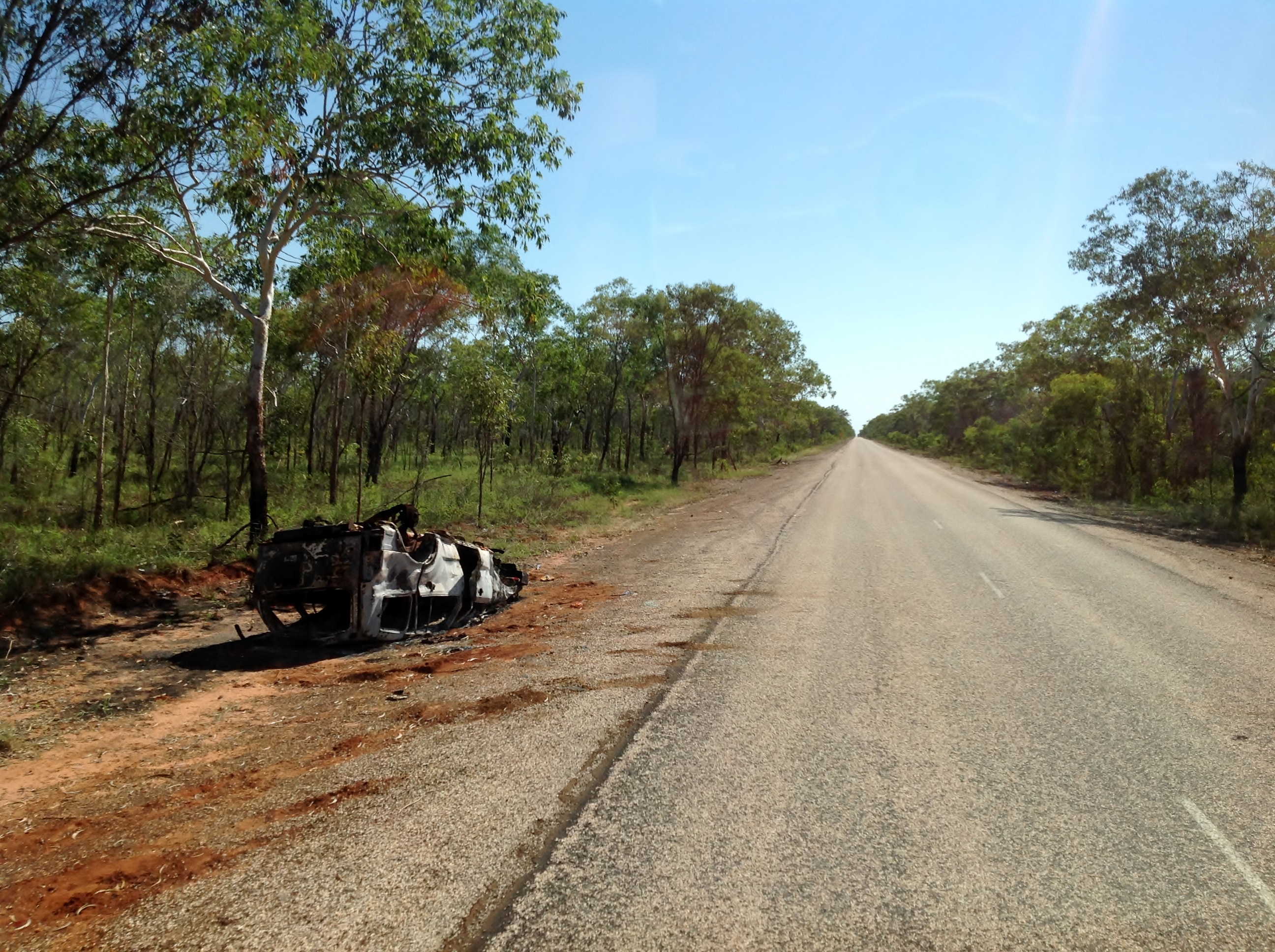
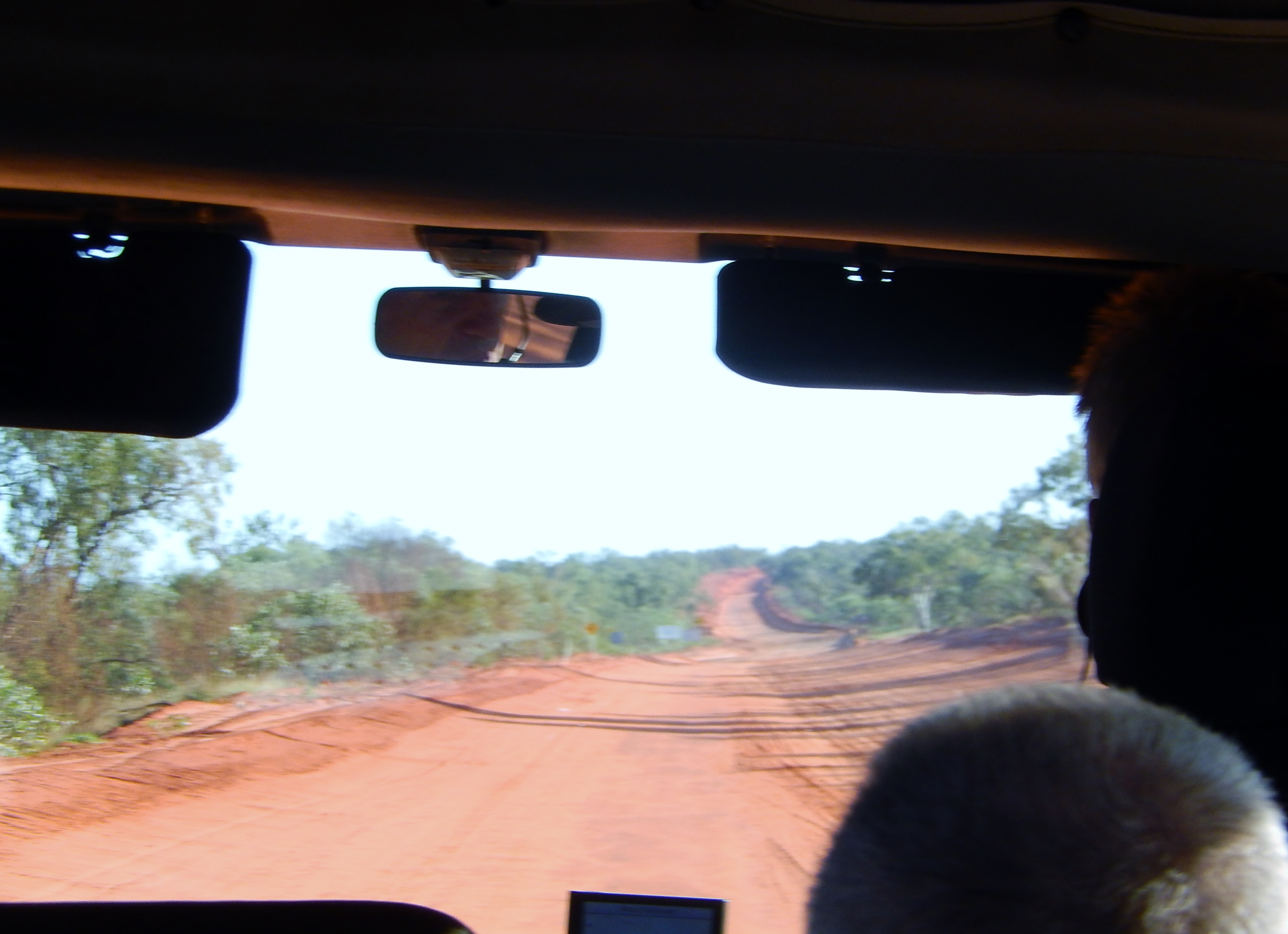
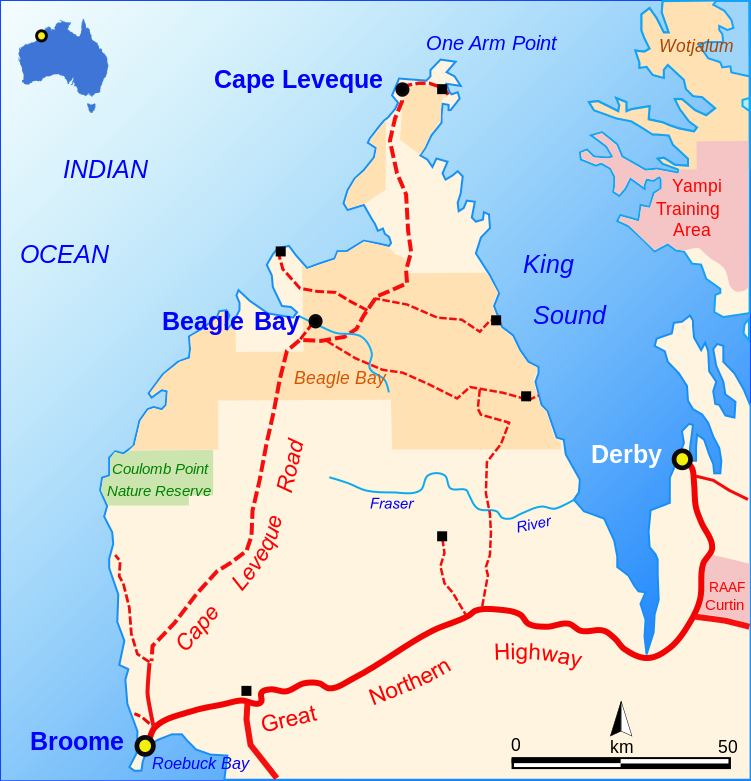
CAPE LEVEQUE ROAD , SOURCE By Summerdrought – Own work, CC BY-SA 4.0, https://commons.wikimedia.org/w/index.php?curid=48442127
Our tour guide today is Don, and our first stop will be the Beagle Bay Aboriginal Community. It is named after the HMS Beagle, a vessel used for exploration in the 1830s and 1840s and whose former shipmate was Charles Darwin. The settlement was established in 1895 by Trappist Monks, who established it as a mission home for aboriginal children, so that its history is now linked with the Stolen Generation – children of mixed-blood Australian Aboriginal and Torres Strait Islander descent who were forcibly removed from their families. These days, their descendants have reclaimed their lives, and it is now a well run community with a school, clinic, general store, good underground water, and a beach and fishing nearby.
Various religious orders came and went until self-determination in the mid-70s, and then the townspeople invited the church to continue providing priests and a school. The Sacred Heart Church, with its magnificent altar decorated with pearl shell inlay is a tourist draw-card.


Outside, the air is thick with the sound of screeching corellas. The Little Corella, or Bare-Eyed Cockatoo, is a playful, talkative bird which travels in flocks. They are zooming past, flying from one Melaleuca or Acacia to another, and calling to each other all the time. There are other birds in the trees too, and more seaside varieties pecking in the patchy grass. Frangipanis are in bloom also, they are a round leaf evergreen versiona with white flowers hanging in clusters. The soil of this area is Pindar, the source of the rich red ochre in traditional artwork. It stains clothes and body when it gets wet, and dries hard. All of this can be heard and seen at the nearby Catholic school, which provides for children until Year 10. I got to wondering what happens if the students want to complete their final two senior years. I supposed they must go on to boarding school or live with other family in Broome. It must be a very daunting prospect to leave this unique town and be shut inside where you cannot hear the nature all around you.
Don, our tour guide, explained to me that all the government schools in the Dampier region only go to primary school level, and that indeed, the students do need to move to a residential High School in Broome to continue their studies. The former principal was known for “leading by example”, inspiring the students to “make sure you are being the best you can be“. His successor has continued and improved this philosophy, so that now the Broome Senior High School is excelling in rankings against Perth and other city schools. I found this recent news item about the current principal being selected to undertake an intensive course at Harvard Graduate School of Education. That is no mean achievement, and let us hope that it translates into brighter futures for all the students of this remote area.
There are several Aboriginal communities in this region, and we pass the turn-off to a couple, in particular Lombadina, which has an all weather airstrip so that the Flying Doctor can come in, and also the choppers which ferry workers and equipment to and from the Dampier off-shore oil rigs, and for fast evacuation in case of cyclone emergency. It is probably for these reasons that the government bitumised the road from here on, but at least the big section of dirt road to get here has provided some protection for this area, reducing the number of random outsiders.
There are several tribes of the Salwater people, who lived mainly on the coast and traded with tribes of neighbouring areas. Tourists can do many tours with indigenous locals and tribal elders: bush tucker, spear throwing, fishing and crabbing, for example. If you are interested, there is more information on Lombadina here and tag along tours operated by Brian Lee here.
As we travel further northward, now on the sealed road, we drive for 16 km (10 mi) straight, not a corner in sight. We see the occasional broken down vehicle abandoned, although the locals are very resourceful bush mechanics. On either side of the road are termite mounds, their colour depends on the soil they eat, so here they are a rich ochre red. The trees on either side are a passing parade of low growing diversity, with a lot that look like a dry broom. I can’t work out their name, but Don tells me everything will get taller as we continue north to the areas of higher rainfall. Something that is prevalent is Pandanus Spirallis, regularly used in traditional basket weaving, which bears a fruit like a red coloured pineapple. The area is well covered, but not lush, as we are not in the tropical north. Rather, the Kimberley region is semi-arid.
After some time of comfortable driving, we arrive at One Arm Point, on the tip of the peninsular. Here were are to visit the Ardyaloon Trochus Hatchery & Aquaculture Centre. What a fascinating tour this was! The local people strive for self-sufficiency through this venture, which was originally harvesting the Trochus Shell, but when its use in the button industry died out in the early 70s, they turned their attention to breeding fish, some of which are sold in the aquarium fish tank industry.
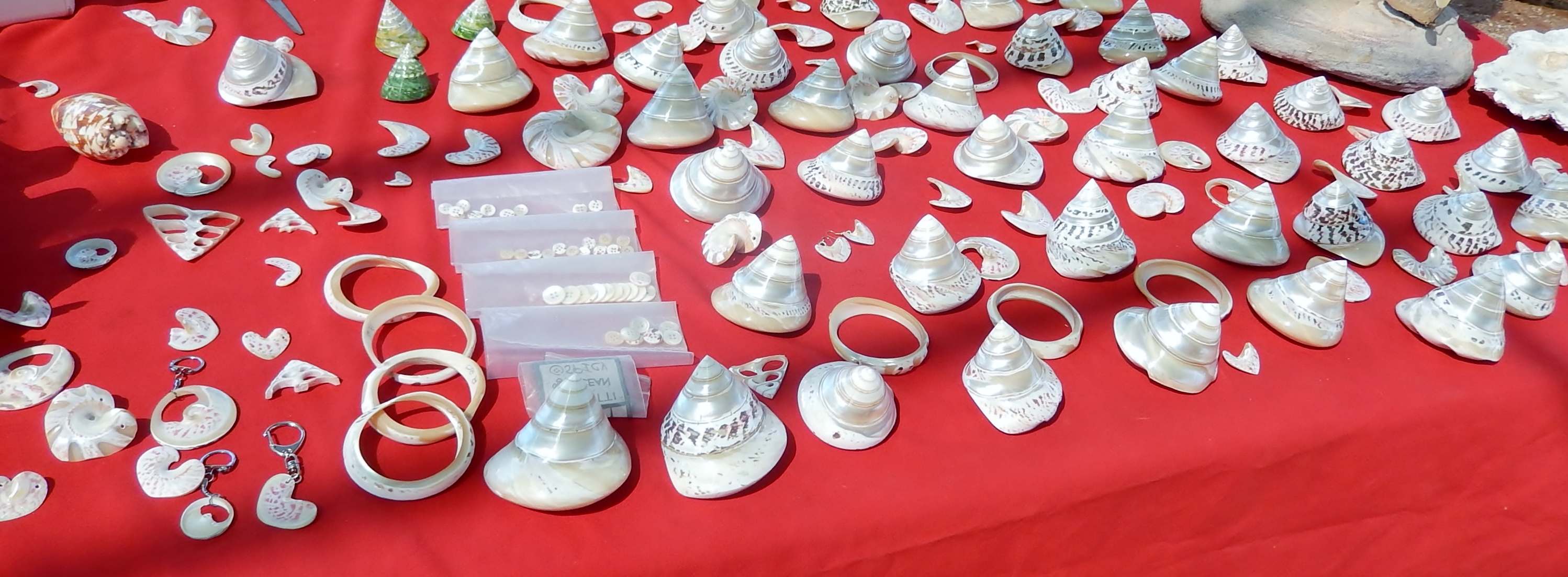
Trochus Shell jewellery for sale at One Arm Point, WA 2016-05-27
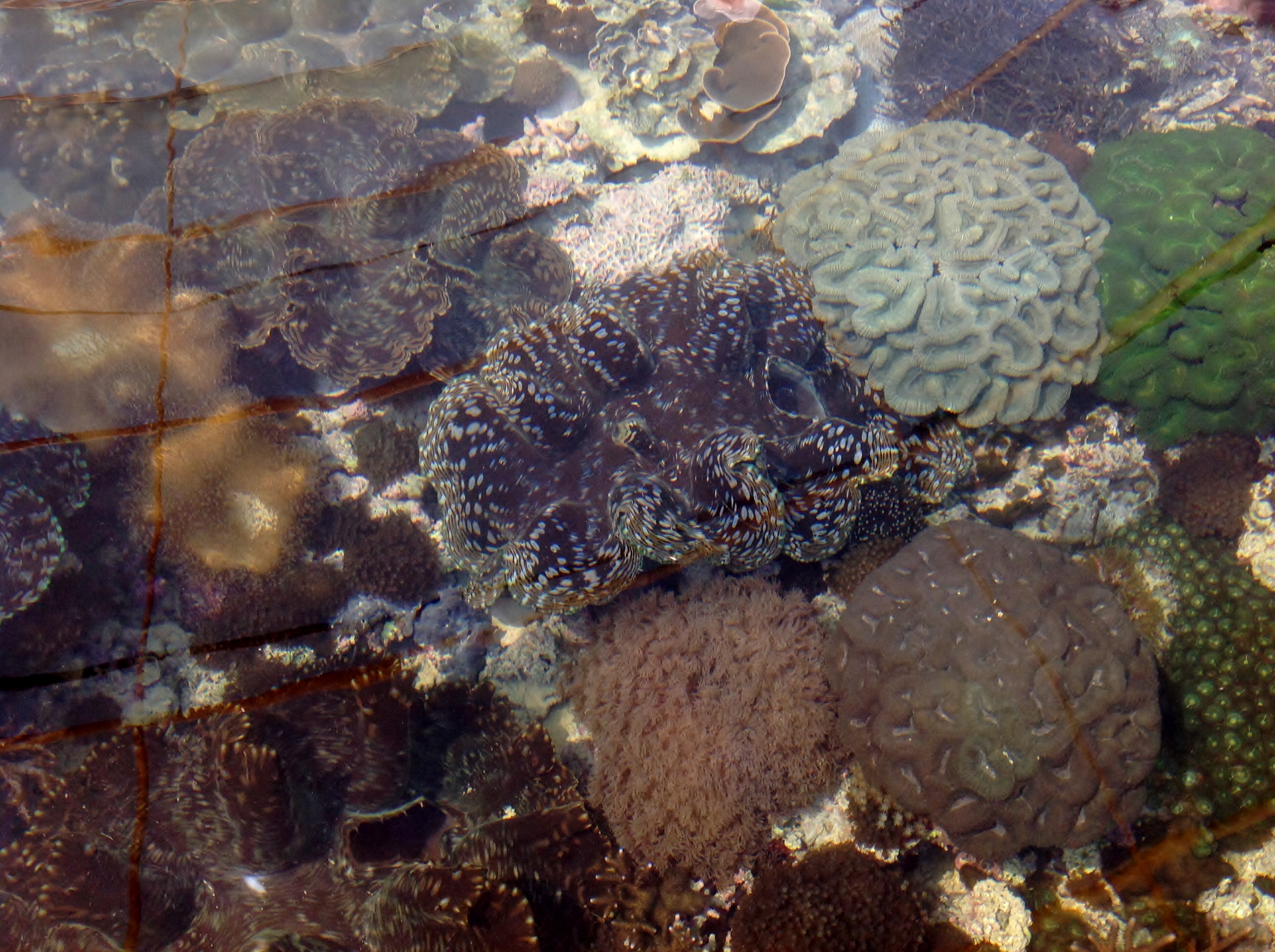
Our young guide introduced us to the Bardi way of measuring the seasons. There are six in their calendar – related to food, flowering, fish biting, water availability, prevailing winds, and so on. So they are very in touch with their fish and their breeding habits among the mangroves and waters of King Sound. For example, we learned that at about twelve months old, Barramundi gradually change sex. We got up close with clams, anemones, sea stars and other strange reactive sea-life. The Archer Fish was a big hit, it feeds at the surface and spits out a stream of water when it thinks prey is near. And of course the Clown Fish (as in Finding Nemo) and the turtles were a crowd favourite. Hard to photograph with the sun reflecting off the water of the large round breeding tanks.
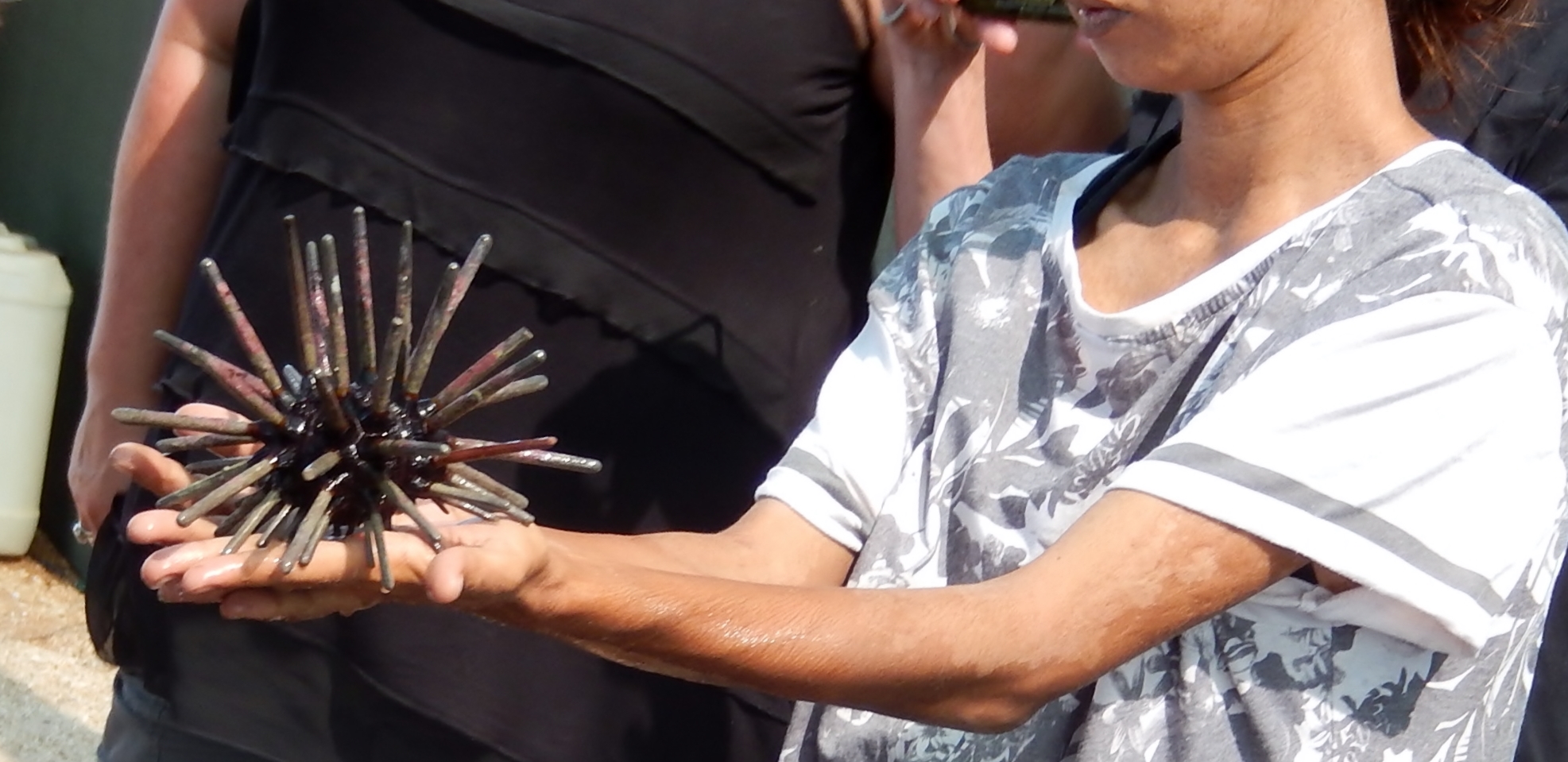
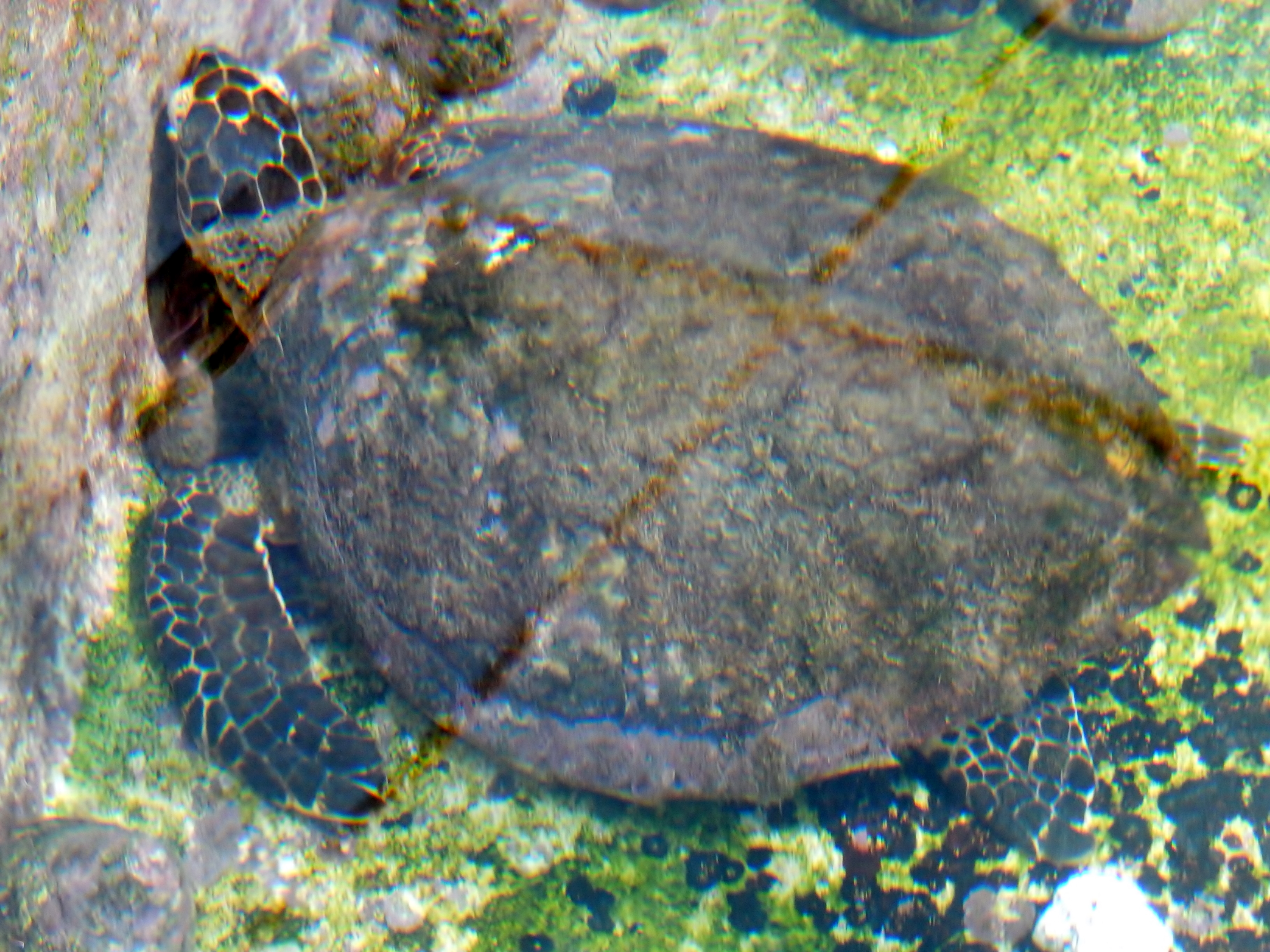
I queried why all the homes were of corrugated iron, and of course, there is a sensible reason which extends beyond the transport problems. They are using Colorbond Steel, which does not require painting, heats up in the day, and cools quickly at night – so is a better heat conductor than brick, which cannot “breathe” in this way. The frames are steel, to survive termites, and the internal walls lined with gyprock. So after all, not such an oven as I imagined. There are really only two temperatures in this part of the world – hot and hotter.
After a delicious outdoor picnic lunch (Don had brought all our food and refreshments with him – no nicking down to the take-away shop in this part of the world), we travelled on to Cygnet Bay Pearl Farm. We had seen their retail outlet and showroom the day before, but this is where it all happens. We had another lovely talk on their history, how pearls are cultured, how to evaluate pearls, and passed some around – although all were accounted for by the time we left! If you are planning on buying any, their website spells out all the differences here.
By the way, the Cygnet was one of William Dampier‘s vessels. I mentioned him in an earlier post. Not much ingenuity in European place names on the Western Australian coast. But here is an interesting place name – the Buccaneer Archipelago – a group of islands off this coast which start around here. The high tides of this area create such fast moving water that the pearl farmers use old railway wagon wheels as anchors on the ropes holding the oysters in place against the drag. These king tides also create a local phenomenon called the Horizontal Falls, which does basically what it says on the packet . . . the waterfalls run horizontally compared to vertically. This natural wonder is best seen by taking a floatplane tour, which we are not doing on this occasion. Some of our group, however, have signed up for the optional Giant Tides Cruise that will take them through the Sunday Island group to see how the powerful tide creates whirlpools and standing waves.
The rest of us cross over the peninsular to Cape Leveque / Kooljamon. This is such a beautiful area. Pristine water, blue skies, stunning rocky outcrops, white sands, red contrasts. Only the sounds of nature and the surf lapping in and out. We have time for a quick swim in the warm waters, then I walked along the sand and over a hill to see what was on the other side. More unblemished coastline. Just so, so divine.


We started out around 6.30am, and it is around 4.00pm when we re-group at Kooljaman resort. Everyone else is making the return trip in the 4WD, which will need several hours of travelling over the same road we came up. When planning this trip, Bill and I had already decided to come back by light plane, and it turned out to be a fabulous choice, well worth every extra cent.
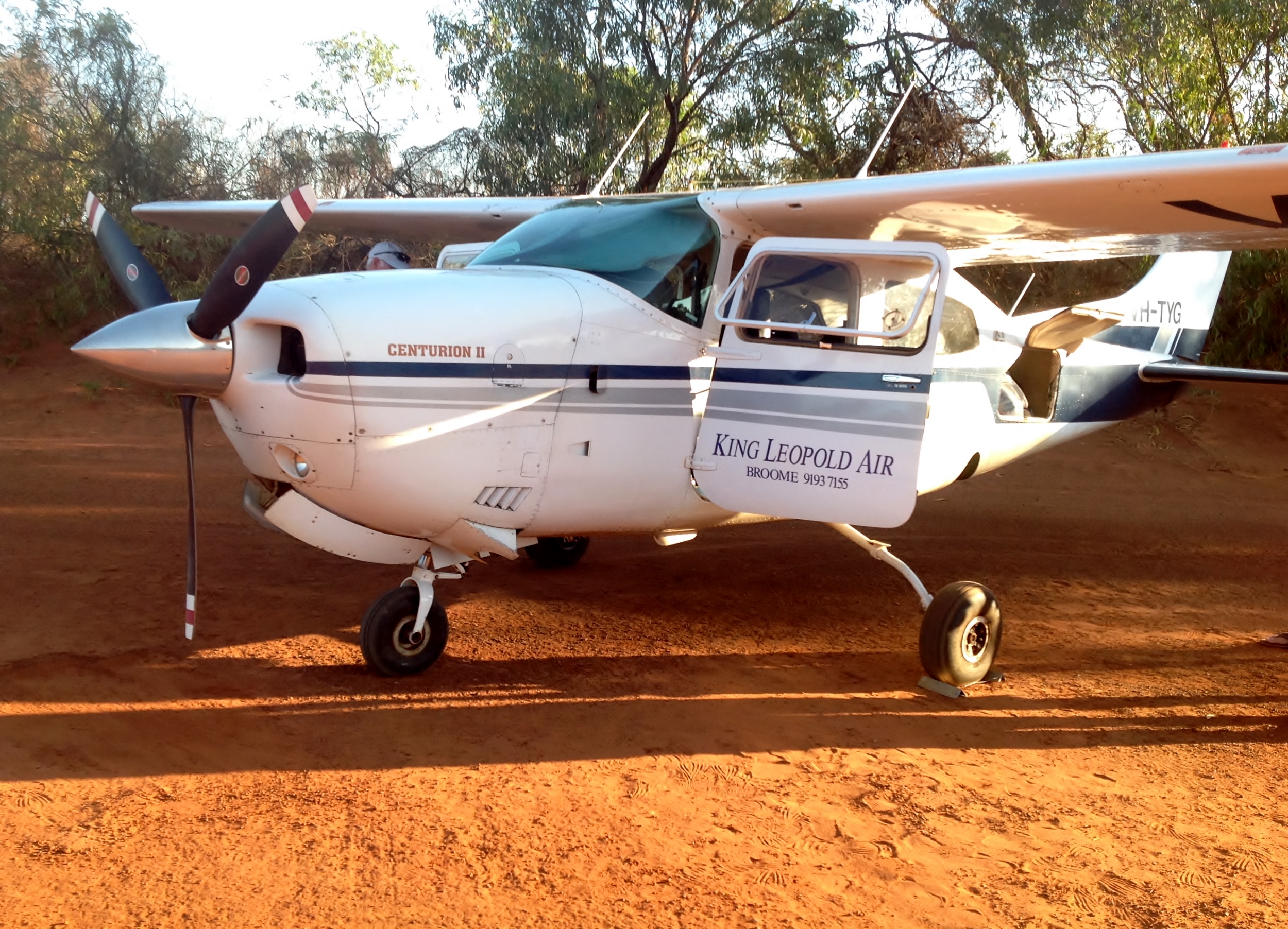 It’s a six seater Cessna 210, captained by the very capable Shelton Tipping of King Leopold Air who keeps in contact with us by headphone. We are joined by three German tourists who I had spoken to earlier on the beach. For a good part of the trip we fly at only 500 feet, so we get a great view of the coastline below us, and as an added bonus, the sunset follows on our right hand side. I’d flattened the battery on the iPad by this stage, so all of these photos are taken on my smartphone. This is just a sample 🙂


Bill had cleverly preserved his camera battery, in order to capture these videos of take-off from the Kooljamon strip and landing at Broome, which occurred right on our 5.30pm deadline.
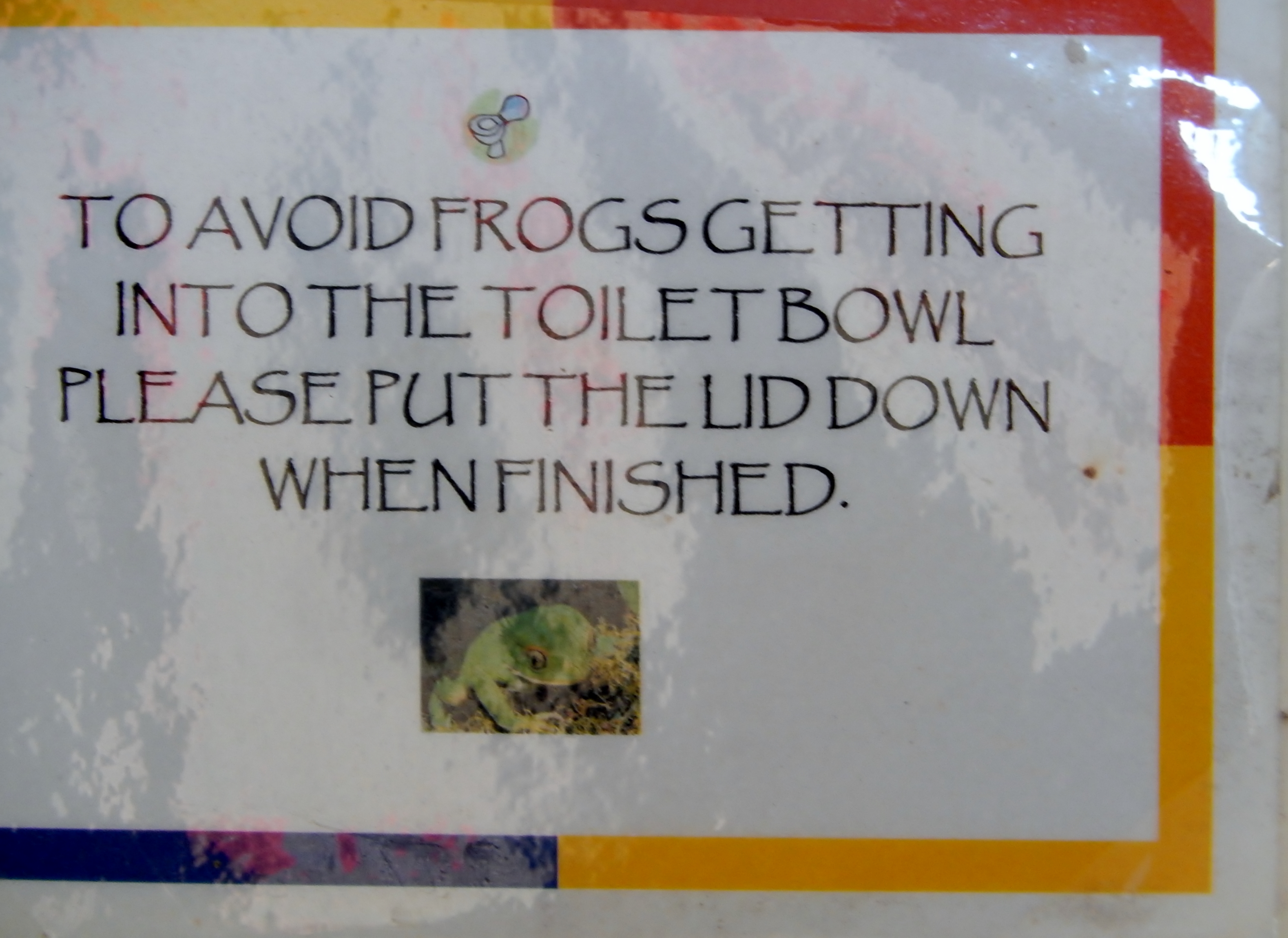
And, as a random photo from the day, I offer this in the “lid up?” or “lid down?” debate . . .
Distance log:
Broome to Cape Leveque and return: about 450 klm
Running Total = 7130 klm (approx) or 4430 miles.
For Reference: We booked our tour through the Australian Holiday Centre.
 GWEN WILSON, Author, aka The Reluctant Retiree
That has more than whet the appetite to see this part of the world.
Great descriptive coverage, and fabulous images to boot. Thanks Gwen
Trio booked today!!!
LikeLike
Oooh, I’m envious Bev. We’ll have to share a wine or two when you get back and you can tell me how it was for you xxx Gwen
LikeLike
This is an amazing post documenting an incredible adventure. For many us, Australia might just as well be a planet in outer space with the chances of us very visiting there being slim to none. I know at this point in my life I will never get to Australia but I remember what seems like a hundred years ago my parents traveled to your remote island continent to visit relatives. At the time I had only recently become aware of the fact that we had Sicilian cousins who emigrated to Australia. Some years later they came to visit us in NY and we were enthralled with their unique way of speaking – Sicilian with an Australian accent! I also remember they brought Vegemite (something indescribable and unforgettable). Your blog is strikingly beautiful and informative; I read it it all the while wishing I was there and that, dear Gwen, it a job well done. Thanks for transporting us to another time and place. You are an excellent tour guide and even better company! 🌟
LikeLiked by 1 person
That particular trip was memorable. We started in Sydney, travelled on the Indian Pacific across country to Perth (that’s like New York to San Francisco), had some day trips down to South Western Australia, then flew to Broome (from where we did the Cape Leveque day trip). Flew on to Darwin via Kununurra. A day trip out of Darwin included Kakadu. Then on to the Ghan from Darwin to Adelaide via Alice Springs. We left the tour there, stopped with friends in Adelaide, then headed to Kangaroo Island for a couple of days. Finally back to Adelaide for a bit, and a flight home to Sydney. There are many posts in my blog about it all.
I admit Vegemite is an acquired taste, but it is very good for you. It first emerged during WW1. Just last week, I had it with banana on toast for breakfast 🙂
LikeLiked by 1 person
I seem to recall not exactly loathing the Vegemite but it was close. One tiny taste was all I cold manage but at least I can say I tried it. I remember years later finding another jar of the stuff in the back of the cupboard which I had forgotten about. To my amazement it looked remarkably like a new jar which made me ask … not for the first time … “What’s in that stuff?!?” 😆
LikeLiked by 1 person
I didn’t mention in my previous comment that the Indian Pacific and Ghan are trains that take three nights and two nights respectively to cover their distances. But perhaps you knew that already.
Vegemite is a by-product of beer brewing. The yeasty extract contains salt, malt and vegetable extract. It has high levels of glutamic acid, which is know to have heart health and muscle development benefits. That causes the flavour which is like beef bouillon, and is slightly bitter (umami). It was first put on the market shortly after WWI as being good for children, but didn’t take off until a catchy jingle was recorded. Most new users make the mistake of spreading it on thick. A little goes a long way. https://www.bing.com/videos/search?q=we%27re+happy+little+vegemites&ru=%2fsearch%3fq%3dwe%2527re%2bhappy%2blittle%2bvegemites%26form%3dANNTH1%26refig%3df41fe3e7102447229bae6b4974a726e3&view=detail&mid=C32003ECAB317607CBFFC32003ECAB317607CBFF&&mmscn=vwrc&FORM=VDRVRV
LikeLiked by 1 person
A little goes a long way!
LikeLiked by 1 person
What an epic trip Gwen. I’d love to visit WA one day and it’s so useful that you pinned a map of where you visited. Returning on the Cessna must have been a thrill and to witness all those magnificent sunsets. Thanks for sharing your past travels.
LikeLiked by 1 person
I was so happy we chose the flight to return. Such an experience! This was one day of a 22 day rail trip around Australia. You might care to have a look at the other posts. You should be able to go back or forward from this one.
LikeLiked by 1 person
I definitely will take a read of them all when I have time. Sounds like a marvellous trip!
LikeLiked by 1 person
It was. It really, really was.
LikeLiked by 1 person
Well, that’s another place I’ll not live long enough to see. So thanks very much for the trip. I really love the ones you took from the air of the bright red edge of the desert at the beach.
LikeLiked by 1 person
That was an amazing end to an amazing day. I was so blown away I was texting photos to a friend even as we were in the air.
LikeLike
Magic.
LikeLiked by 1 person
Reblogged this on The Reluctant Retiree and commented:
We are just home from a friend’s 88th BIRTHDAY, at which one of the guests talked about hopes to travel to the Kimberley Region of Western Australia. Which put me in mind of the day we travelled to CAPE LEVEQUE. Many of you commented at the time, but I thought it worthwhile revisiting our big day out…
LikeLike
Fascinating place and flying in a tiny aircraft – what fun! I can see why the shell altar is a draw, looks both unusual and impressive. By the way did anyone suffer from air sickness in such a plane as it looks like it could’ve been more like a rollercoaster ride? 😉
LikeLike
The altar is certainly worth visiting! And no, the plane ride was very smooth with a super light landing. We were thrilled with it. Well worth the add-on cost.
LikeLike
Yes, I think you’re right about worth the extra cost as it’s something that will really stick in your memory. No point in quibbling about cost when special opportunities arise. Great trips are made of great memories, aren’t they? 😊
LikeLiked by 1 person
I totally agree, and although I have been known to be VERY careful with my money in the past, I am more relaxed now. When it comes to travelling, my theory is that you may only pass this place once in your life, and if you can’t afford a splurge here and there, then you really shouldn’t be leaving home in the first place.
LikeLiked by 1 person
Pingback: Bye Bye to Broome, Darwin is calling – May 2016 | The Reluctant Retiree
More impressive writing with good layout. You must take copious notes, Gwen.
LikeLiked by 1 person
Thanks Derrick. I bash my notes on the iPad while the guide is speaking. I can almost type and sight-see at the same time, but it is disconcerting when the Apple software comes up with another word and inserts it before I notice. I can cut and paste from the iPad to the WordPress software, and reword from there. Then I do some fact-checking before I publish. And you well know the value of photographs for triggering memory. I enjoy introducing these parts of Australia to my overseas followers, but best of all, I get to keep it as an on-line diary. That’s well worth the outlay and effort.
LikeLiked by 1 person
Interesting place!!!
LikeLiked by 1 person
Had to keep reminding myself that this was all in one day!
LikeLiked by 1 person
It was a big day. A lot of time on the road of course, but that had its own fascination. And the flight back was the cream on the cake, and then still back in time to enjoy dinner and a drink a at the hotel. Amazing country, we are so glad we did it.
LikeLike
An adventurous day indeed.
LikeLiked by 1 person
Hi Lynda, thanks for dropping by! I thought you might be interested in the story of the Broome Senior High. I am sure they could do with a teacher of your talents up there. You could be the primary school inspiration that spurs the students on to greater heights cheers Gwen
LikeLike