Sunday 15th October 2023
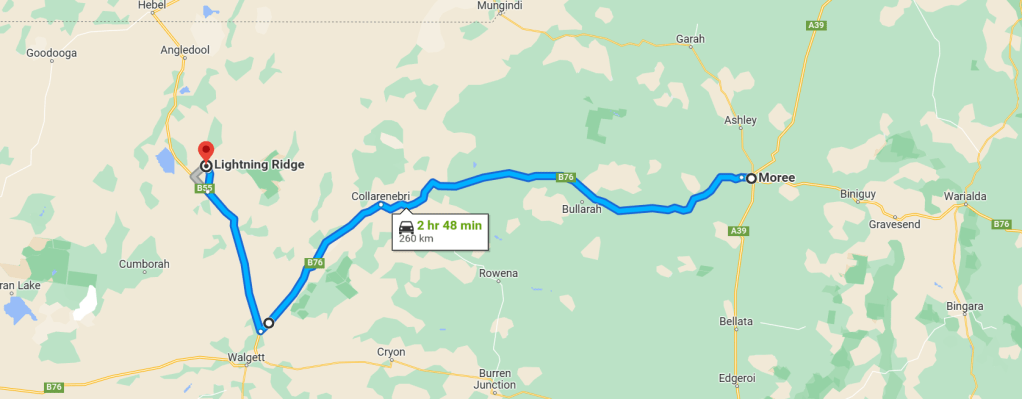
After a light continental breakfast and chat with a Canadian family who are returning to Melbourne after a holiday in Queensland, we topped up on fuel and pulled out of Moree around 9.30am Sunday morning heading west on the two-lane Gwydir Highway, destination Lightning Ridge via Collarenebri. As usual I took the first drive shift. The speed limit most of the way is 110klm (about 70mi), but the bitumen – like many other roads we’ve been on so far – is flood damaged, so there were places it was a bit like riding a bucking bronco.
The land is flat, wide-open and scattered with scrubby-looking eucalyptus trees. Not much livestock in evidence in roadside paddocks. Ninety minutes later as we pulled into “Colly” a sign informed us we were at 150m (500 feet) elevation. Talk about stating the bleeding obvious!
The population of Collarenebri is around 700 and any hope of dropping a tourist dollar was destroyed when the only things in town were a pub and a service station, so we settled for using the public toilets and swapping drivers. The next stretch of the Gwydir Highway was a little better, the trees a little thicker, and we saw signs of moving into red dirt territory. We even saw two emus!
The next major town is Walgett, but our route required us to turn off a little before and head north to Lightning Ridge, and we pulled up at the tourist office around 12.30pm just as the Sunday markets were packing up. We’d travelled about 260klms / 160mi in those three hours.
Near the southern border of Queensland and located 768klm (489mi) from Sydney and 72klm (45mi) north of Walgett, Lightning Ridge has a population of about 1200 which is supplemented by over 80,000 visitors who arrive every year to either try their luck at fossicking or to see what an outback mining town is really like. Lightning Ridge is particularly special because it is now the only place in Australia and one of the few places in the world where the precious and highly prized black opal is found. It is also an important paleontological site, although that’s something we didn’t explore. It is also a rather weird place. You have to have a certain outlook on life to enjoy living there, and clearly many do. This is a place people can drop off the map and march to their own drummer.
The woman in the tourist information centre was such a fount of information I couldn’t remember everything! However, one of the features of Lightning Ridge is “car door” self-driving tours. Each is marked by coloured car doors (green, blue, yellow and red) from wrecked vehicles, erected roadside and painted with numbers corresponding to sights on an accompanying handout. Using this you can set off and explore various opal fields and points of interest.
After checking in to our log-cabin style motel room we headed off on the Yellow drive. This drive takes you through a harsh landscape dotted with piles of light-coloured sandstones tailings and shanty houses built of “whatever”, where miners live off-grid using solar power, fuel powered generators, wind power, and even candlelight. This area is called the Three Mile Opal Fields. Apparently there are more than 200 distinct opal fields on the ridges of rocks surrounding Lightning Ridge. The rocks are from the cretaceous period for those of my readers who are geologists. It was never my go I must say. In fact, I passed up studying geography at school because I muddled it up with geology.
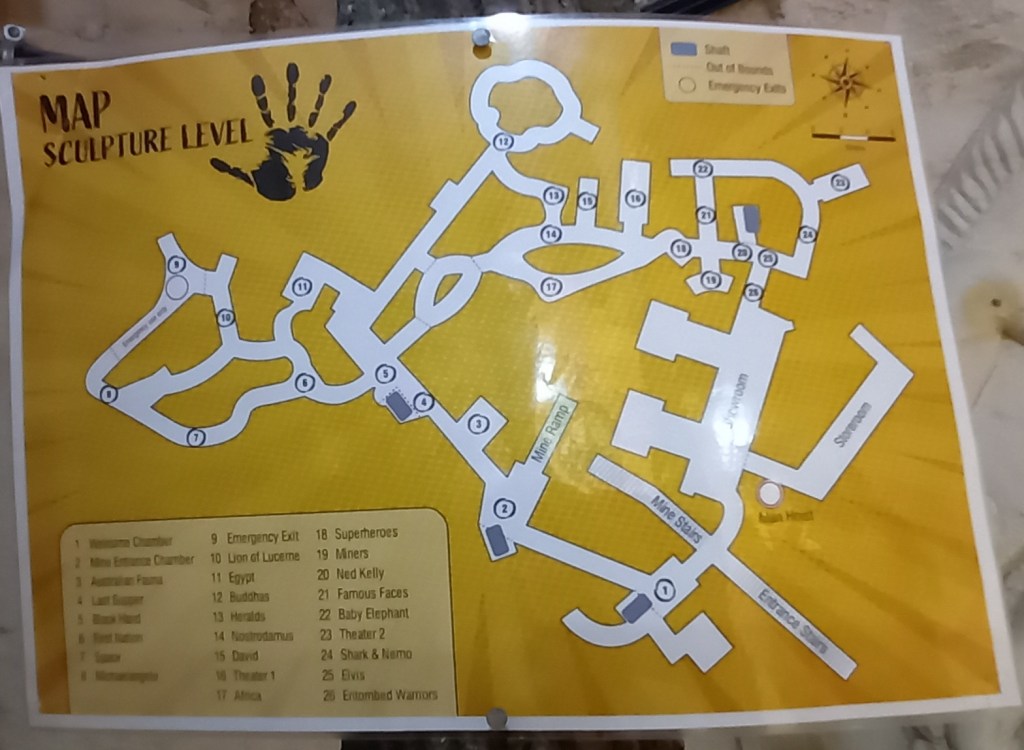
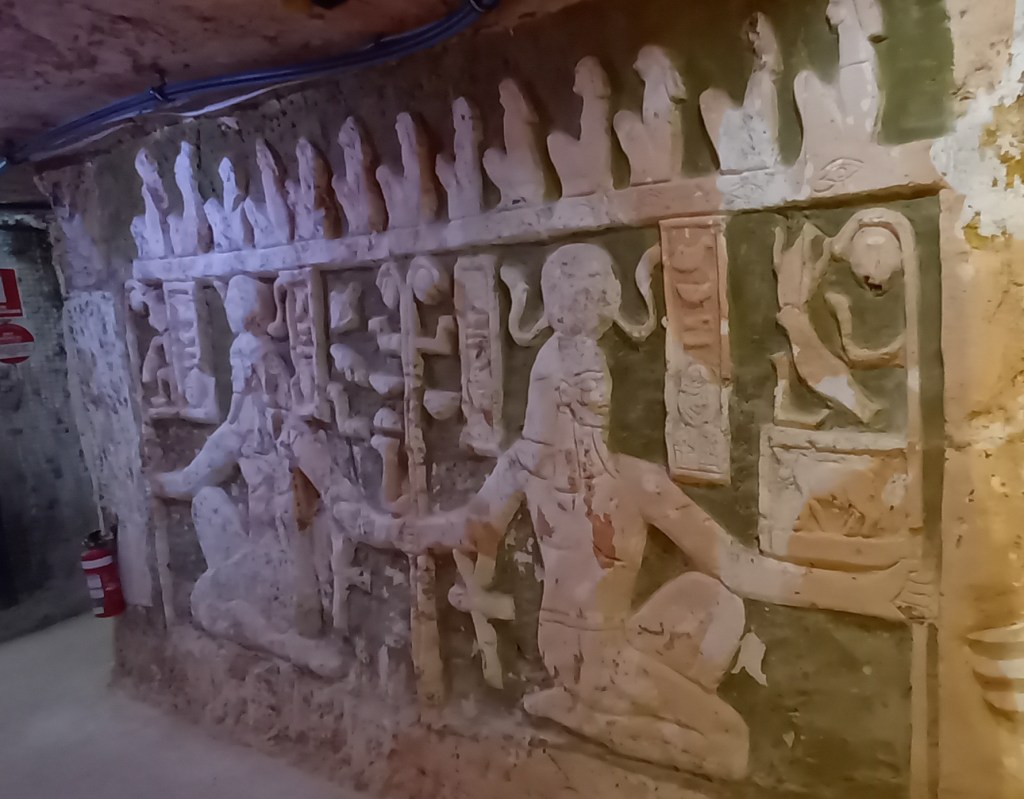
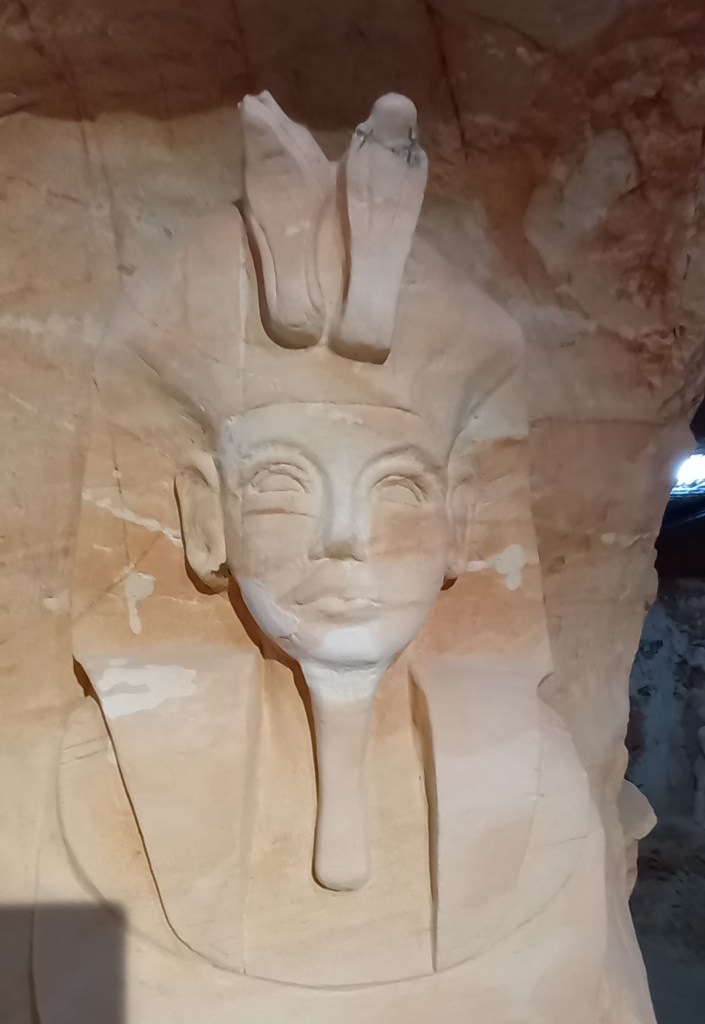
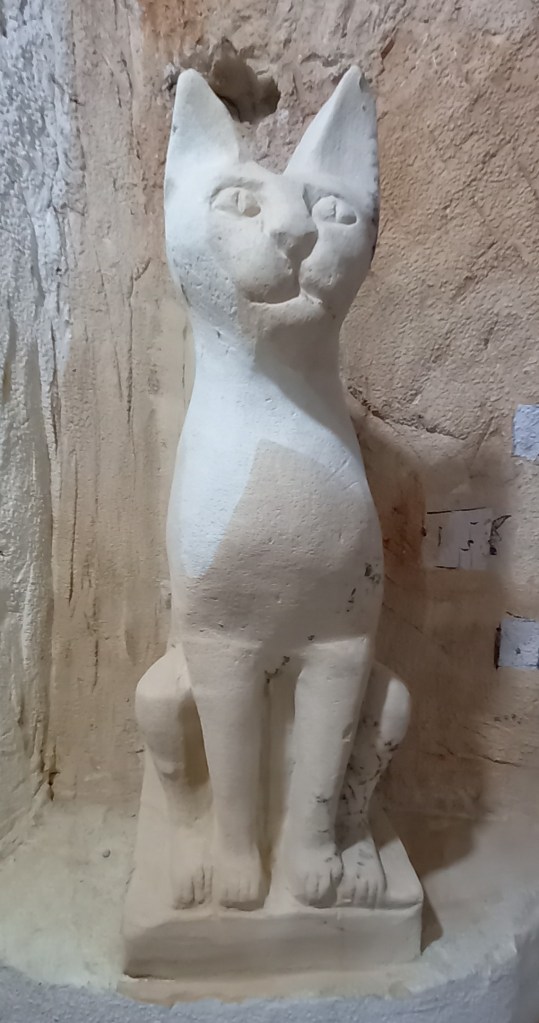
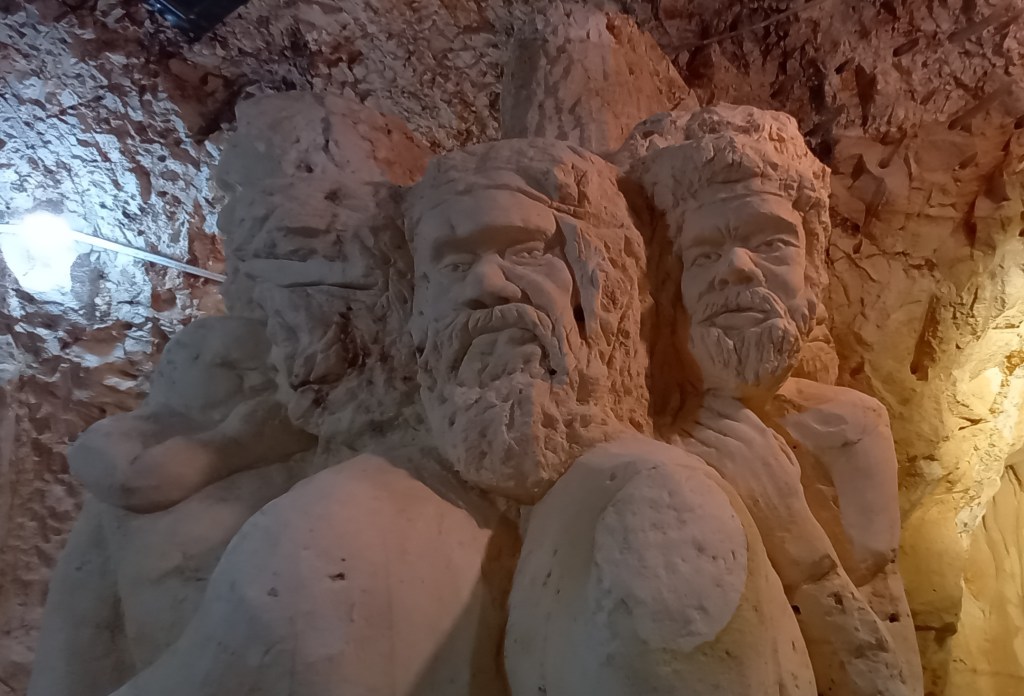
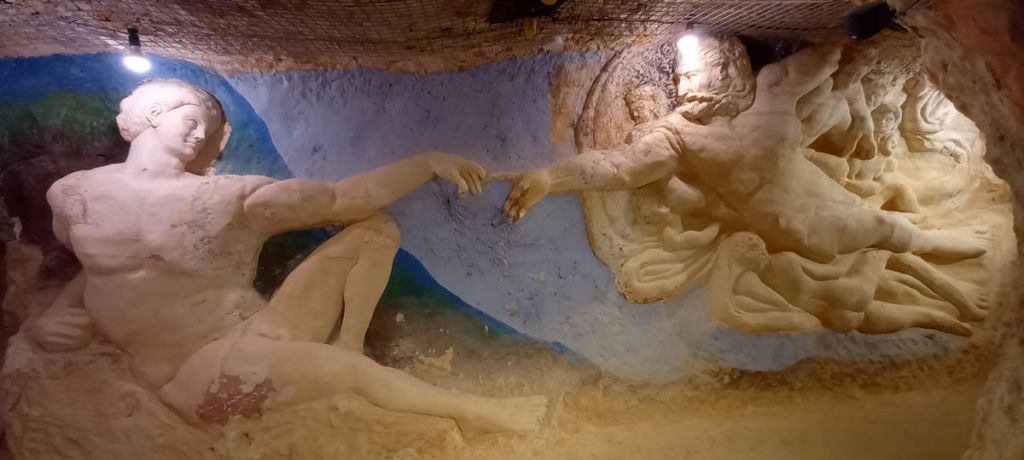
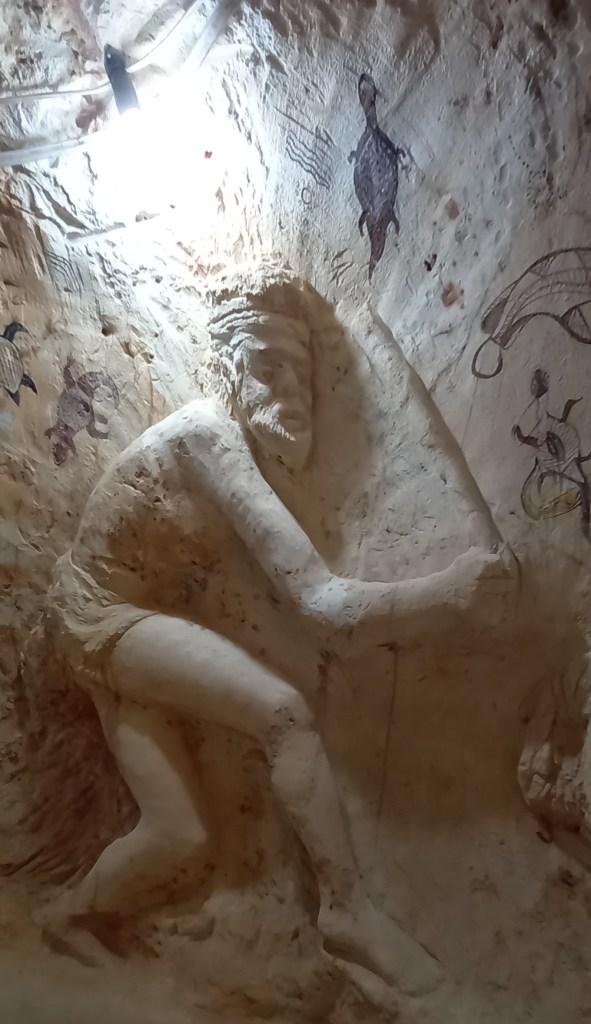
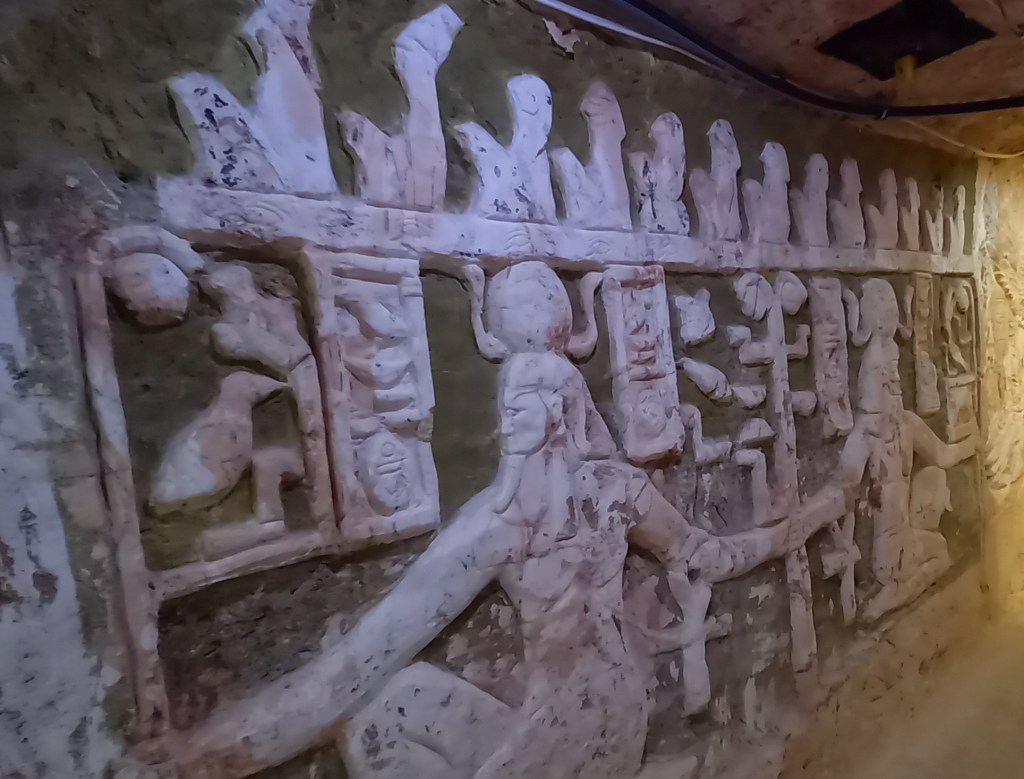
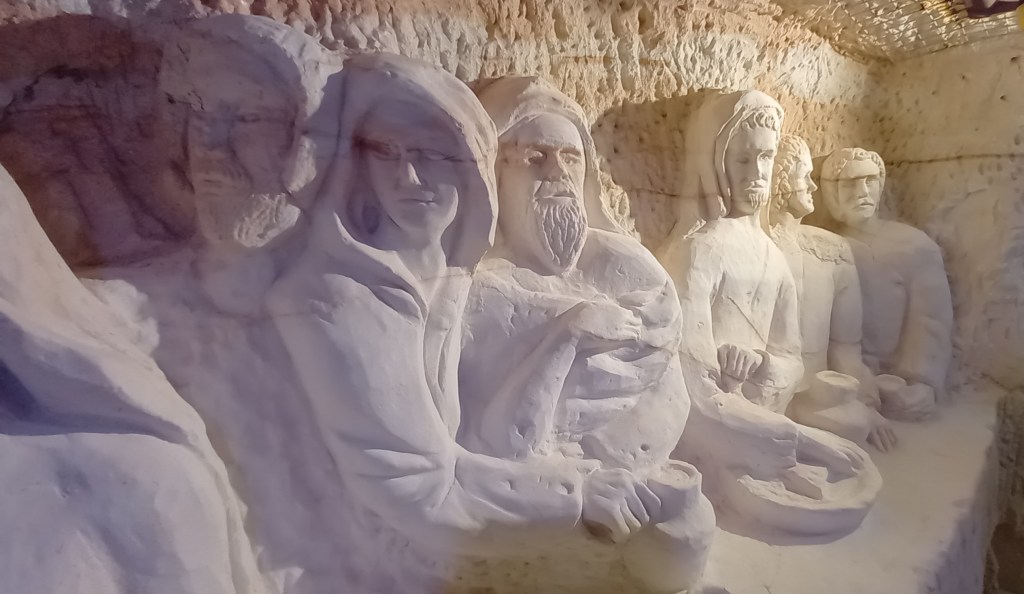
Without doubt, the highlight of this tour is the ‘Chambers of the Black Hand.’ This is both an opal mine and a sculpture gallery. Ron Canlin, a former Royal Marine originally from the UK, came to Australia in 1982 and bought an unwanted mine and tried his hand at opal mining, barely managing a living from it. It is possible to do a tour of his mine on a lower level 18 metres below ground (60 feet), but we stuck with the sculptures which are eleven metres (36 feet) underground, situated above the height where opal can be found. I can’t remember how many steps we had to descend – about 80 I think – and don’t forget you have to get back up them. There is a lift, but it is a bit of a secret. The entrance price is also a bit steep, so I’m sure if you said “it’s the lift or nothing” you would suddenly be shown where it is!
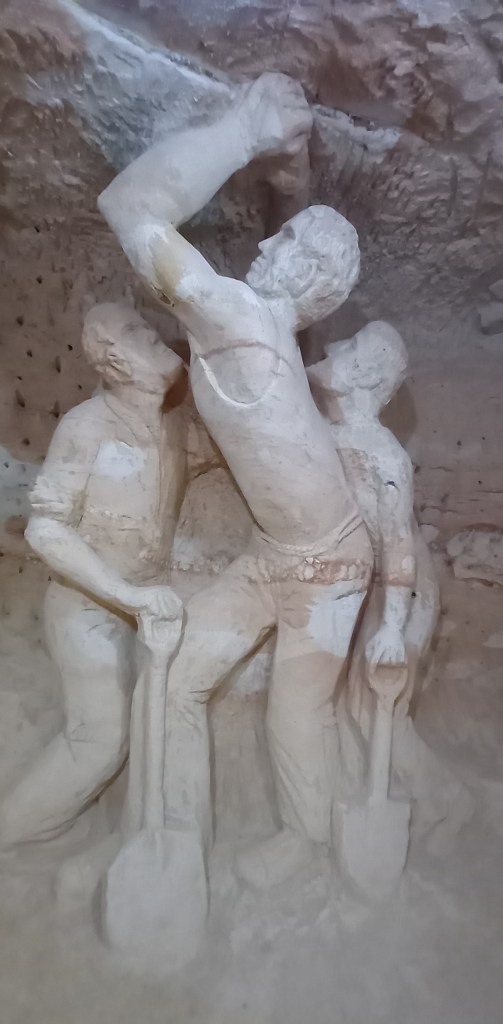
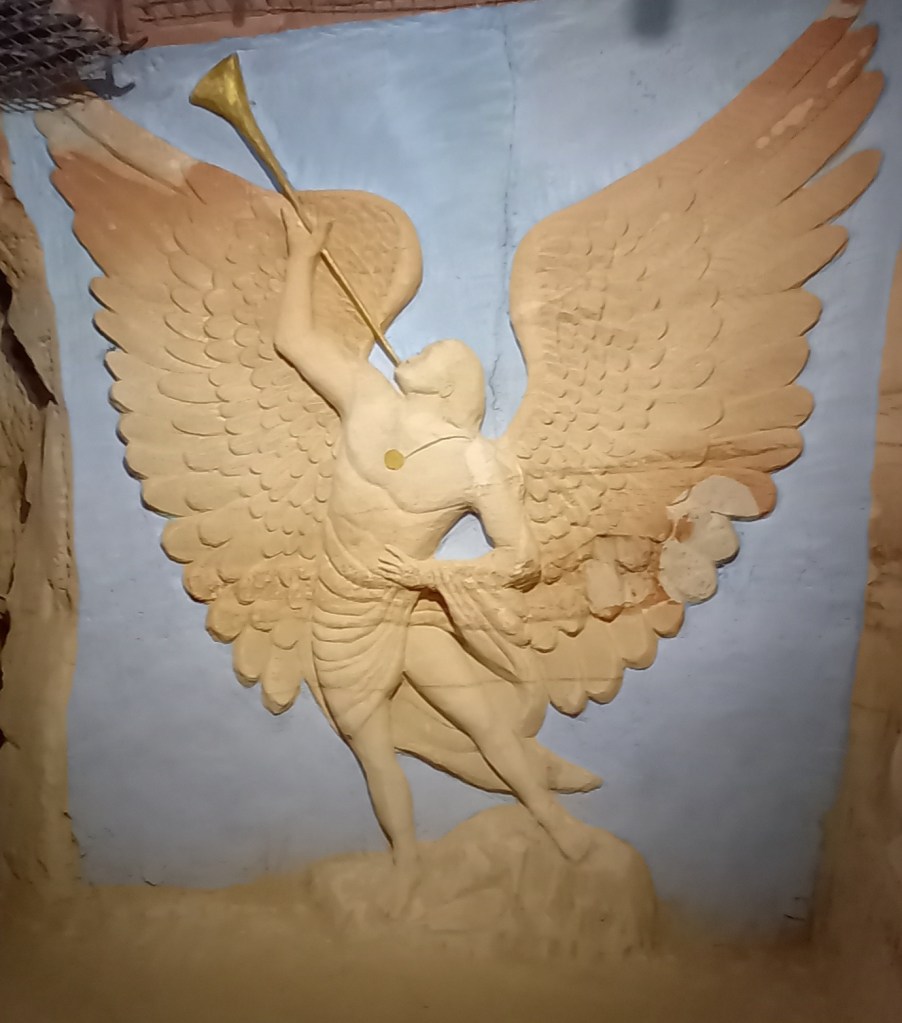
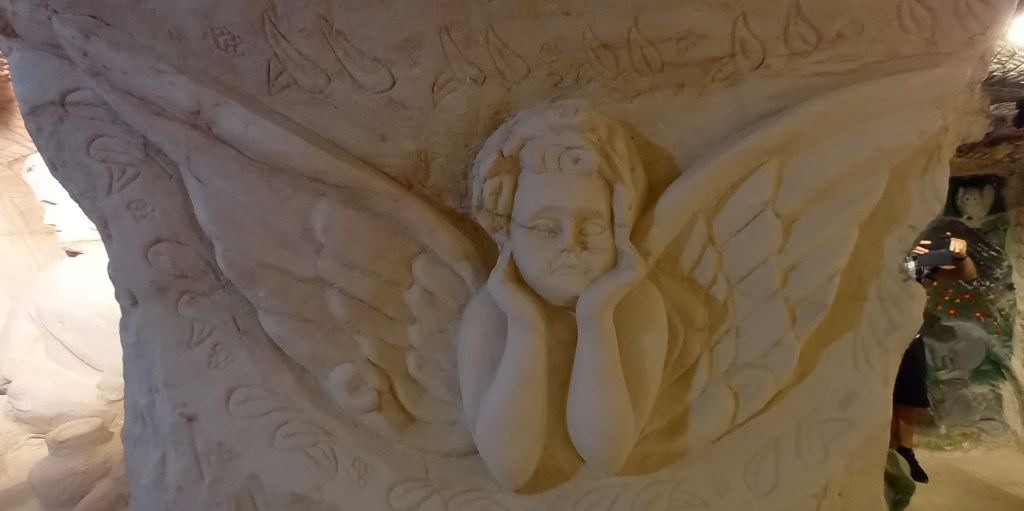
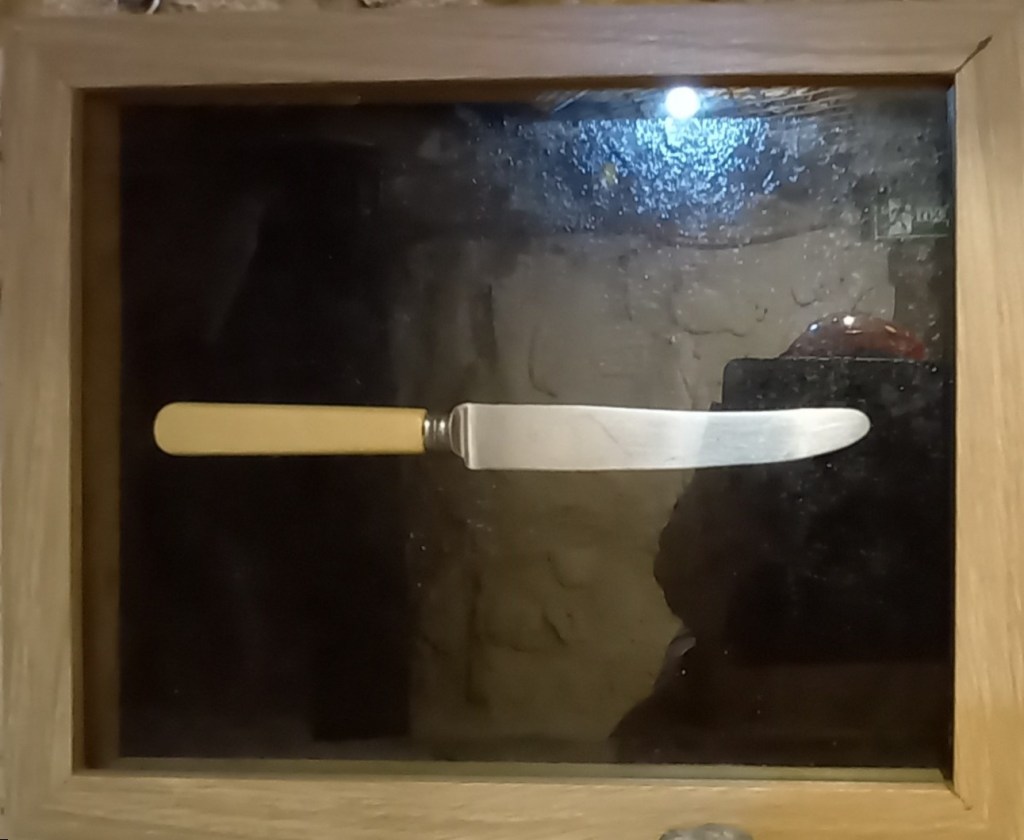
The story goes that when Ron’s wife died, one day (in 1997 I think) he found relief from his grieving by carving into the relatively soft sandstone rock walls with an old butter knife and the result is over 900 sculptures across 26 chambers featuring recreations of historical figures, eras, cartoon characters, animals, action heroes and famous faces – the list goes on. (Some were painted which I wasn’t much taken with.) I took many photos on this self-guided tour. The seventeen in the slideshow I include here are obviously some of my favourites, plus a couple of orientation shots, including a framed replica of the famous bone-handled butter knife.




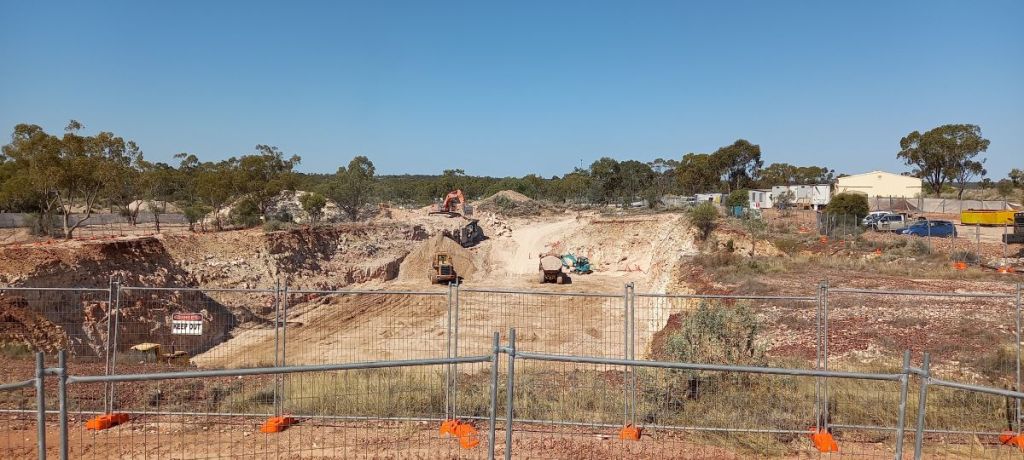
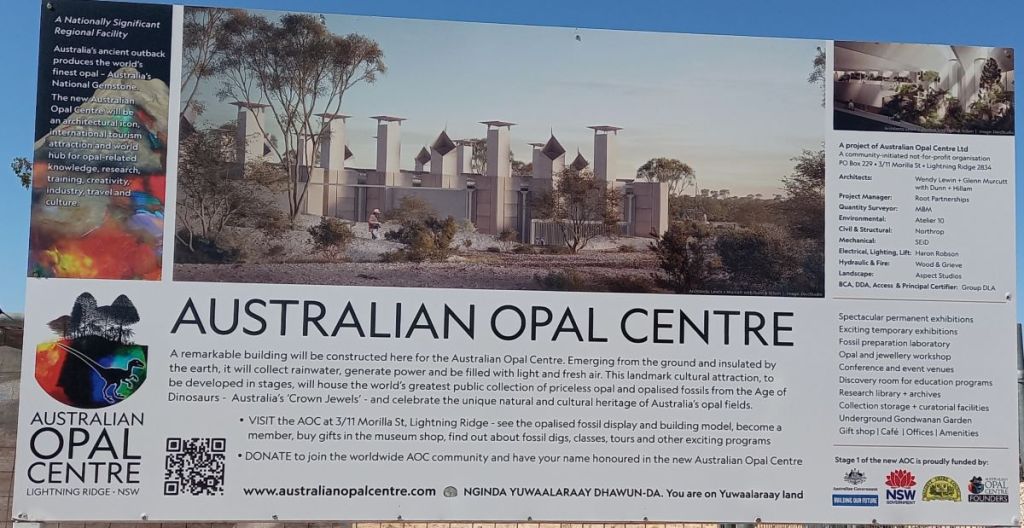
Not far away we came across the “new” Australian Opal Centre, which at this point in time, is one HUGE hole in the ground. Here we bumped into a chap who asked us, “are you one of the founders?” – “Ahh, no – what?” was the best we could answer. So! We didn’t mean to, but we spent the best part of 30-45 minutes hearing all about this business venture which is meant to create a not-for-profit national museum to preserve, display and research the greatest ever public collection of Australian opal, opalised fossils and the colourful history and heritage of the Australian opal fields. It’s been under development for around twenty-five years and it is still – as I mentioned already – simply a hole in the ground. So far the founding fathers tipped in A$1 million, and federal, state and local government funding A$19 million, but it’s going to take a lot more dollars to see this “landmark cultural attraction … housed in a remarkable building, emerging from the ground and insulated by the earth” come to fruition. The sign in front of the hole is meant as a leap of faith in my humble opinion.
I forgot to mention the fossils. 100 million years ago, dinosaurs roamed the lands around a great Australian inland sea. Giant sauropods, ferocious theropods and diminutive ornithopods shared this world with everything from crocodiles and turtles to tiny mammals, yabbies and snails. As well as dazzling opal, Lightning Ridge, once a forested plain near this ancient sea is famed as one of Australia’s most important dinosaur fossil sites. https://www.australianopalcentre.com/fossil-digs
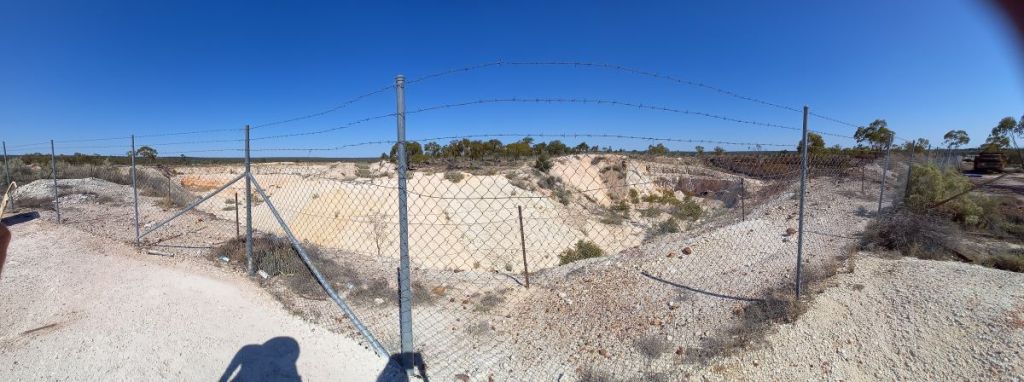
Just before bumping into this informative founder (I won’t name him for the sake of his privacy) we’d gone to the top of an incline which we thought was Lunatic Hill (is there only one in town, I wondered?) and through a wire fence looked down on an open-cut mine area which we understood had something to do with Nettleton, the second settlement on the diggings, and Ion Llewellyn Indriess, a prolific Australian author who wrote more than 50 books over 43 years between 1927 and 1969. Born in Sydney in 1889, Indriess lived an itinerant life in rural New South Wales, including mining in Lightning Ridge, before enlisting in WW1, seeing service in major battle areas, and, after recuperating from his wounds, once more took to the itinerant adventuring life before settling in Sydney in the late 1920s and marrying in 1932.
We didn’t quite get why the car door tour had brought us to this spot, beyond one of Indriess’ books being the autobiographical Lightning Ridge, published in 1940 and based on his time opal mining here – but it transpires that the above-mentioned founder was behind the erection of his memorial, and we were supposed to have continued on foot around the open-cut mine via Old Chum’s Track to view both the memorial and Nettleton. I’ve found a video of the track, and another blog post which elaborates on the story – read it here if interested – and have decided that, on balance, I can live with having missed the correct route instruction.
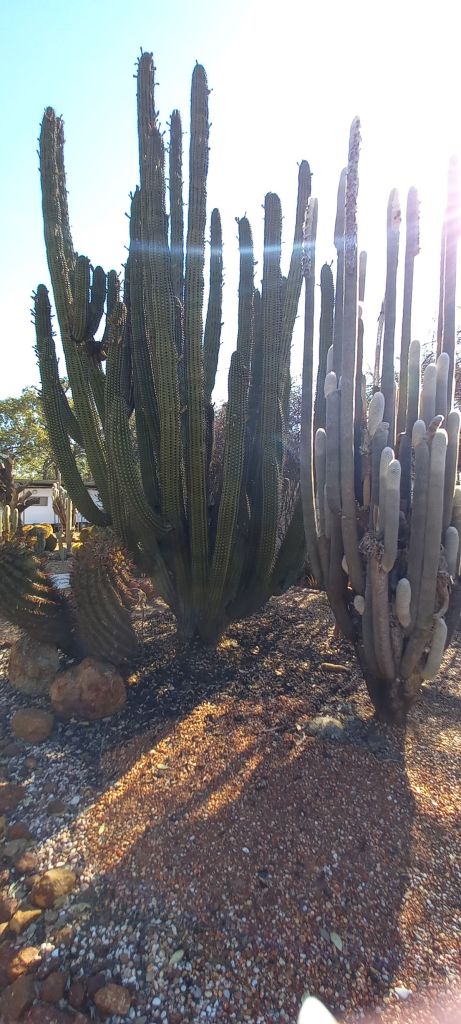
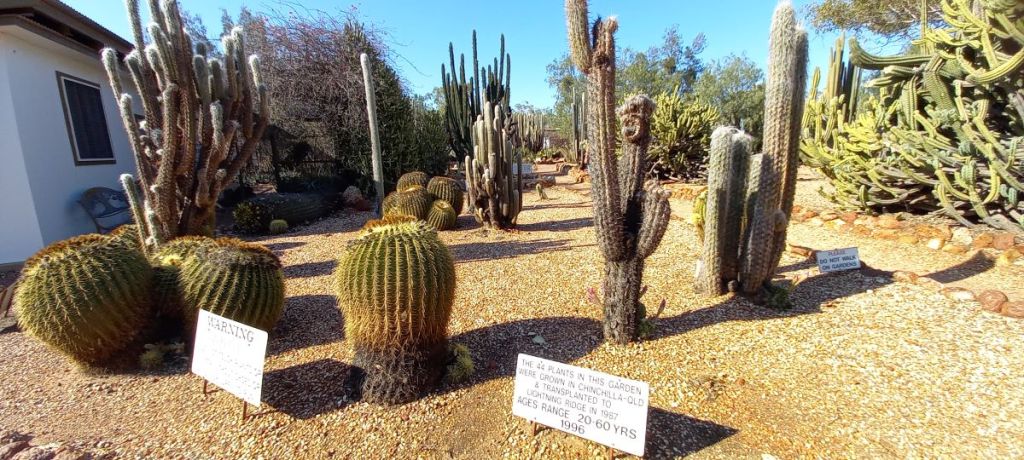
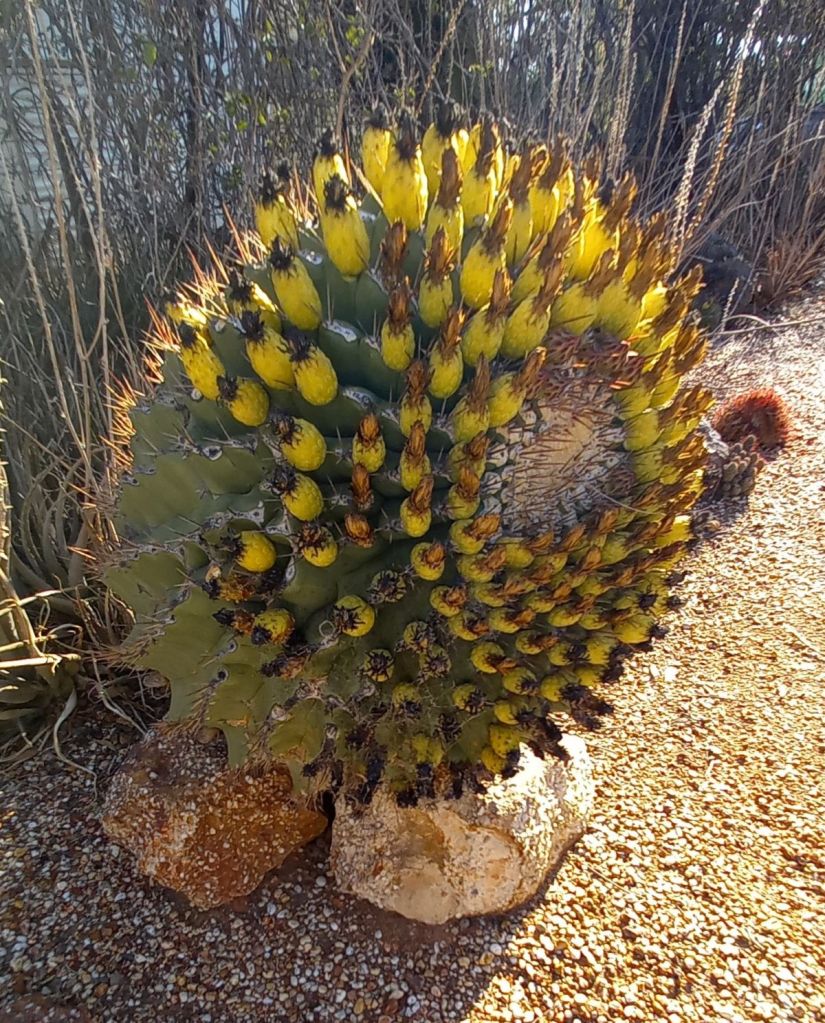
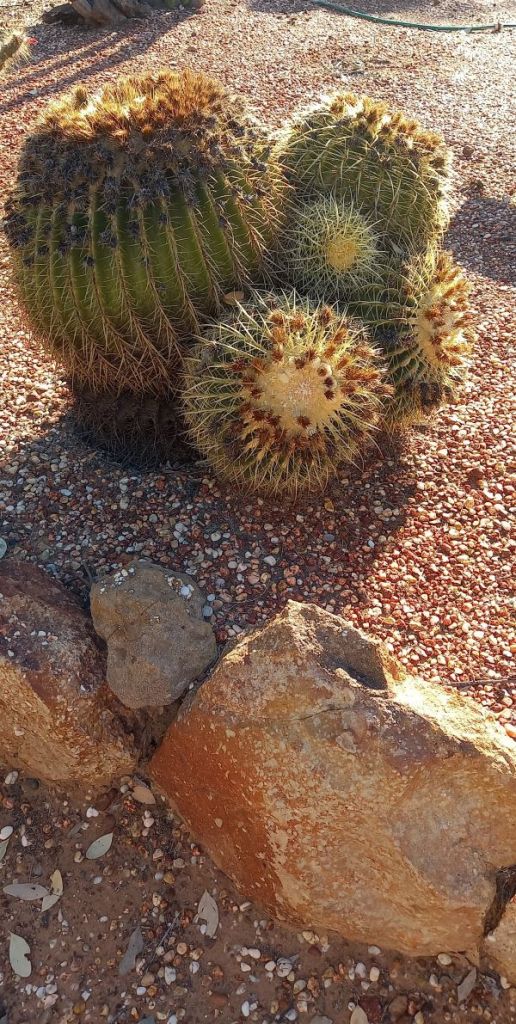
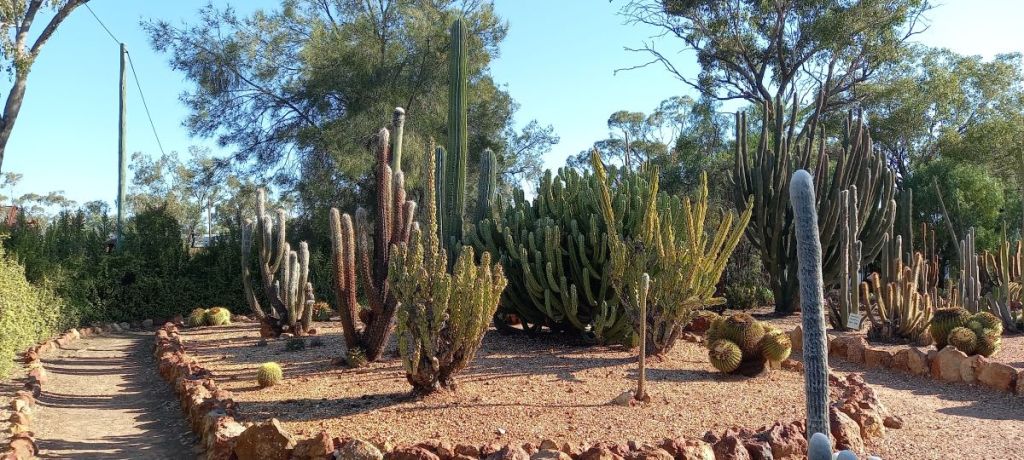
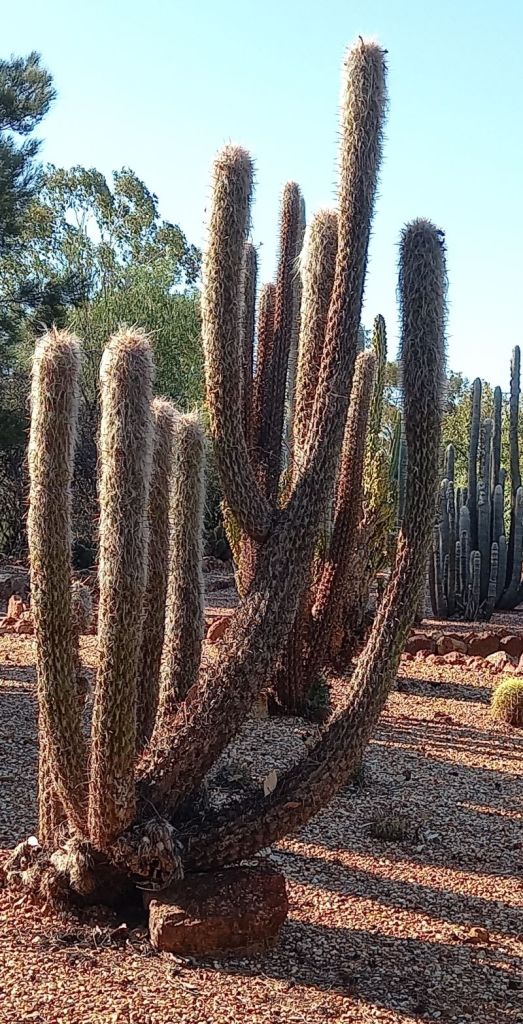
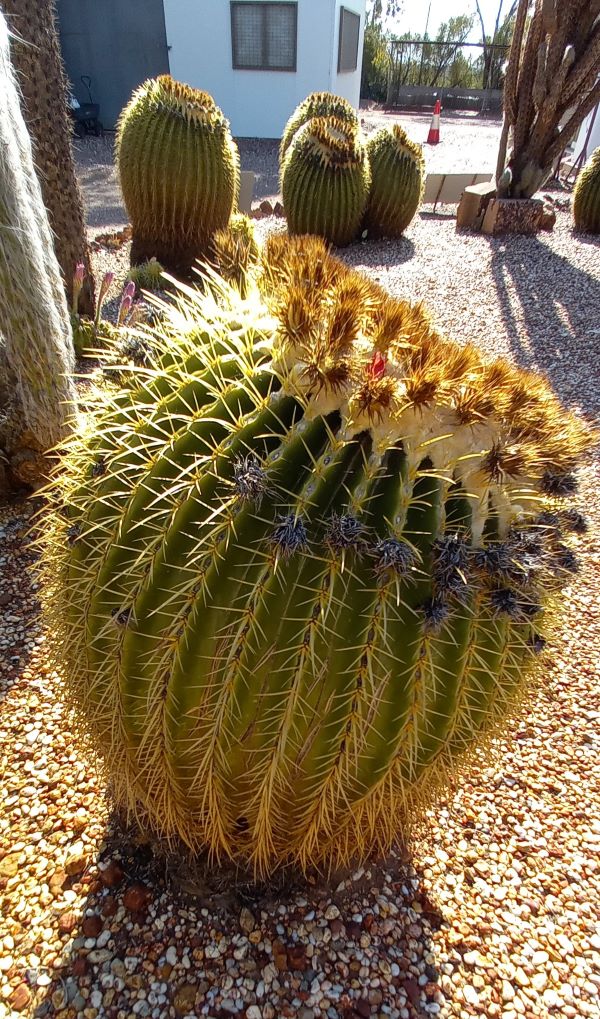
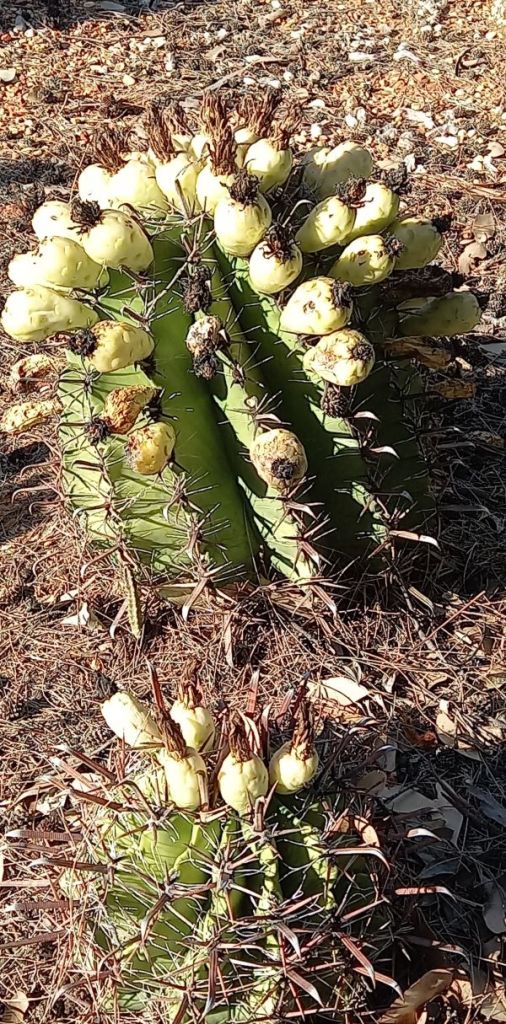
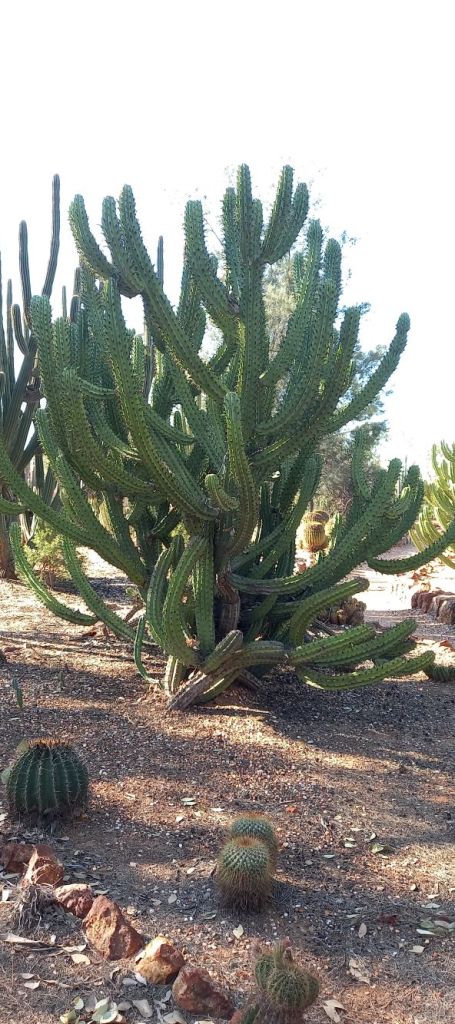
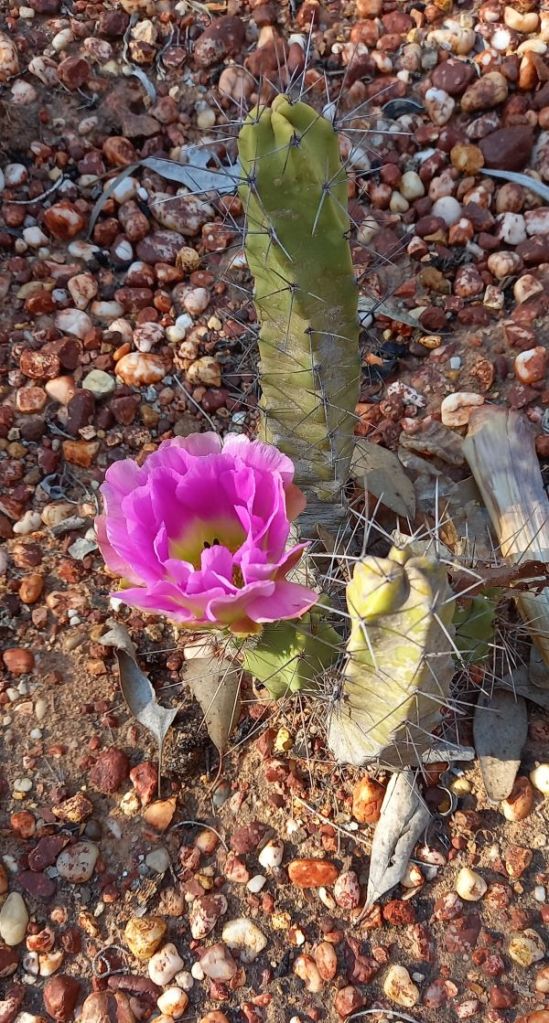
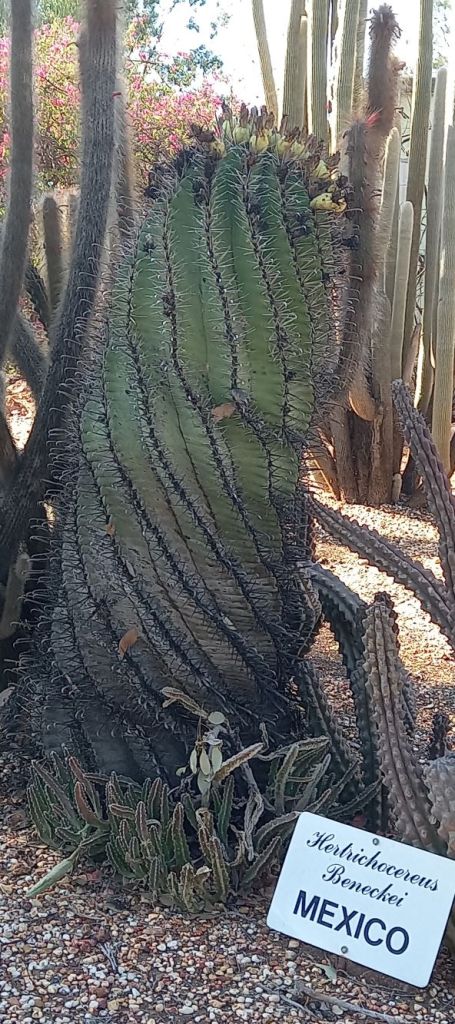
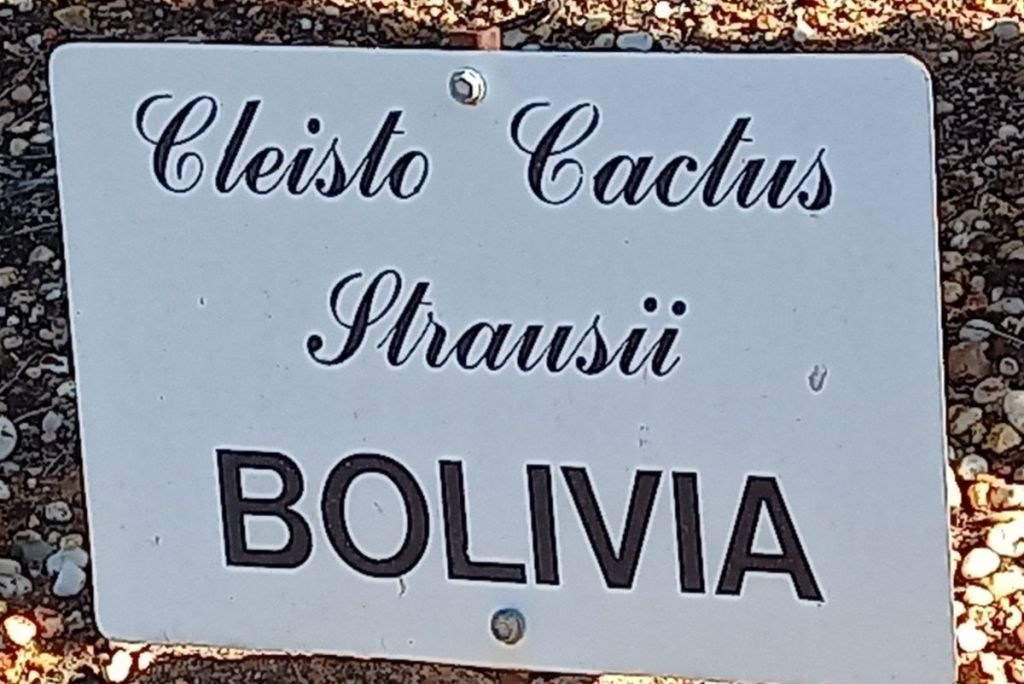
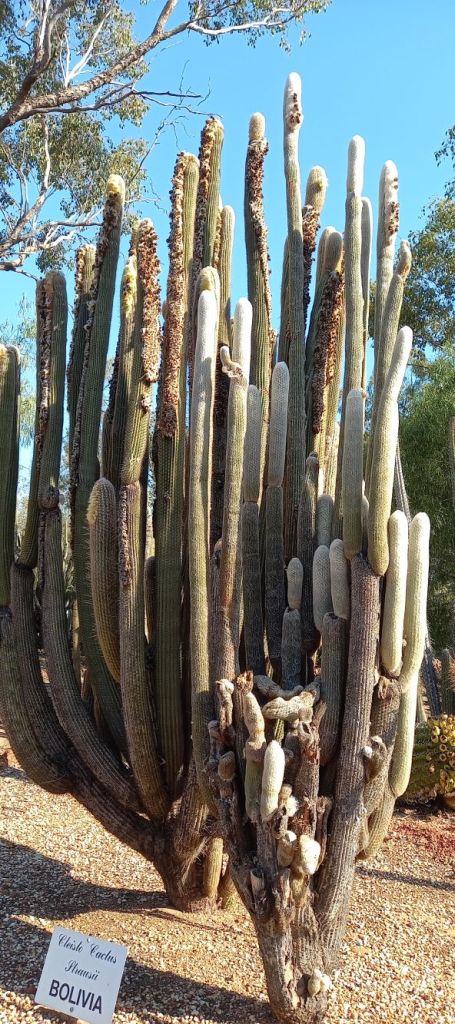
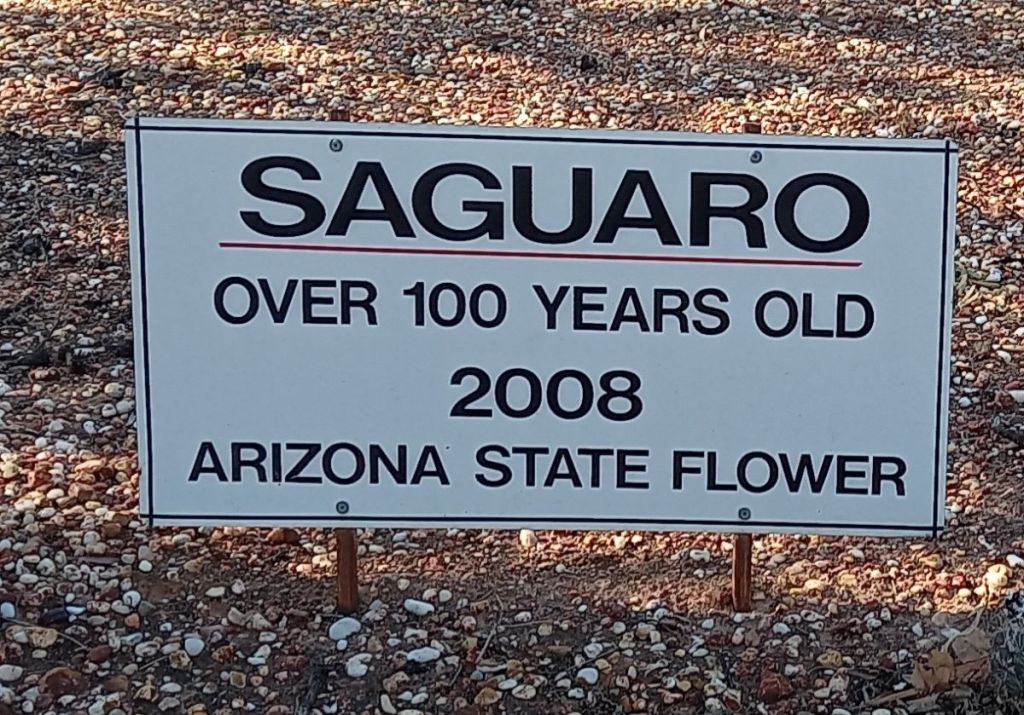
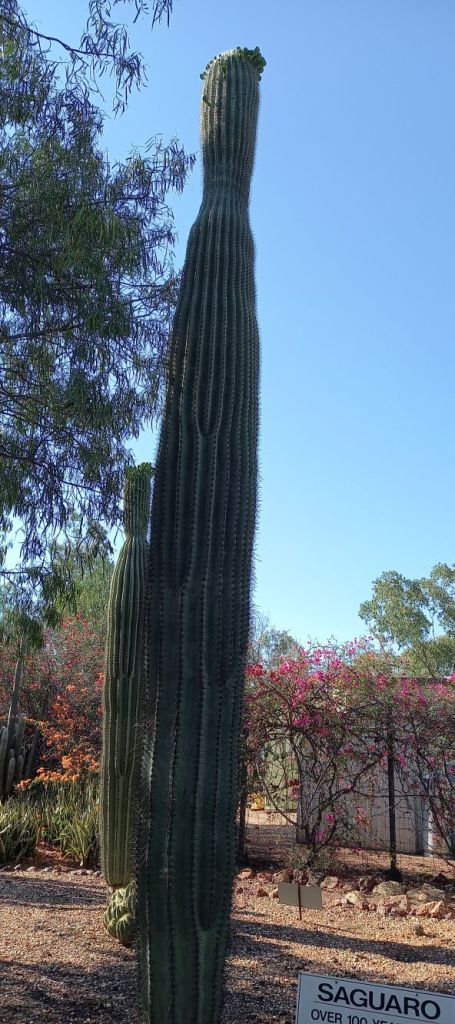
Our day was far from over, though. Our informant had told us that Bevan’s Cactus Nursery was a must see. This put us on the short ten-minute Blue Car Door Explorer tour which took us past other opal fields, and a walk-in mine, which we did not explore as it was getting on for 4.30pm when we arrived at the nursery. It boasts as “the largest collection of Cacti in the southern hemisphere”. Whether true or not, there was certainly a plethora of Cacti to see with most either just flowered, or about to do so. I found it too hard to choose photos, so this time I have added many, but reduced their file size considerably so I hope you can still view them okay. Those paying attention will notice that one of the “so-called” cacti is really a bougainvillea.





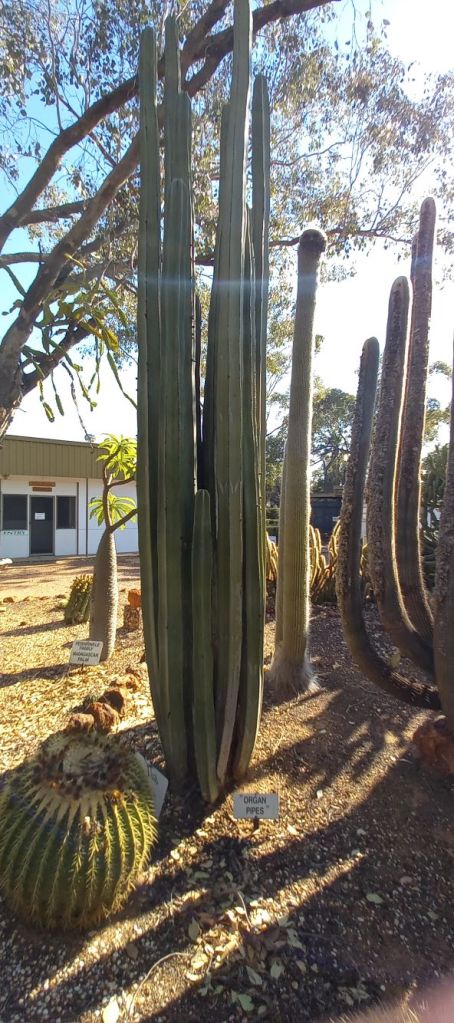
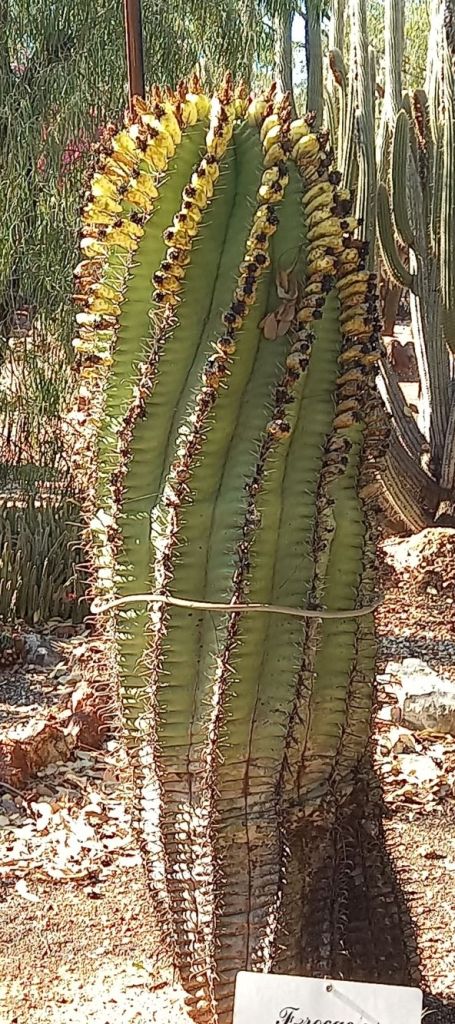

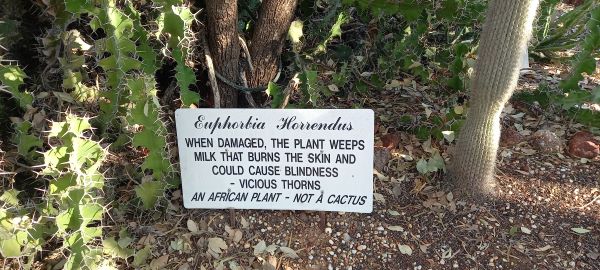
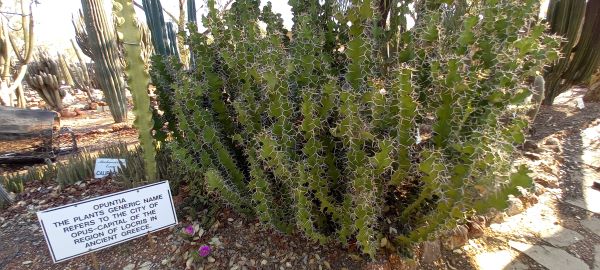
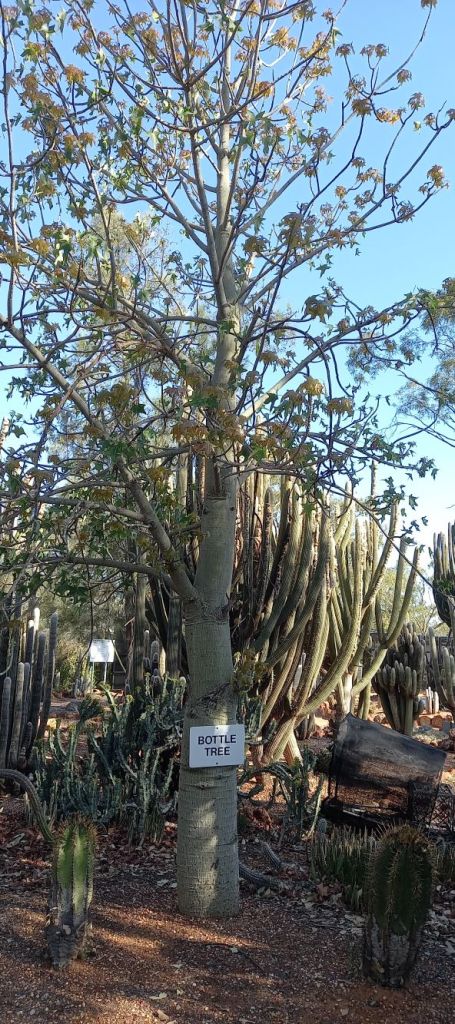

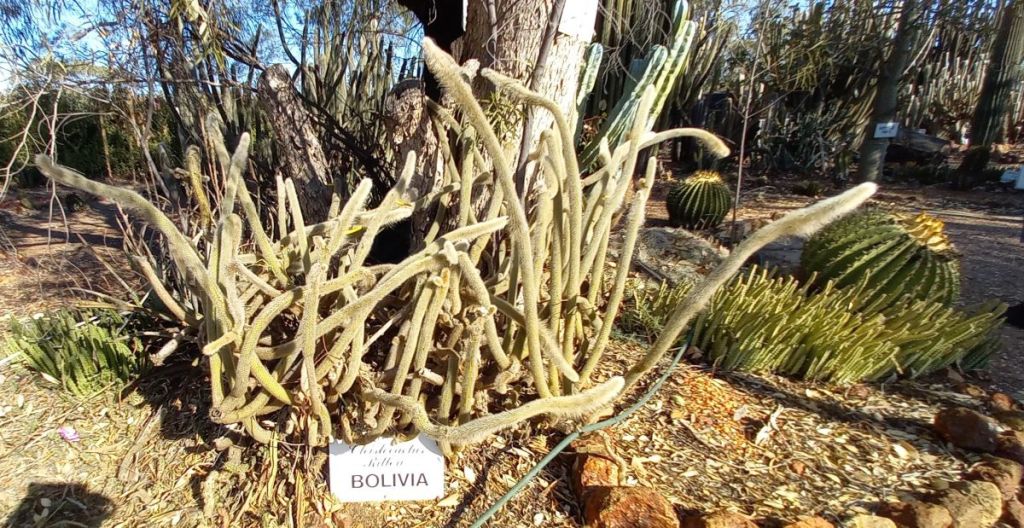
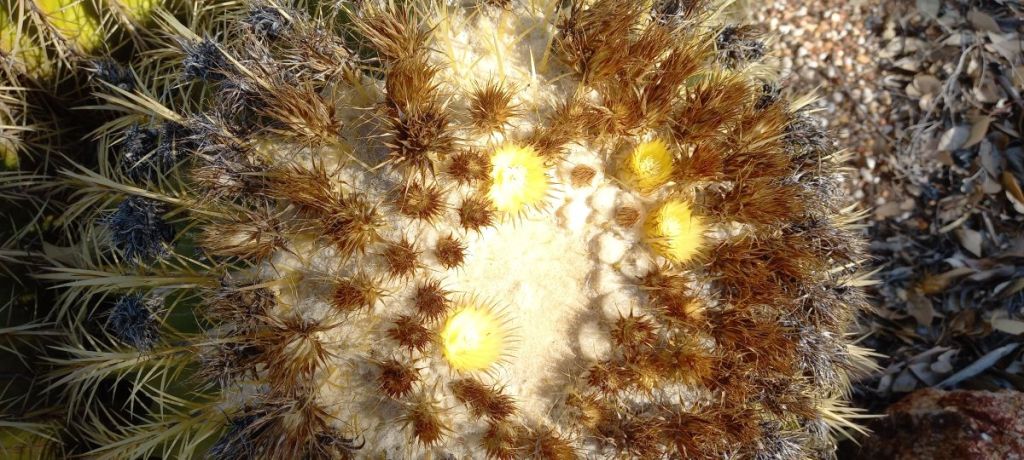
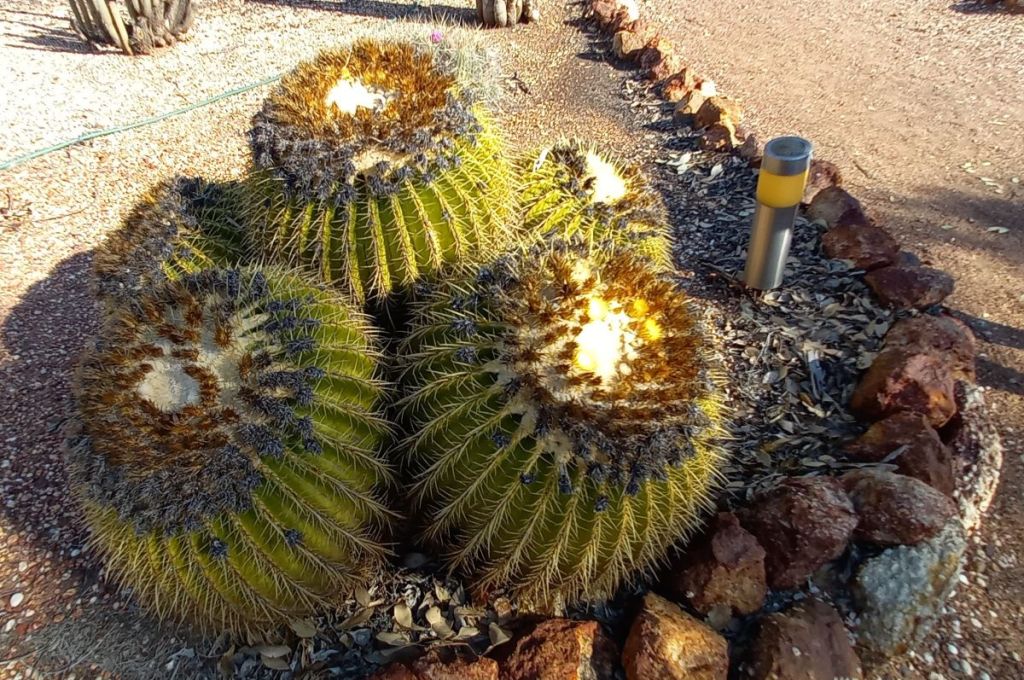
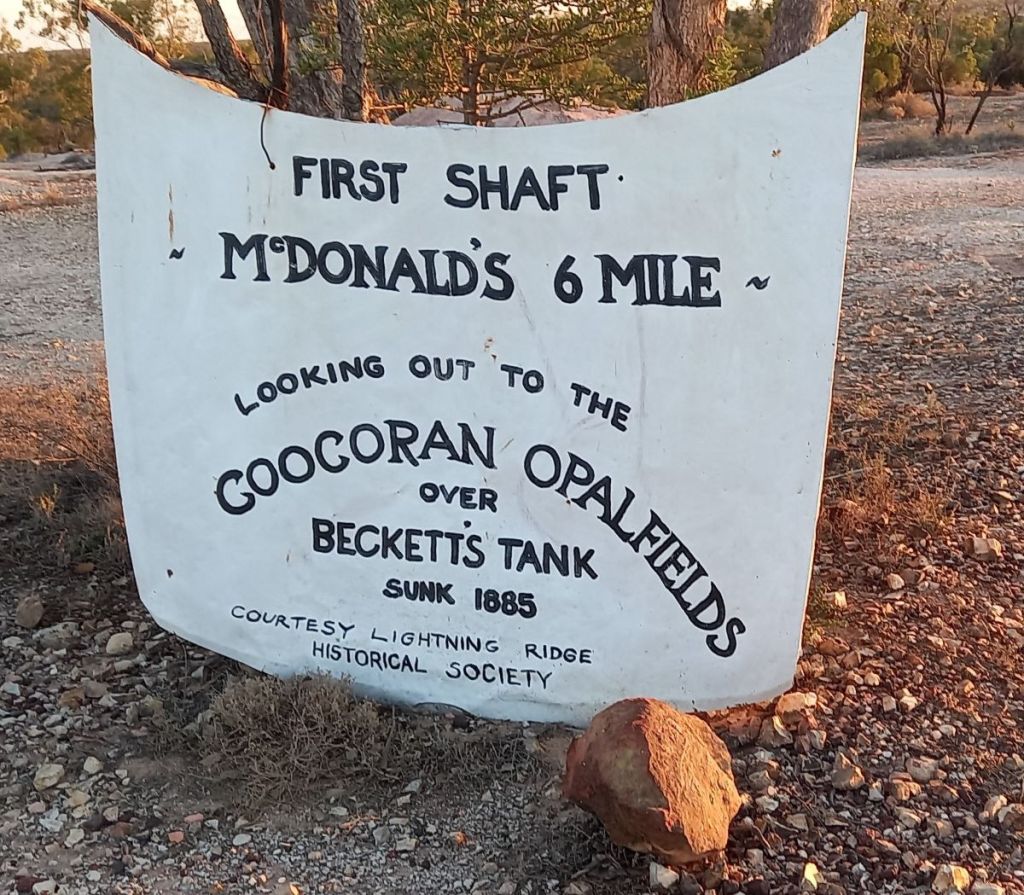
There was not much in town open for dinner on a Sunday night, so we settled for something at the Bowling Club, before taking the twenty-minute Green Car Door Explorer tour up to Nettleton’s First Shaft Lookout. Charlie Nettleton had been an opal miner in White Cliffs before moving to Lightning Ridge in 1903 after recognising the potential of the black opal found only there. Today he is credited as the founder of the black opal industry.
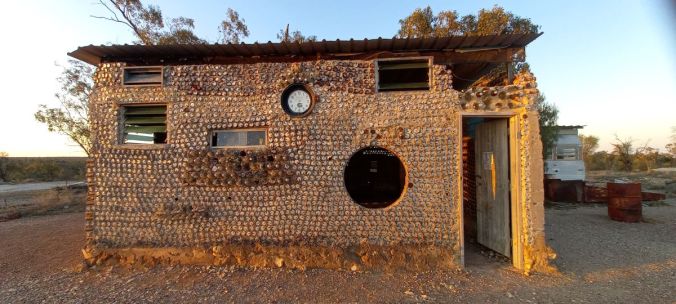
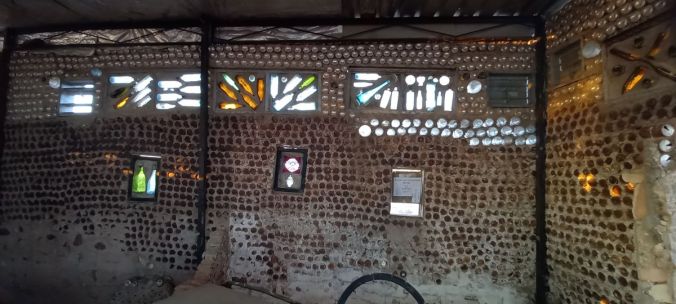
Many were gathered here to watch the sunset, but before it started we wandered over to the one building on this ridge – the Beer Can House. The photographs demonstrate why it’s called that! And it’s important to watch your step as you walk around. Falling down a shaft is a long drop!


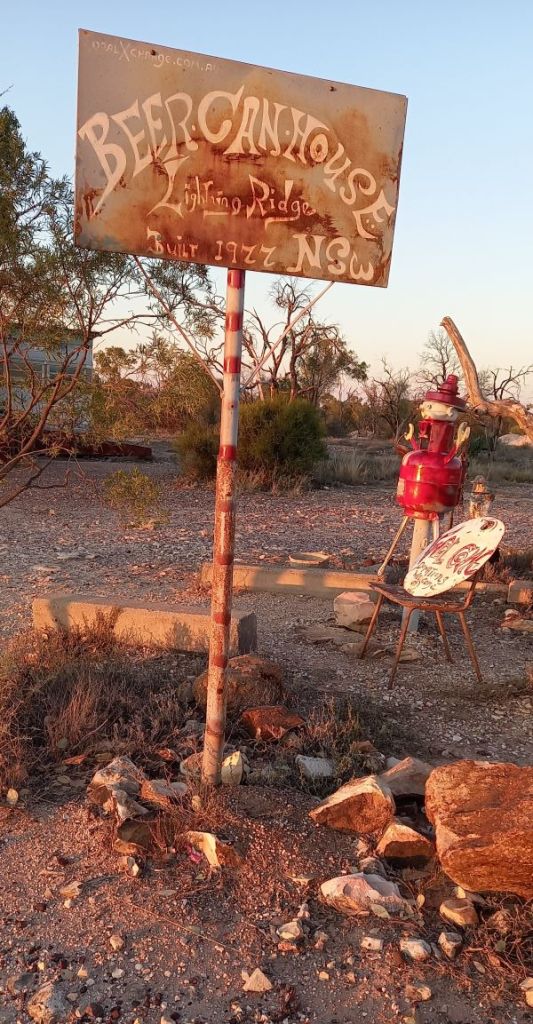
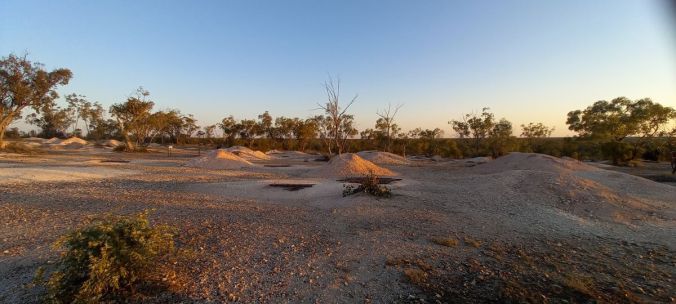
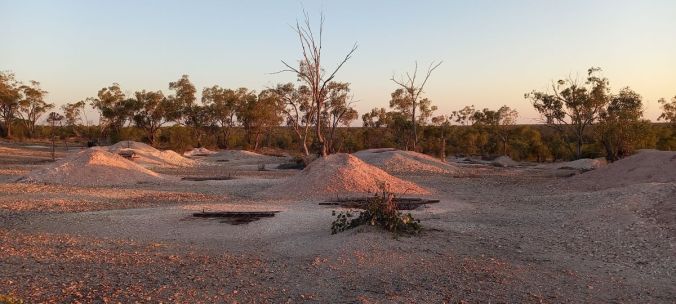

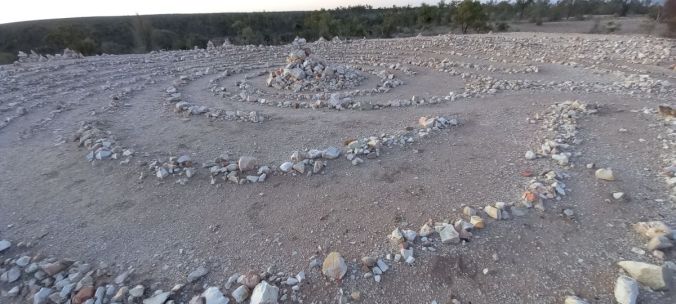
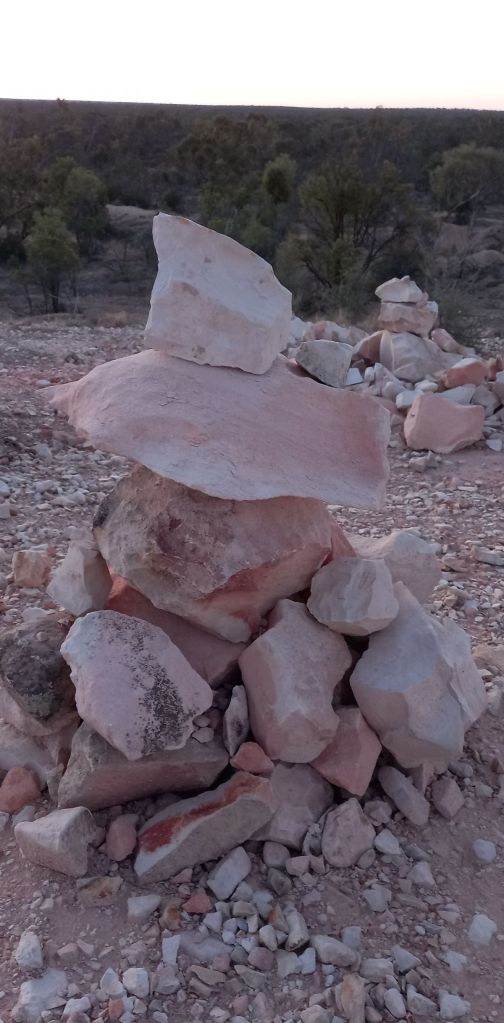
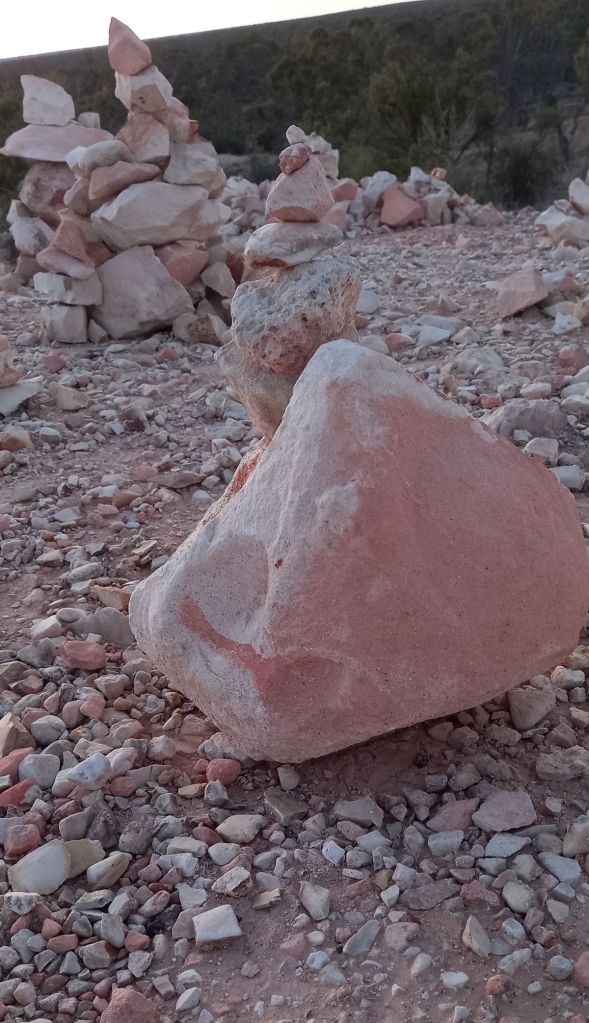
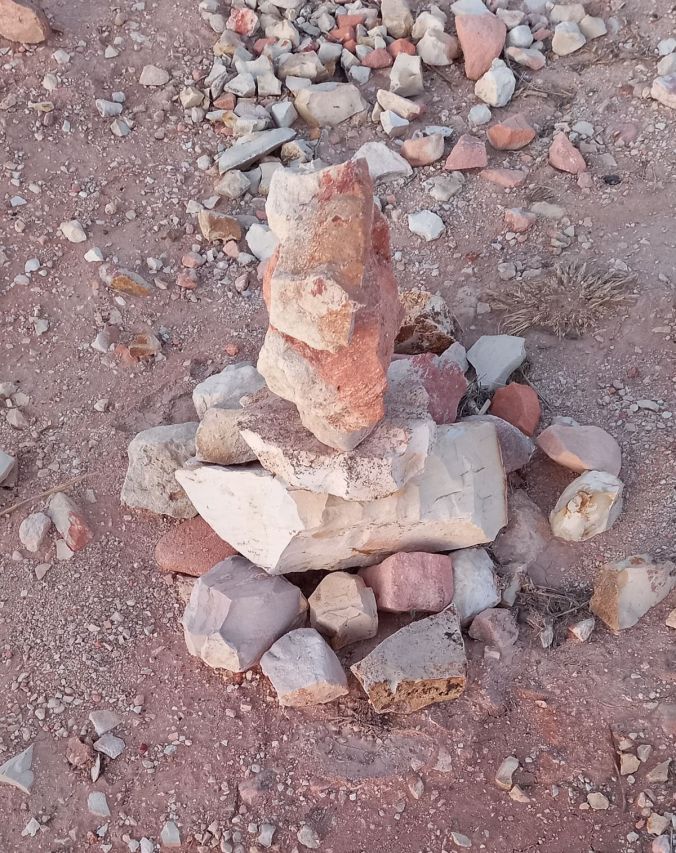
At this spot there is also a stone labyrinth created by four people in six hours. Why they built it is not explained in the brochure, but it has a spiritual atmosphere, and visitors are encouraged to re-align any stones they find have been knocked out of place, which I did occasionally. Here and there stone cairns dot the landscape, similar to Jewish gravesites. And yes, there was one Winnebago driver who found it necessary to park as close as possible, and across the sunset viewing area, without leaving the vehicle. A little naughty of me not to cut him completely out of shot 🙂 The other 4WD with its back open was not blocking anything even though I’ve accidentally framed it in from this angle.
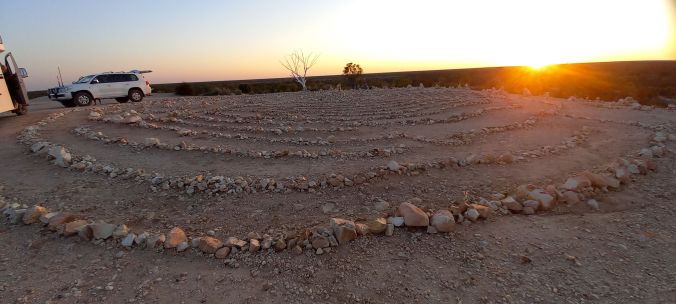
The below sunset images were taken between 7.10pm and 7.20pm. The tree is painted white – it doesn’t grow like that naturally 🙂
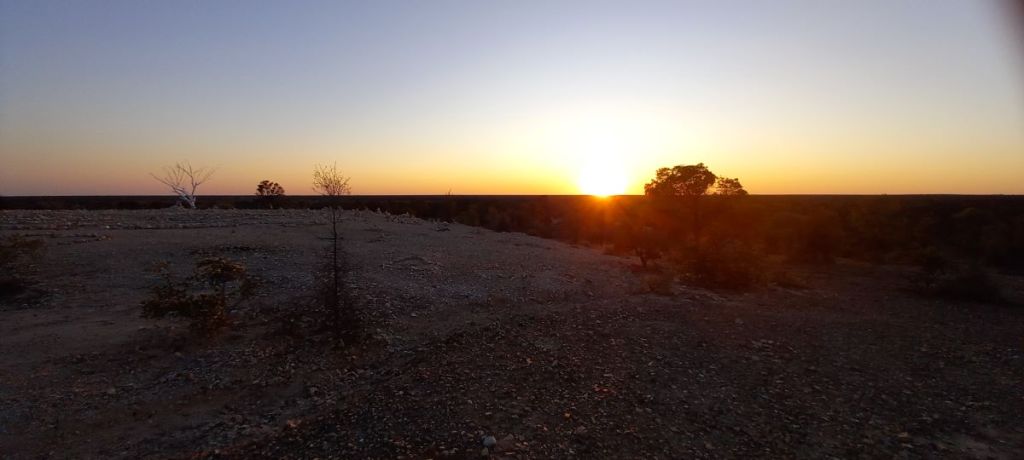
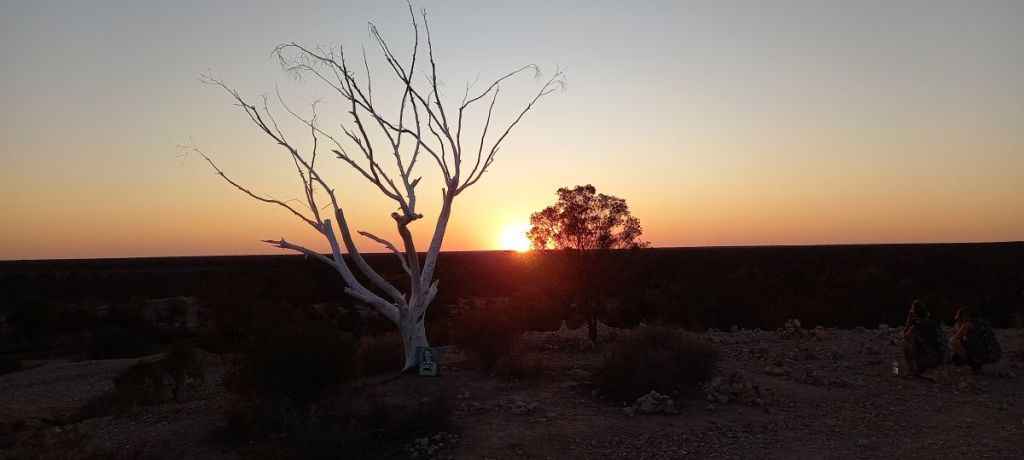
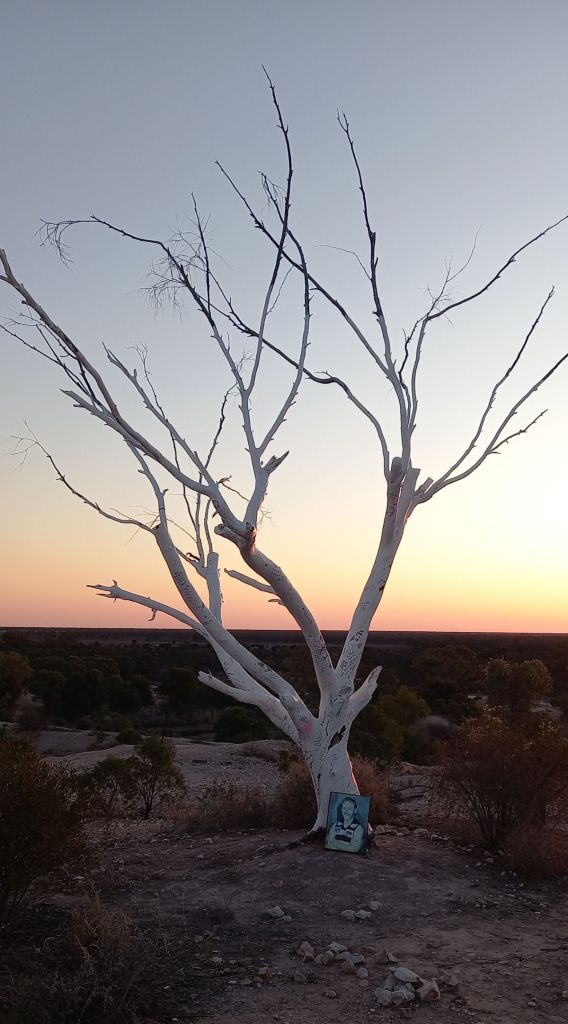
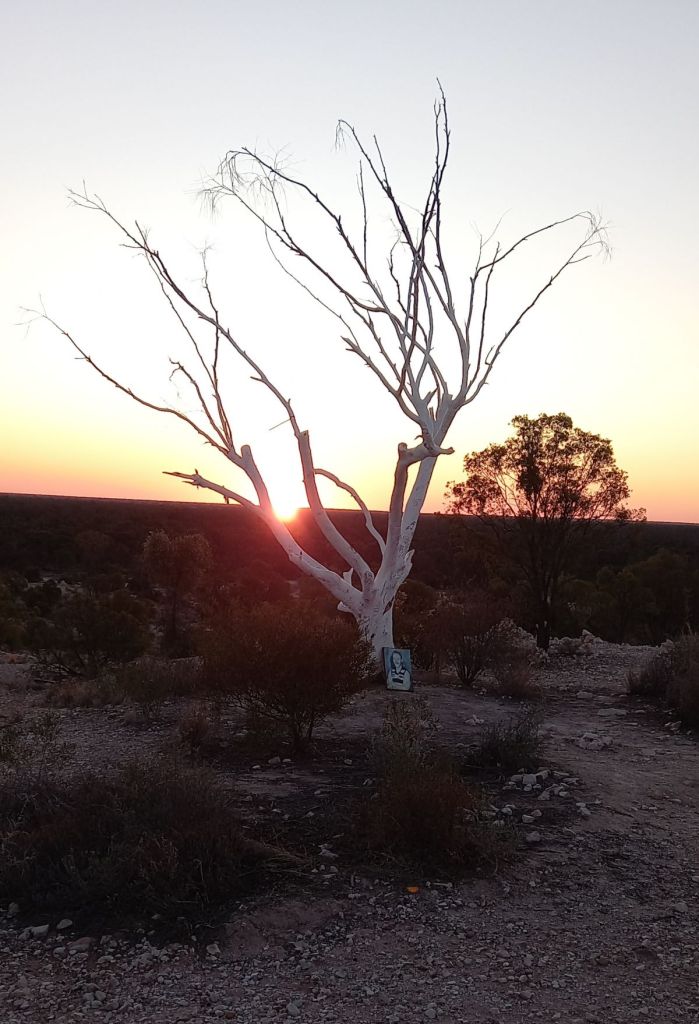
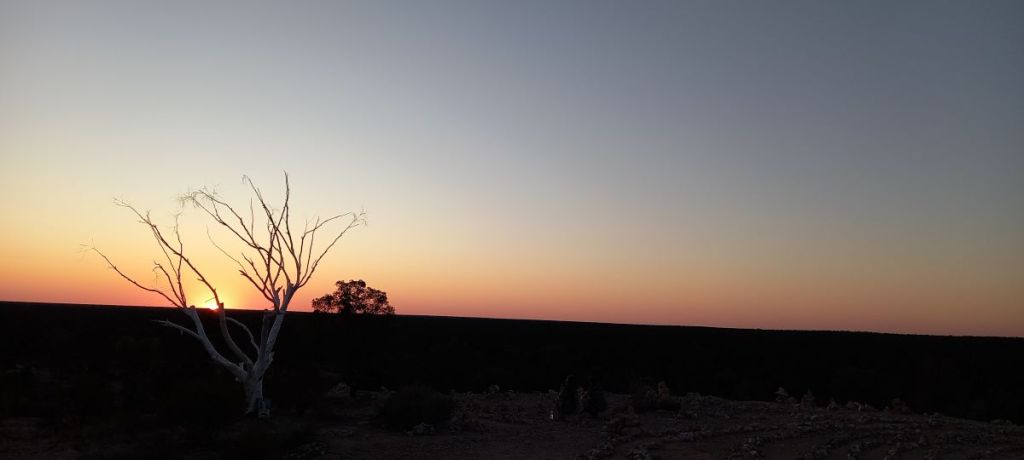
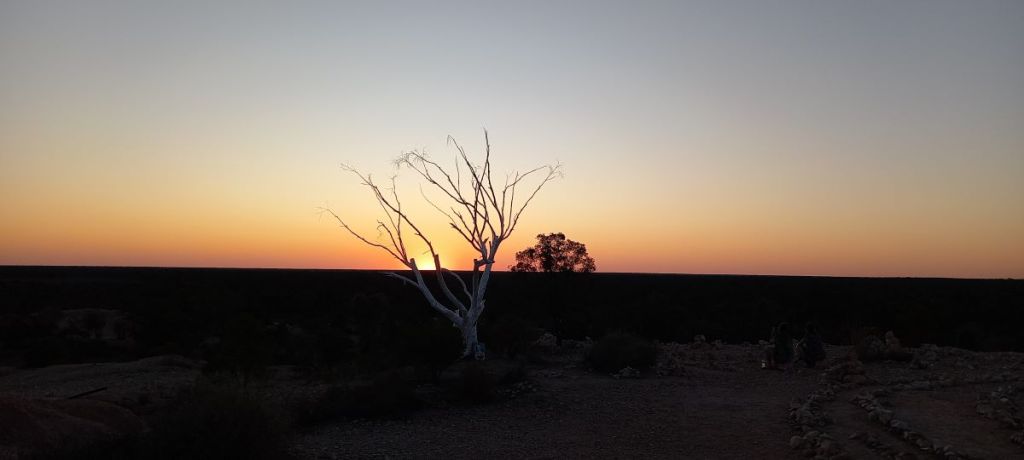
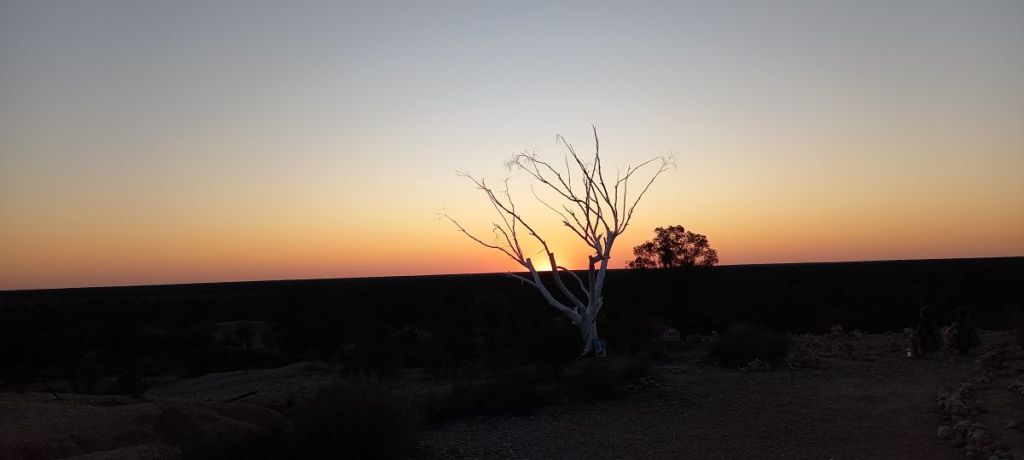
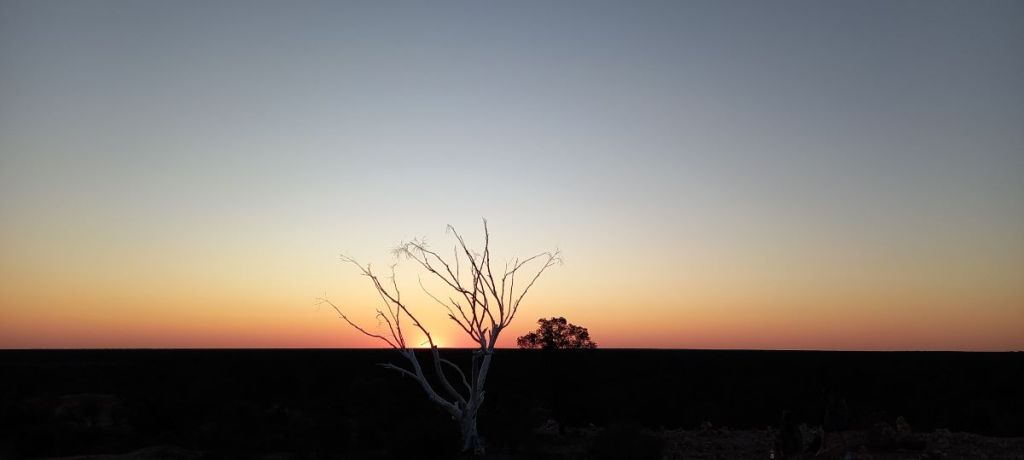
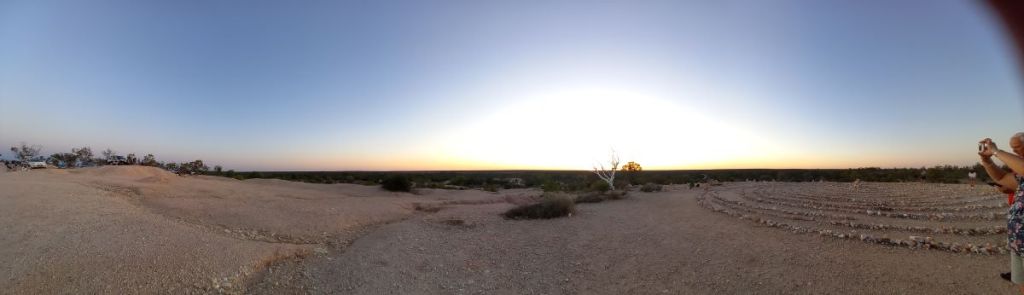
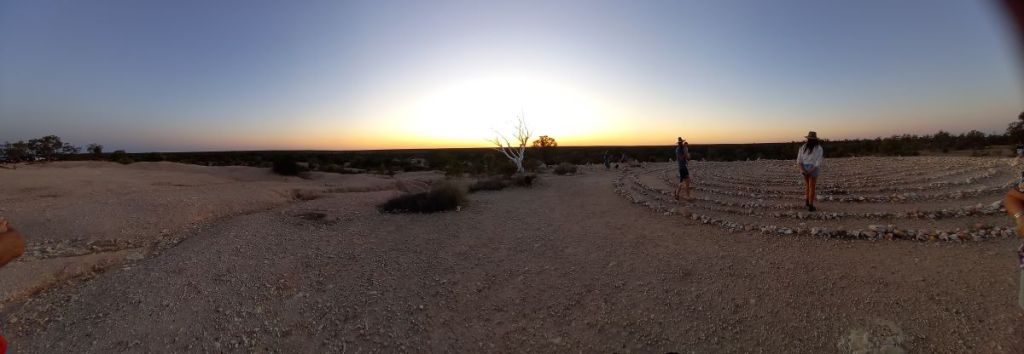
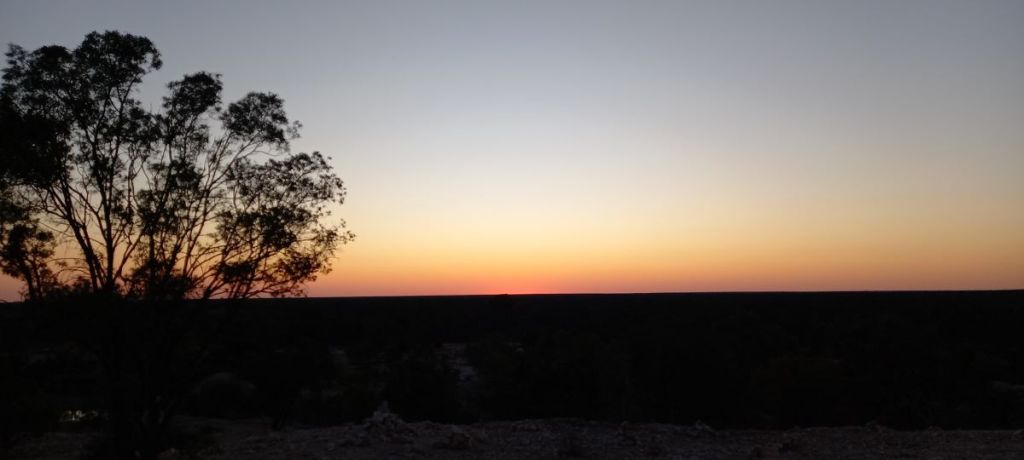
A fitting end to a very big day.
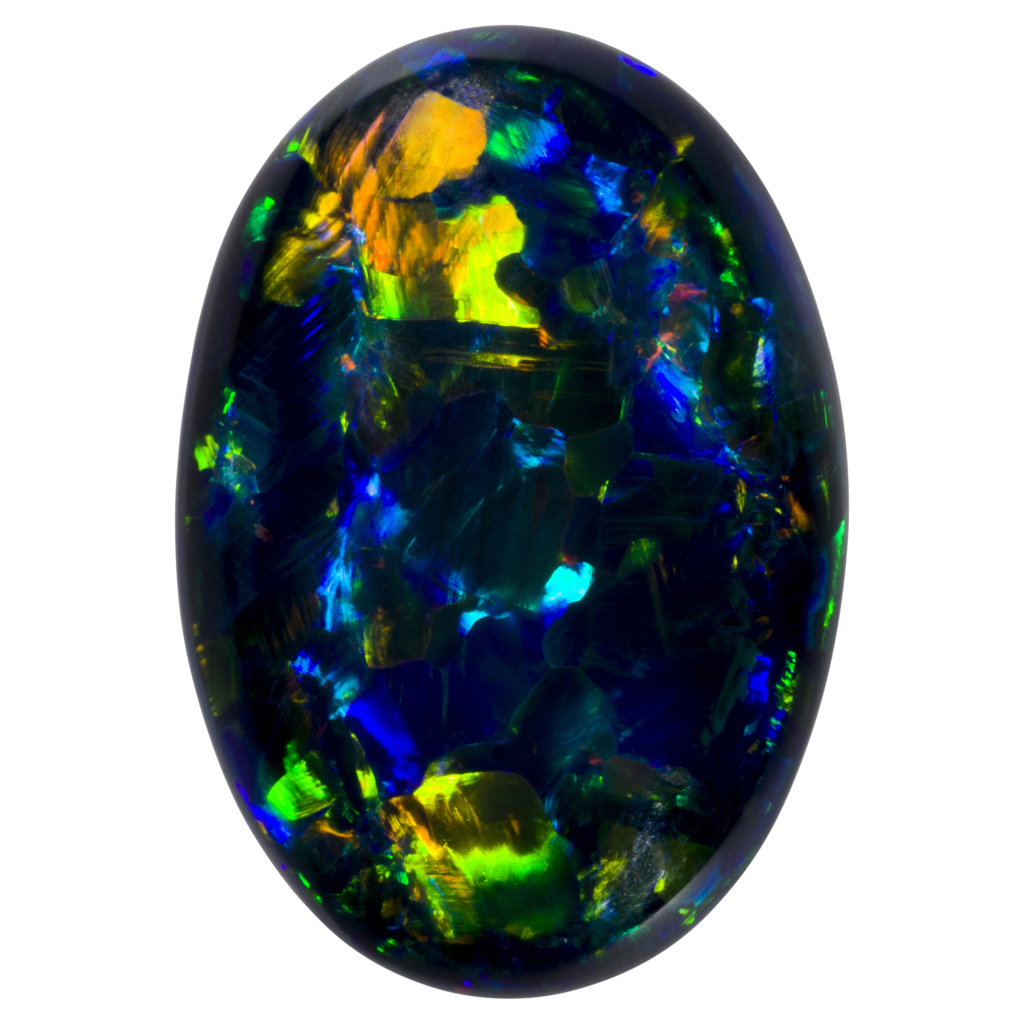
Black opal is mined at Lightning Ridge NSW. The gem opal sits on black to grey colorless opal ( potch). Generally, the blacker the potch, the better quality of opal. The most important factors determining the value of opal is clarity and luster of colors. The Red color is the most expensive. Many other factors include size, shape, high dome and pattern.
Source: Opal Specialist Rockhounds, Sydney
 GWEN WILSON, Author, aka The Reluctant Retiree
Here is the post I borrowed your history piece for.
https://bushboy.blog/2025/03/06/a-bit-more-of-moree/
Thanks once again
LikeLike
I´m always so grateful for these roadtrips you and Bill take, Gwen, as I cannot see me ever going to Australia, and getting to see it through your eyes bring me a lot of joy. They feel like mini-vacations, which are always welcome.
LikeLiked by 1 person
I love being able to expose these more out of the way places that the average tourist would not get to explore on a short vacation. But I’m frustrated that I am so short of time for writing them up. I have at least another 14 posts of this trip waiting to be written; and in a couple of weeks I will be elsewhere. On the Murray River at the South Australian end.
LikeLike
And this is exactly why I love your posts. These days I have no interest in the places everyone goes to or writes about. I much prefer those little gems that isn´t frequented by most. How exciting to look forward to another trip, and good luck with the backlog.
LikeLiked by 1 person
Wow you packed a lot of interesting places in there.
LikeLiked by 1 person
And so much more to write about yet!
LikeLiked by 1 person
You do a wonderful job of documenting and describing your experiences, Gwen! Lightning Ridge sounds like a great place to visit.
I am sorry I am in the process of catching up again, and will work back through your posts over the weekend. I am here! 🙂
LikeLike
Dear Lavinia,
I’m mortified I missed your comment at the time. And even more mortified I have left my readers in Lightning Ridge when there was so much more to this road trip.
Like you though, I get overwhelmed on a day-to-day basis. I’m only just now sorting through emails and finding so much stuff!
Thanks for commenting. Your remarks are much appreciated, x Gwen
LikeLiked by 1 person
No worries, I understand completely. I am here, and glad to know you are OK.
LikeLiked by 1 person
Gwen, you are such a good tourist. You research and really get into the places you see. That is marvelous. My dad used to travel like that. The cactus garden looks like my yard on steroids ;)! Even the bougainvillea. And some of the same kinds of cacti! If you ever visit Arizona, I will take you to Desert Botanical Garden. https://dbg.org/ Another place we have here that is very unusual is the music museum. So lots we can do!
LikeLiked by 1 person
Let’s hope one day a visit comes to fruition. The DBG looks wonderful and on a much more professional level than Bevan in Lightning Ridge, although I am sure you would be charmed by its down-home feel.
And a music museum would be great too~
LikeLike
An amazing location. I’m so pleased you were able to photograph those carvings – and of course all the succulents.
LikeLiked by 1 person
Thank you, Derrick. It’s certainly not your average Sydney suburb!
LikeLiked by 1 person
I must write something about Coober Pedy which is another opal mining area. But I was there about sixty years ago. And you are really re-energising my memory Gwen.
LikeLiked by 1 person
I’ve never seen Coober Pedy so that one is over to you 🙂
I’m glad you’re enjoying tagging along on this trip. More to come.
LikeLike
My gosh, the works of that Ron Canlin are pretty darn good!
LikeLiked by 1 person
He can sure do more with a butter knife than the average person!
LikeLiked by 1 person
Brings back memories , we explored this area in 2009 when we were “grey nomads”, loving the outback, so very different to NZ! Enjoy.
Lynne and Chris
LikeLike
How wonderful to hear from you Lynne and Chris! It sure is a “different” landscape. But I always tell people that if you can’t go to Europe, you can see the same diversity of landscape in New Zealand. A beautiful country! x Gwen
LikeLike
What a fun place to see. Thanks again for the great tour, Gwen
LikeLiked by 1 person
Glad you enjoyed it Don, and had the patience to read it all. I might have to break some other days in two parts…
LikeLiked by 1 person
Amazing images, Gwen, what an adventure. I’m not sure I’d have gone into that mine, though I do have a very similar butter knife which came from my grandmother via my mum, so that puts it in the 1940s or before. Strangely, I don’t feel the need to go and carve rocks with it, but fair play to the man. Is there a reason for transplanting cacti to Australia? As water stores perhaps?
LikeLiked by 1 person
I wish I could upload my photos in their original resolution, but I would chew up my WordPress storage in no time flat – and I don’t wish to upgrade to a higher premium.
It was John Bevan’s father who started the Cacti collection – although I can’t remember why.
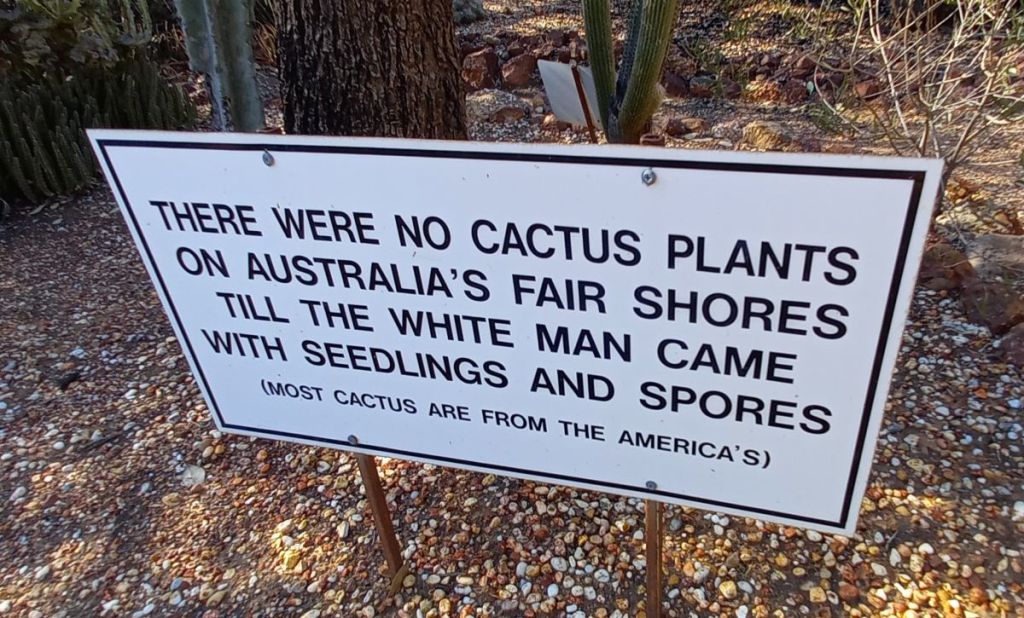
Cacti are not native to Australia, although we do have some native succulents. But they are well suited to our climate, and they quickly adapted when introduced by the European settlers. Of these, the most infamous is the Prickly Pear (Opuntia) which has infested every state and territory of Australia and become, like rabbits, a pest.
The rest, like in this garden, are innocuous 🙂
LikeLiked by 1 person
Australia does hold quite a lot of interesting places, history, animals and people! I can see this is one major place to see!!
LikeLiked by 1 person
It sure does GP! And this is just New South Wales 🙂
Let’s see if we ever get to such road trips in other states…
LikeLiked by 1 person